
The AI conversation got a bit uncomfortable at Cannes Lions 2026, with ad quality at the center of many conversations this year.
Every major platform has an AI story.
And several of the festival's biggest voices used the stage to question whether the industry has been honest about what AI actually delivers.
Publicis CEO Arthur Sadoun released a satirical film calling out AI overpromising in agency pitches.
Meanwhile, Cannes Lions CEO Simon Cook warned from the main stage that the industry is producing "mediocrity at scale."
Snap's global senior director of creative strategy, Valentina Culatti, also told a Cannes audience that most brands are getting AI wrong.
The phrase circling panels and session titles all week was "AI slop," and the consensus is blunt.
AI used without judgment produces work that audiences spot on sight.
The Argument on the Croisette
Sadoun released "The Wrong Promises" just before the festival opened, a 145-second film styled as a mock true-crime documentary.
It uses anonymized client testimonies to document what he called a collective crisis in agency pitch culture, with scenes described as based on real events.
A pitch consultant describes a meeting that "got weird," while a client recalls being offered a $5-million bonus to adopt an agency's AI platform.
Another recalls being told the brand would not have to pay "until we win you a gold Lion."
Sadoun himself put it plainly.
"The compound effect of over-promising on AI and unsustainable commercial offers in pitches to generate headlines is leading to massive job cuts in our industry," he explained.
"Collectively, we have to stop this race to the bottom."
Cook, meanwhile, told The Hollywood Reporter that the creative industry is "in a world defined by mediocrity at scale."
He warned that AI risks "diluting distinctiveness, emotional relevance, and stories that cut through."
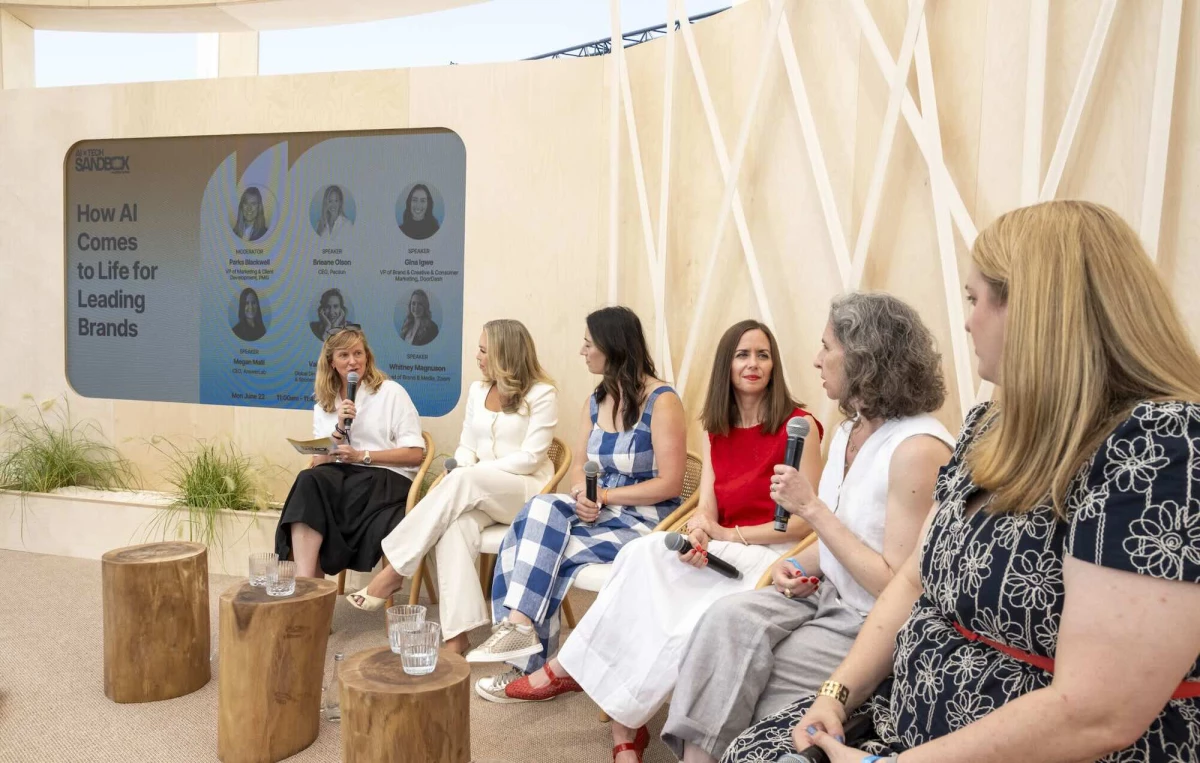
Snap's Valentina Culatti also spoke on a PMG AI & Tech Sandbox panel, "How AI Comes to Life for Leading Brands."
She put the responsibility on the people operating the tools, not technology.
Each of these industry leaders is making a version of the same argument.
Ogilvy's Cannes programming used the phrase "Slop Age" in its session descriptions.
It's a term that has circulated in creative circles for months before landing in the official festival schedule.
The festival changed its own structure in response.
Cannes Lions entries dropped 25.5% in 2026, from 26,900 to 20,050, following the introduction of tougher entry rules requiring proof of impact.
All entries must now be personally endorsed by the submitting agency's CEO and CMO, and entrants can be banned for up to three years for breaking the rules.
Tying every entry to a CEO and CMO's name makes AI fakery a personal risk, not a faceless agency one.
Cannes Lions is writing the slop debate straight into its rulebook, converting a stage warning into real accountability.
The Business Case Behind AI Slop
The economics of AI slop are easy to see.
AI-generated creative is cheap to produce at volume, so for brands under cost pressure and agencies competing on price, the efficiency argument is real.
The problem then surfaces later, in audience response and brand recall.
Samsung experienced this directly in February 2026, when the brand drew widespread criticism for using AI footage to promote the Galaxy S26.
The camera capabilities of the phone were supposed to be the selling point, but audiences immediately noticed the footage was AI-generated.
The episode illustrated something that the Cannes Lions conversation is now formalizing.
Audiences notice when AI is used to fill a gap that the product or the idea should have filled.
Publicis Global CSO Carla Serrano added that the group now demonstrates its AI capabilities to clients through a live platform.
This live-demo approach is the honest answer to the Samsung problem, showing how AI works as it happens.
The Evidence From This Week's Shortlists
The shortlists back the quality argument up. The campaigns drawing the most jury attention are not the ones built on AI.
KitKat's "The Heist" is a story about a vending machine and a break room.
Meanwhile, Lay's "The Most Epic Watch Party Group" is a WhatsApp chat with football stars.
Uber Eats' "Build Your Own Super Bowl Commercial" lets audiences curate their own creative brief.
Each of these ideas works on its own terms, and the AI involvement in the production, if any, is beside the point.
The new AI Craft subcategory in Film Craft Lions asks entries to show how AI actually changed what the execution could do.
It marks where AI makes a real idea possible and where it just fills a creative gap.
A McKinsey survey found that close to 75% of U.S. marketers expect AI to push their media spend higher next year.
So a new category rewarding genuine AI craft at Cannes Lions arrives right on time.
As AI takes on a greater role in discovery and decision-making, influence depends not only on capturing attention, but also on being recommended at the moment of choice.
— McKinsey & Company (@McKinsey) June 24, 2026
Learn how AI is transforming the advertising ecosystem. https://t.co/iB95gYHQFCpic.twitter.com/yDmYDYCyhM
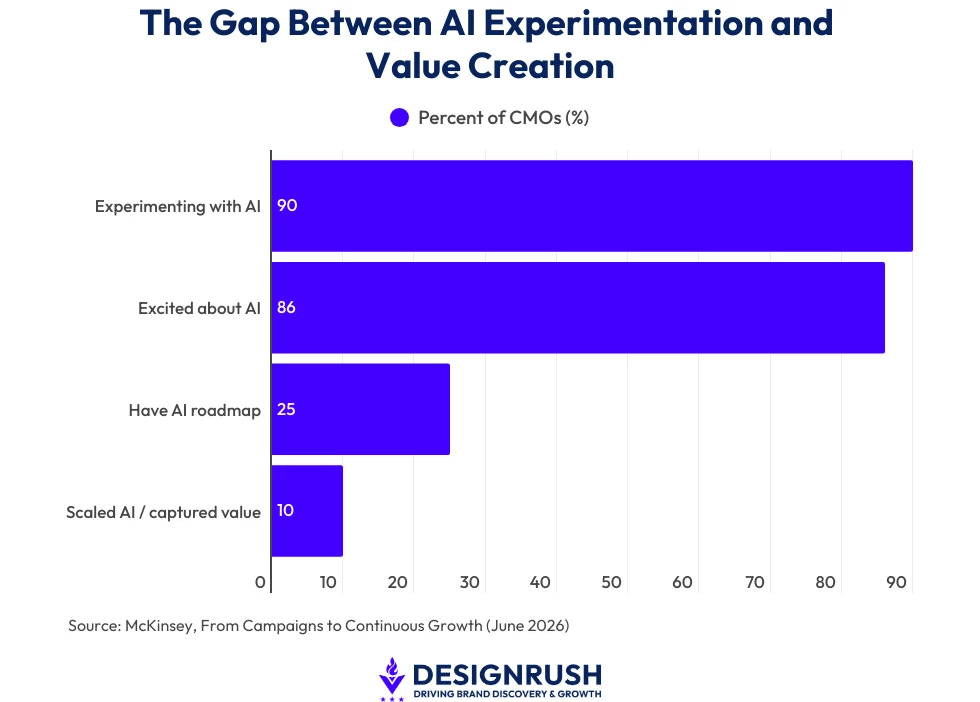
This optimism comes with a catch. A separate McKinsey report published this week at Cannes found that 90% of CMOs are experimenting with AI.
However, fewer than 10% have scaled it or captured real value across their marketing.
The report's fix for that gap is to treat creativity as infrastructure.
Codifying brand voice, visual identity, and guardrails gives the AI system something specific to work with, which helps distinguish output from generic volume.
With AI now standard across every agency, human judgment is the only real differentiator left.
For brands and agencies taking the AI quality argument seriously, here are three things worth noting:
- Audit AI outputs for distinctiveness before publishing: Ask whether the work could have come from any other brand. If it could, the brief needs more work.
- Treat first-party data as the primary creative input: AI produces more distinctive outputs when the data behind it is specific, structured, and brand-owned.
- Build feedback loops into AI workflows from day one: Tools without user feedback mechanisms cannot improve after deployment, and most pilots stall because teams never measure whether the outputs are actually working.
The Cannes shortlists do not reward AI use. They reward ideas, and always have.
Our Take: Is the Industry Actually Listening?
We think this is the most useful AI conversation the industry has had, since the people leading it are working against their own short-term interest.
Sadoun sent 40% fewer staff to Cannes this year and cut Publicis's own entries, which is a far harder stance than a keynote followed by a beach party.
When the critics are the ones giving up entries and headcount, the criticism is worth taking seriously.
Talk is easy, though. Next June will show whether agencies actually entered fewer, stronger campaigns.
Or whether they quietly go back to flooding the categories once the AI slop panels are cleared out.
Remember that the tool is available to everyone, but the brief is not.
This piece runs alongside our wider look at which campaigns have led the shortlists and what the week's trends say about where the industry is heading.
Brands and agencies building AI into creative workflows need partners who understand how to produce distinctive output from strong data and well-developed briefs.
Explore the top creative agencies in our directory.