
HIMSS is updating its Digital Health Indicator for the AI era, expanding the framework from four dimensions to five and giving an AI-enabled workforce its own category, according to Healthcare IT News.
The measures behind DHI 2.0 are still being worked out, with HIMSS stating that it wants a closer look at how data moves through healthcare organizations and how well different systems connect, with workforce readiness becoming part of that assessment too.
And given that many hospitals already have EHRs, cloud platforms, and AI tools in place, DHI 2.0 goes further into how well those systems work together across care settings.
Goji Labs works on enterprise healthcare software for existing clinical systems, along with the data infrastructure needed to run AI in production.
Goji Labs CEO and co-founder, David Barlev, says that the difficult part often appears when software leaves a controlled test environment.
"A demo can look solid and still run into messy data, an older EHR, or a workflow the team did not understand well enough," Barlev says.
"Healthcare software has to work inside the system that is already there, with all of those constraints around it."
Healthcare AI Depends on the Data Underneath It
HIMSS says data and digital infrastructure remain less developed than governance in health systems expanding their use of AI.
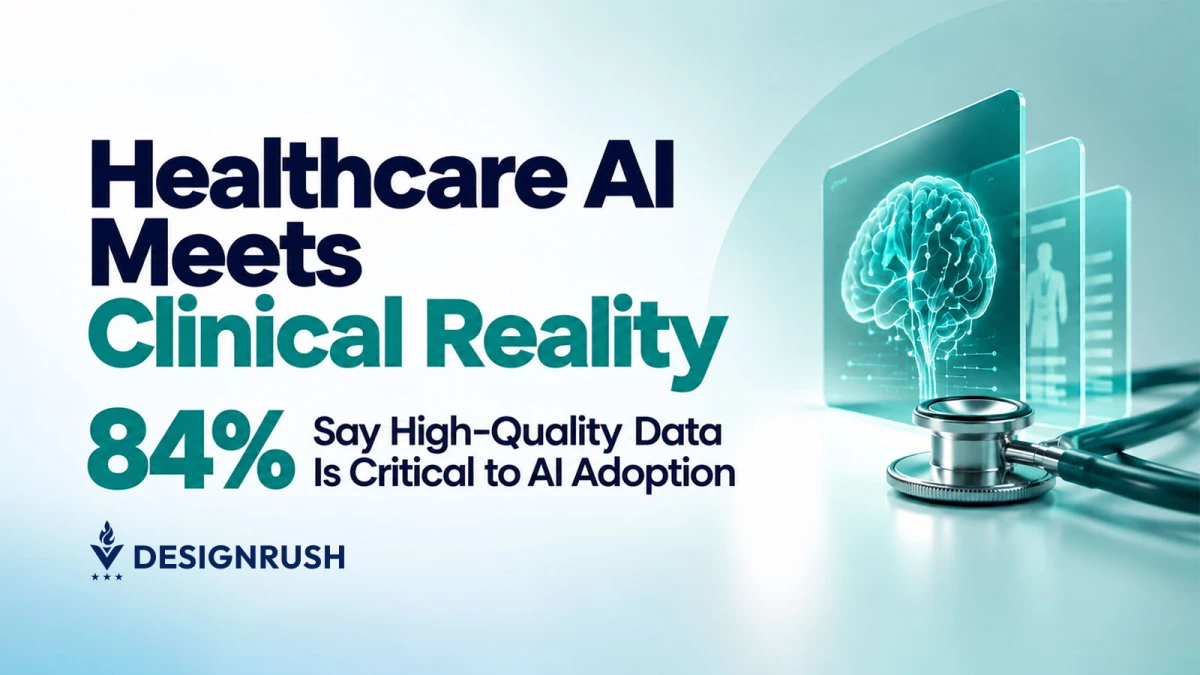
This as HIMSS’ State of Healthcare AI & Digital Transformation report found 84% of respondents considered high-quality data critical to successful AI adoption.
Goji Labs' AI data work maps where information lives, how it is structured, and how an application will retrieve it from existing systems.
"The first questions I ask are about the data," Barlev says.
"Where is it coming from? Who can access it? What happens if one feed is late or incomplete? Those answers affect the architecture before we get anywhere near production."
Production architecture may include retrieval pipelines, vector databases, and orchestration that pulls information from several sources.
Interoperability Has to Hold Up in Clinical Work
HIMSS says hospitals have made significant progress connecting systems inside their own organizations.
DHI 2.0 will look more closely at trusted data moving across facilities and through a patient's care journey.
A healthcare application may need information from an EHR, lab system, or another system of record while preserving the permissions attached to patient data.
Goji Labs' healthcare guidance covers FHIR R4 and CMS-0057-F interoperability requirements. Its architecture work also includes role-based access and audit logging.
Clinical workflow is part of the integration work too, with Goji Labs’ healthcare teams working with the staff who will use the product and design around the processes already in place.
"An integration can pass every technical check and still make the clinician's job harder," Barlev says.
"I want to see what they are doing when the software appears, what information they need at that point, and what happens if the connection goes down."
HIMSS is also giving cybersecurity and resilience more weight within the governance dimension.
Healthcare AI Needs Monitoring After Deployment
The new AI-enabled workforce dimension will examine whether clinicians can use and trust digital and AI tools, along with the skills needed to work with them.
Lifecycle monitoring and risk management are also part of the updated governance model.
HIMSS has raised concerns about accuracy changing over time as AI systems encounter new data.
Goji Labs uses evaluation frameworks and validation layers to monitor accuracy and system performance after release.
A data feed can arrive late. An integration can go down. An AI output may need human review before it reaches a clinical workflow.
"Before launch, I want the team to show me what happens when something goes wrong," Barlev says.
"Who sees the output, who can override it, and how will we catch a change in performance after release? Those answers belong in the release plan."