
AI and Brand Authenticity: Key Findings
- AI speeds up content production, but it can also make brands sound the same, so marketers need to stay hands-on to create distinct concepts.
- Brand voice can deteriorate when using AI alone, which means there’s even more pressure on teams to put extra time and care into messaging and ideas.
- AI can improve efficiency when used intentionally, but as global strategist Pam Didner explains, it still needs human oversight.
Eighty percent of marketers now use AI for content creation, according to HubSpot’s 2026 State of Marketing Report.
What’s primarily driving this adoption rate? Speed.
From generating messaging to full campaigns and strategies, AI can handle marketing tasks in a fraction of the time.
Despite driving efficiency, AI-assisted marketing is raising concerns about originality and differentiation.
“You will notice that the information generated by AI can sound a little generic,” says Pam Didner, a global marketing strategist and founder of Relentless Pursuit LLC.
When AI-generated content is generic, companies using similar tools can start to sound the same.
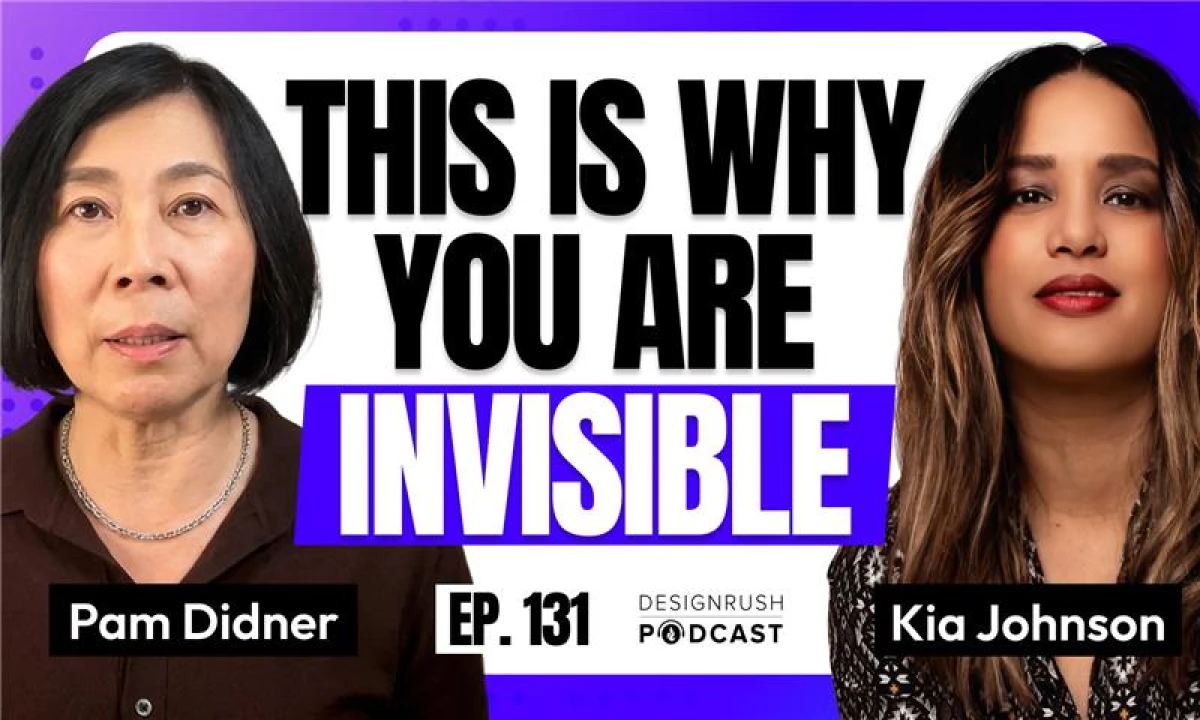
In episode No. 131 of the DesignRush Podcast, Didner gives her honest take on AI use in marketing.
She also gets candid about the pitfalls teams face when clear communication isn't a priority, both internally and externally.
In this insightful episode, Didner explains why:
- More content isn’t always better
- AI outputs sometimes fall short
- Team alignment breaks down
- Human input still matters
Keep reading for a sneak peek of Didner's advice.
Watch the full episode on YouTube or listen on Spotify.

Who Is Pam Didner?
Pam Didner is a global B2B marketing leader, AI keynote speaker, and founder of Relentless Pursuit. She is a former global marketing strategist at Intel with more than two decades of experience in enterprise marketing.
Through her work, she helps organizations improve demand generation, sales enablement, and revenue-focused marketing strategy.
Brand Voice Matters More Than AI Speed
AI makes arduous content tasks, such as research, drafting, and ideation, easier to produce at scale.
That said, if all marketing teams use similar tools, there’s a good chance they'll start to look like clones. When this happens, it's way harder to stand out and impress consumers.
That’s why humans are still essential to marketing, according to Didner.
“You can delegate a lot of stuff to AI, but can you also be that gatekeeper or a person that has a point of view?” she says.
It’s a question many marketers are still grappling with.
AI can produce more, but does it produce better? And what happens to brand growth if the output lacks a clear point of view?
Instead of focusing on volume, lean into human emotions and perspectives.
This is what keeps marketing fresh, unique, and authentic to consumers.
Bypass Generic Content or Risk Falling Flat
Unsurprisingly, messaging that feels generic is a surefire way to undersell a brand.
Almost immediately, it signals a lack of depth or even irrelevance.
Do this over time, and any chance at engagement or campaign performance can quickly topple.
That’s why content quality is so essential to attracting and converting potential customers.
“Don't delegate your critical thinking capability to AI,” Didner says.
Why?
When teams rely on AI without proper direction, it starts to influence how they execute across channels, often resulting in:
- Lower engagement across marketing channels
- Weak messaging that fails to resonate
- Lackluster campaigns with poor results
- Weaker positioning against competitors
- Declining trust in the brand’s expertise
When these cracks start to show, performance and credibility often suffer.
In May 2025, Coca-Cola put out an AI-assisted “Classic” campaign that misquoted author J.G. Ballard and even misspelled “Shanghai.”
While an extreme (and frankly, quite embarrassing) example of how wrong AI-led ads can go, it shows what can happen when human input is overlooked.
Why Intentional AI Adoption Is Key
Despite widespread AI adoption across industries, many companies fail to implement it correctly.
Didner encourages a more measured approach, since simply adopting AI does not guarantee better outcomes.
“Look at your business results to judge. Do you even need to have AI?” Didner says.
This could look like small inefficiencies going unnoticed when teams focus on output rather than effectiveness.
Over time, these gaps can accumulate and impact performance across campaigns and customer experience.
Heavy reliance on AI can also create long-term risk.
When teams depend too heavily on automation, they may lose visibility into what is actually driving results.
That is why adoption should be guided by business needs, with clear oversight to ensure that efficiency does not come at the cost of strategy and differentiation.
Sales and Marketing Misalignment Can Kill Results
Generic messaging isn't just an AI problem. It can also crush internal operations.
For marketing and sales teams, lazy cross-functional communication can directly affect how they engage prospects and move opportunities forward.
When they don’t align, even strong campaigns can fail to drive meaningful business outcomes.
Didner explains that the issue is rarely rooted in conflict between teams.
“It's more or less, they are not talking to each other,” she says.
Differences in priorities, timelines, and expectations can cause teams to operate in silos.
Marketing may focus on long-term brand building and nurturing, while sales teams operate under immediate revenue pressure and quota-driven decisions.
While solvable, fixing communication gaps typically requires effort.
“That requires the sales and marketing to have very close communications. And most of the time they just don't,” Didner says.
Where Internal Misalignment Starts
When alignment breaks down, the impact can be seen across the entire buying process.
- Unqualified or neglected leads that are not properly followed up on
- Mismatched messaging that does not align with customer expectations
- Longer sales cycles caused by inconsistent communication
- Missed opportunities at critical decision stages
Let these issues compound, and companies risk losing potential buyers.
This can show up as stalled deals, lower conversion rates, and a disjointed customer experience.
This can make achieving alignment challenging, but no less critical.
"In the world of digital marketing, especially in the current stage, the sales and marketing, or if nothing else, the handoff between marketing to sales needs to be seamless," she says.
Neglecting to sync makes organizations vulnerable to losing trust, revenue, and growth.
AI Should Support Strategy, Not Replace It
To improve efficiency, many marketing teams are integrating AI into their workflows.
This allows them to scale research, content creation, and campaign execution more quickly.
However, rather than relying entirely on automation, Didner emphasizes the importance of using AI to support existing strategy rather than replace it.
“You have to actively bridge the gap, build the process, and set up the tools that both sides can communicate with each other,” Didner says.
Without humans overseeing the work, concepts can become generic, with vague language, and can even lack the emotional pull campaigns often lean on.
Moral of the story?
If AI is used to replace human creatives, more brands will just look and sound the same, likely causing consumer fatigue.
Why Clear Communication Matters for Humans and AI
The way people discover and evaluate brands has changed, but what actually matters hasn’t.
According to Didner, you still need to communicate openly with your team.
“Communication. You always have to communicate with your employees,” Didner says.
“That is not something that you can delegate."
Clarity becomes even more important as teams adopt AI.
“You do have to communicate clearly so AI can follow your direction," Didner says.
At the same time, many companies are using AI to reduce headcount or replace roles.
That’s where things often start to break down. As Didner puts it:
“That doesn't mean you should reduce the level of the communication with your team."
If communication slips, here are just a few consequences that can arise:
- Messaging becomes inconsistent across teams
- Marketing and sales fall out of sync
- Customer communication starts to break down
- Trust in brands weakens
Whether you’re working with people or AI, communication is what keeps everything aligned.
Watch the full episode on YouTube or listen on Spotify.