
Agentic AI in Enterprise Software Development: Key Findings
- AI is shifting enterprise software from feature-led to workflow-led development, changing how systems are planned, built, and maintained across the SDLC.
- AI amplifies organizational weaknesses as much as it boosts productivity, meaning broken processes, unclear ownership, and weak QA surface faster at scale.
- Discipline, not model capability, determines success with agentic engineering, as clear constraints, context control, and verification prevent AI-driven chaos.
Several years ago, adding AI to enterprise software often meant adding some form of smarter search, better recommendations, automated workflows, conversational interfaces, or other similar functionalities.
Today, that story is still unfolding as more disruptive shifts are happening behind the scenes.
AI is no longer only influencing what enterprise applications do. It’s also changing how they’re designed, built, verified, deployed, and maintained.
Now, teams are moving from AI as just a feature to making it the way work gets delivered.
And while this has made coding easier, it also makes maintaining trust, governance, and smooth operation tougher.
However, while code is getting easier to produce, trust, governance, and operational integrity are becoming harder to sustain.
This tension is forcing a rethink of the software development lifecycle at an organizational level.
This is something that we at Instinctools have made a point to implement in all our projects.
As an #AI and #ML development company that has walked 30+ organizations through AI implementation, we’ve noticed that some AI adoption challenges crop up more often than others. So, our very own AI Center of Excellence (CoE) team has curated the most recurring AI problems and…
— *instinctools (@instinctools_EE) February 17, 2026
In this article, I’ll be breaking down what’s changing across the SDLC, why it’s forcing an operating-model shift, and what leaders should put in place before scaling AI-driven practices.
Copilots were just a warm-up. The main event is agent-driven workflows
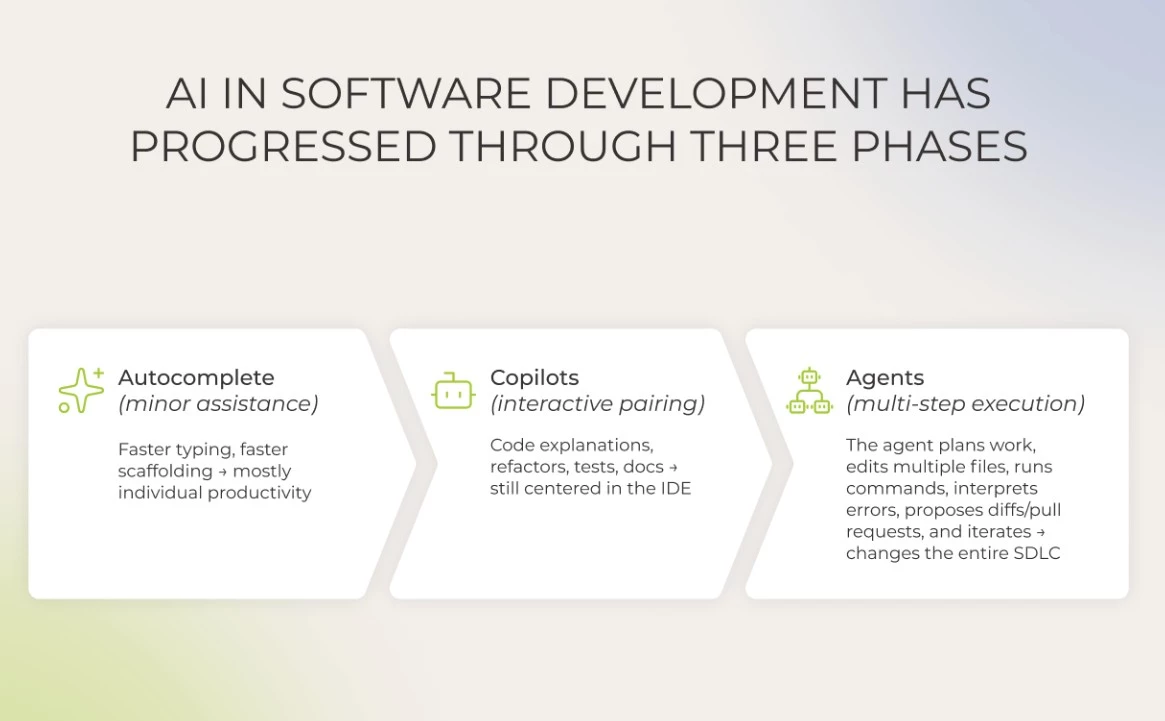
Early AI coding tools behaved like supercharged autocomplete.
Then, leaders faced another wave of AI that helped an individual developer move faster by generating snippets and boilerplate or explaining unfamiliar code.
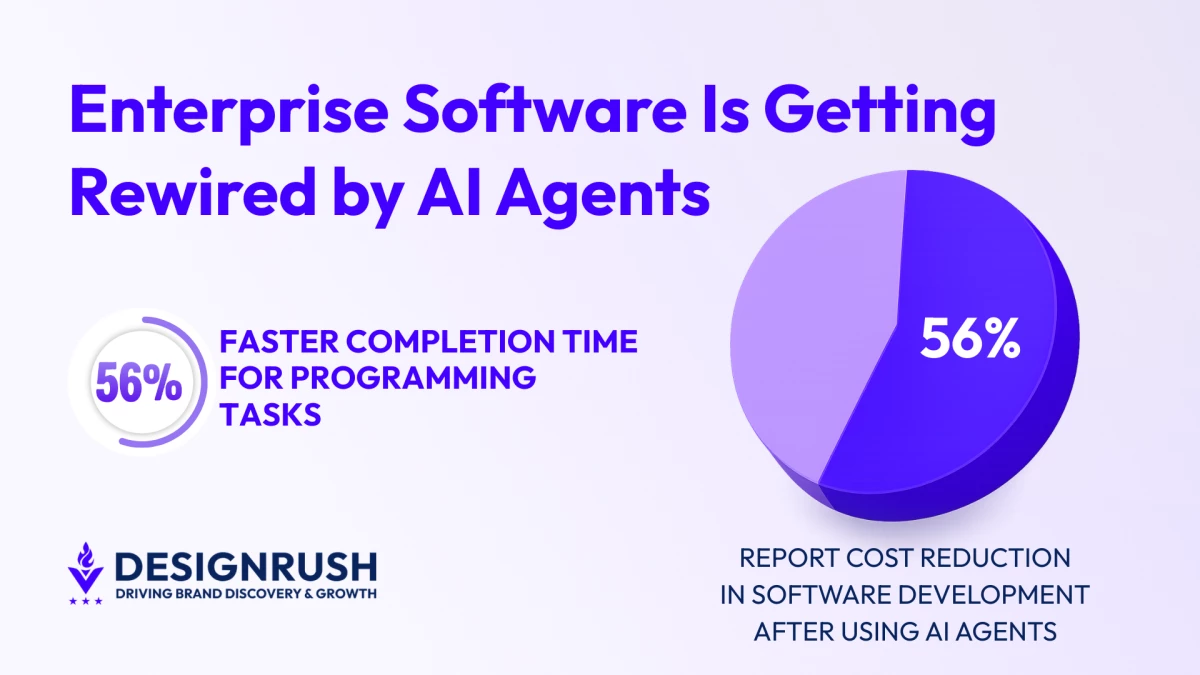
For example, a Cornell University experiment with GitHub Copilot found developers completed a programming task 55.8% faster with AI assistance.
Useful, but mostly limited to the developer’s IDE and individual throughput.
Now we’re entering the agentic phase.
Some teams call this new mode vibe coding, but the label can obscure what matters. At an enterprise level, it’s better understood as agentic engineering.
AI software development agents are built to take a goal, such as ‘add a feature’, ‘fix the bug’, ‘refactor the module’, and plan the steps to achieve it.
They then modify multiple files, run commands and tests, interpret failures, and iterate toward a working result.
In other words, they can be perceived as multi-step executors that work across the codebase with tool access.
This matters because the moment AI started transitioning from a code assistant to a full-fledged contributor, enterprises inherited a new kind of management problem.
The question “How do we help developers code faster?” was stifled by another one.
“How do we make AI-driven change safe, consistent, and auditable across teams?”
Why speed isn’t the hard part anymore
One of the biggest misconceptions about AI is that it’s a silver bullet for improving enterprise software development.
In reality, though, it acts as an amplifier. And make no mistake, that isn’t always a good thing.
Just as it strengthens an organization’s advantages, it also magnifies dysfunction in several ways.
Organizational readiness
The first friction point is closing skill gaps, because agentic workflows demand new habits like:
- How to frame intent cleanly
- How to set guardrails
- How to verify outputs
- How to keep context from drifting over time
Without structured onboarding and hands-on practice, early gains tend to fizzle out and engineers fall back to old habits.
But now, they’re juggling a faster, noisier stream of changes.
The hidden cost of AI adoption
Then there’s the part most leaders underestimate. AI adoption comes with real implementation overhead.
The tools themselves may look inexpensive compared to headcount, but the total cost lives in integration, infrastructure, governance, and the time it takes to refit workflows so the output doesn’t overwhelm review and QA.
The ROI is there when teams start with high-impact bottlenecks, such as regression testing, documentation upkeep, or repetitive integration work.
That’s because those are the areas where AI can take work off people’s plates instead of adding more to validate.
Authority Magazine just published an in-depth interview with Alexey Spas, Founder & CEO of instinctools, on how we leverage #AI to scale smarter, empower people, and drive real business impact without losing the human touch.
— *instinctools (@instinctools_EE) January 15, 2026
💡 “The goal of AI is to augment, not replace, human…
Security and control boundaries
Security and privacy are the other speed limits you can’t wish away.
As soon as AI touches real enterprise code and context, you’re dealing with sensitive data, regulated domains, and the risk of leakage or misuse.
This is especially true when agents can call tools beyond the IDE.
As such, teams need to engineer guardrails like access controls, data handling rules, and auditability. This helps avoid total shutdowns the first time something goes sideways.
Fitting agents into existing delivery models
AI doesn’t land in a vacuum. It has to plug into the way your teams already build.
Agile, hybrid, and even legacy waterfall environments all have their own handoffs, rituals, and approval paths.
The problem starts when agents are integrated without considering what they can do independently, what needs human approval, or how work actually flows.
In these use cases, most teams will end up creating friction in new places instead of the acceleration they were hoping to achieve.
So, yes, AI can help teams move faster. But speed isn’t the hard part anymore.
The hard part is building a holistic system of people, processes, security, and verification that can handle AI-level throughput without trading away trust.
Where AI agents are already reshaping the SDLC
Over the past year, agentic AI has gone from "interesting" to something enterprise teams are increasingly willing to put in the driver’s seat.
And there’s a good reason for that. It provides elastic delivery capacity with the existing headcount and lets teams get from idea to prototype in days, trying multiple directions without betting the farm.
Here’s where agents are already pulling real weight across the SDLC.
Planning
Planning used to be a lot of calendar time and not enough signal.
AI agents change that by pulling in delivery history, market inputs, and operational constraints to map out realistic paths instead of one shaky forecast.
You still make the call, but now you’re doing it based on clear information, not gut feel.
Requirements analysis
In the enterprise, requirements rarely show up neatly wrapped with a bow on top.
They’re scattered across legacy code, process docs, tickets, and “everyone knows” assumptions.
Agents can solve this fragmentation by extracting rules from existing systems and asking SMEs structured follow-up questions.
This helps turn fuzzy input into acceptance criteria you can actually test against.
And if teams have the right guardrails in place, agents can also assist with detecting contradictions before they snowball into scope creep and late-stage rework.
Design
Design is where teams either set themselves up for a smooth build or paint themselves into a corner.
Agents help teams move faster by quickly mapping out realistic architecture options, all while clearly showing the trade-offs upfront.
Similarly, they can crank out early UX concepts that are aligned with established design patterns.
This lets teams pressure test different iterations before revisions become too costly.
Development
If agents are used well, they can take on unglamorous tasks like:
- Optimizing pipelines
- Wiring up APIs
- Generating integration scripts
In turn, this lets engineers stay focused on logic, edge cases, and system integrity.
The key is treating agents like fast-moving contributors who still have to play by the rules: coding standards, dependency policies, and architectural decisions that keep the codebase from turning into a patchwork quilt.
Quality management
When integrated correctly, AI can help teams ship faster. But it can also multiply the number of times things need to be revised.
Agents that are designed to generate and run tests continuously, spot flaky tests, and surface failure patterns will need to have quality control checks in place.
This ensures that the agents work as intended instead of forcing team members into an endless triage cycle.
Deployment
Deployments shouldn’t feel like a high-wire act.
Agents help teams roll out changes more safely with canary or blue-green releases, watching key signals in real time, and flagging anomalies before users feel them.
When something looks off, agents connect the dots between what has changed and where the risk likely sits.
Then, they can tee up rollback or mitigation steps based on policies you’ve already defined.
Maintenance and support
Most enterprise teams struggle to keep software running as systems sprawl and team members move on in their careers.
By staying on top of logs, traces, and tickets, agents filter out the noise and present teams with a clearer picture of what’s breaking and why.
Over time, they can also keep runbooks and internal knowledge bases up to date. That way, teams don’t have to constantly reinvent the wheel during incidents.
System decommissioning
Retiring a system sounds straightforward until you hit data retention rules, access controls, and all the hidden dependencies no one’s thought about in years.
Fortunately, agents can be designed to map dependencies, flag compliance obligations, and walk through decommissioning steps in a controlled way.
This ensures the transition to next-gen systems doesn’t descend into chaos.
Practical ways to make agentic engineering work in the real world
Agentic engineering pays off when you treat it like a delivery system, not a chat window.
Here are a few operating practices that go a long way.
- Use a unified, technology-agnostic layer (middleware infrastructure) where common tool connections are pre-built, so orchestration is quick and the same guardrails can follow you from project to project.
- Manage context carefully, but don’t over-engineer it. Most teams don’t need complex retrieval systems on day one. A well-structured markdown plan (what you’re building, constraints, standards, “don’t touch” areas) is often enough until documentation truly explodes.
- Explicit limitation rules are a must. Agents try to be "perfect," which can lead to endless loops on an unsolvable problem and a bloated context window. Set rules like ‘stop after three attempts and flag me’ to prevent churn.
- Stick to one communication protocol to avoid schema drift. If your priority is connecting agents to tools, use a tool-connection protocol like MCP. If it’s agent-to-agent coordination, go for an A2A protocol.
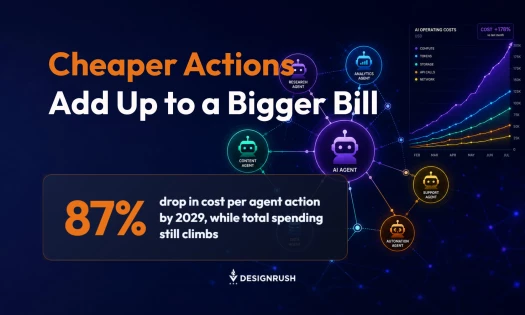
- Track token consumption. Costs can creep up quietly when agents run long sessions or repeated retries. Add monitoring and set alerts so usage stays predictable and teams don’t get surprised at the end of the month.
AI raises the ceiling, but discipline sets the floor
Enterprise software used to move at the pace of the team’s bandwidth and the organization’s handoffs.
Now it can move at the pace of agents: fast, tireless, and surprisingly capable, but also quick to amplify whatever’s shaky in the system around them.
That’s why the real differentiator isn’t who uses AI, but who can run it well: set constraints, maintain clean context, build verification into the pipeline, and spot failure modes before they turn into production problems.