-details-webp.webp)

2026 Web Design & UX Trends: Key Findings
- 91% of online consumers want better digital experiences, meaning brands need to do more to engage and retain users.
- A 99% online satisfaction rate will see users spending 6.5 times more time online, demonstrating that brands need to make the digital experience a key priority.
- Personalization and AI integration remain key, with this trend dominating the digital experience talk now and in the future.
It’s no secret that the World Wide Web has become the go-to source of information, with people spending as much as seven hours online every day.
From scanning social media feeds to researching brands online, users’ expectations for digital experiences are growing.
“When users make decisions in milliseconds, design becomes a trust contract. If your layout overwhelms or confuses, you’ve already lost the moment that matters,” says Jeff Nordstedt, Director of User Experience at eDesign Interactive.
That perspective defines the work of eDesign Interactive, a full-service digital experience agency that helps brands transform complex challenges into intuitive, high-performing web environments.
eDesign Interactive brings award-winning expertise, recently earning eight top honors at the 57th Annual Jersey Awards.
Editor's Note: This is a sponsored article created in partnership with eDesign Interactive.
To meet rising user expectations, here are expert-led insights on how brands can elevate digital experiences through more intuitive, responsive design.
The Cost of a Poor Customer Experience
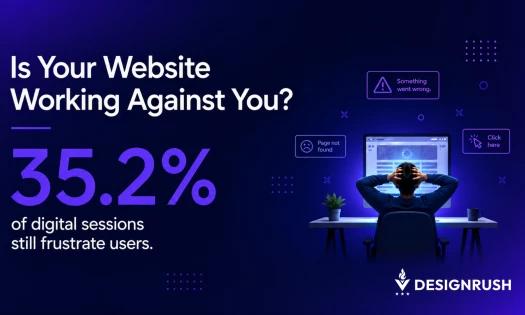
According to Conviva,91% of consumers experienced frustrating digital service issues in the past year.
And so, even a 1% increase in poor engagements can lead to users spending 42% less time on a digital platform.
“This frustration has led to tangible behaviors that brands simply cannot afford to ignore, and evidence that more needs to be done to bolster the digital experience,” explains Vincent Mazza, Managing Partner at eDesign Interactive.
After a poor experience:
- 55% abandon carts
- 50% switch to competitors
- 39% cancel subscriptions
The good news? Keeping users engaged is not a far-off dream.
Brands that boast a 99% digital satisfaction rate see users spending 6.5 times more time online.
And in 2026, that extra time could mean the difference between a bounce and a brand loyalist.
What Your Brand Can Do Differently
Users rarely wait around for a slow site to catch up.
When performance falls short, it shapes the entire perception of your brand from the very first click.
That’s why leading brands are rethinking four key areas, starting with speed.
1. Prioritize Performance Above All Else
Speed and technical efficiency must form the backbone of every digital experience, while designs should be optimized with a mobile-first strategy.
The integration of Core Web Vitals and SEO-friendly designs will result in speed and eye-catching aesthetics while increasing visibility in search engines.
The most effective approach includes:
- Using automated image optimization software to reduce file sizes and convert them into WebP and AVIF formats to enhance loading performance.
- Hosting websites on reliable cloud networks to ensure speed, scalability, and security.
- Building clean, lightweight layouts and limiting unnecessary plugins to optimize speed and stability.
2. Personalization Shapes Every Click
Users expect websites to respond in real-time while shaping content, offers, and navigation around their behavior.
To meet this, brands must ensure that every interaction feels relevant, intuitive, and personal without crossing privacy boundaries.
The key steps here include:
- Using customized headlines, CTAs, or content that reflects a user's past interactions or behavior.
- Introducing prompts, discounts, or offers at moments that feel instinctive, including personalized greetings to regular visitors and upsells to those who ditch their carts.
3. Motion With Purpose
Animations still have their place at the table, but should be used with more thought behind them.
In doing so, it reduces the cognitive load of the user and keeps them engaged.
Rather than flashy effects, designers should choose subtle and intentional movement that improves clarity and navigation.
This makes the user more connected to the interface.
Purposeful motion can be achieved by:
- Building motion with intention by using thoughtful transitions that guide users through the experience rather than distract them.
- Showcasing smooth, layered animations that create a more fluid, intuitive feel without overwhelming the interface.
- Adding depth with subtle 3D shifts and perspective-based movement to introduce dimension while maintaining performance and clarity.
- Applying light filters and blend effects selectively, which, when used with restraint, add texture and polish without visual noise.
4. AI As Your Critical Design Partner
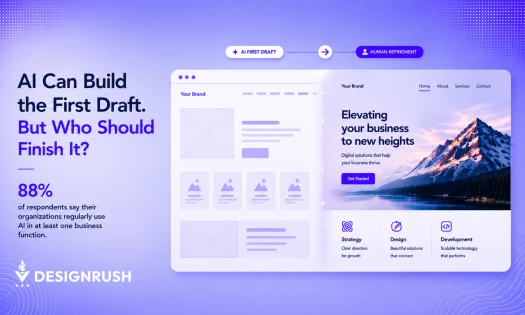
AI is no longer just a supportive tool, but has become a key player in the creative process.
It can be used as a design assistant to suggest accessibility improvements, optimize typography and color pallets, enhance layout, and even automate tests and recommend which designs perform best.
Brands are seeing results by:
- Using AI planning tools to generate full sitemaps and wireframes based on a creative brief.
These come complete with structured page layouts, tailored starter content, and styling aligned to the brand’s identity. - Relying on AI assistants to refine copy, adjust layouts, write or edit code, and build visual assets.
All of this can happen directly within the design environment, accelerating iteration. - Offloading repetitive tasks to intelligent agents that draft long-form content and bulk-optimize media for SEO and accessibility.
These systems also update metadata and handle routine site maintenance, freeing up teams for higher-impact work.
How Brands Can Succeed in 2026 and Beyond
This coming year will be shaped by brands that make a great user experience a core business purpose.
This can be achieved by focusing on making users feel understood and supported, so they can move through an experience without thinking twice.
“Great UX isn’t just good design; it’s a relationship,” concludes Nordstedt. “The brands that commit to evolving it over time are the ones that earn lasting loyalty.”
Companies that treat the digital experience as an evolving commitment, not a one-off project, will ultimately shape their success in 2026 and beyond.