
High-Performing Websites 2026: Key Findings
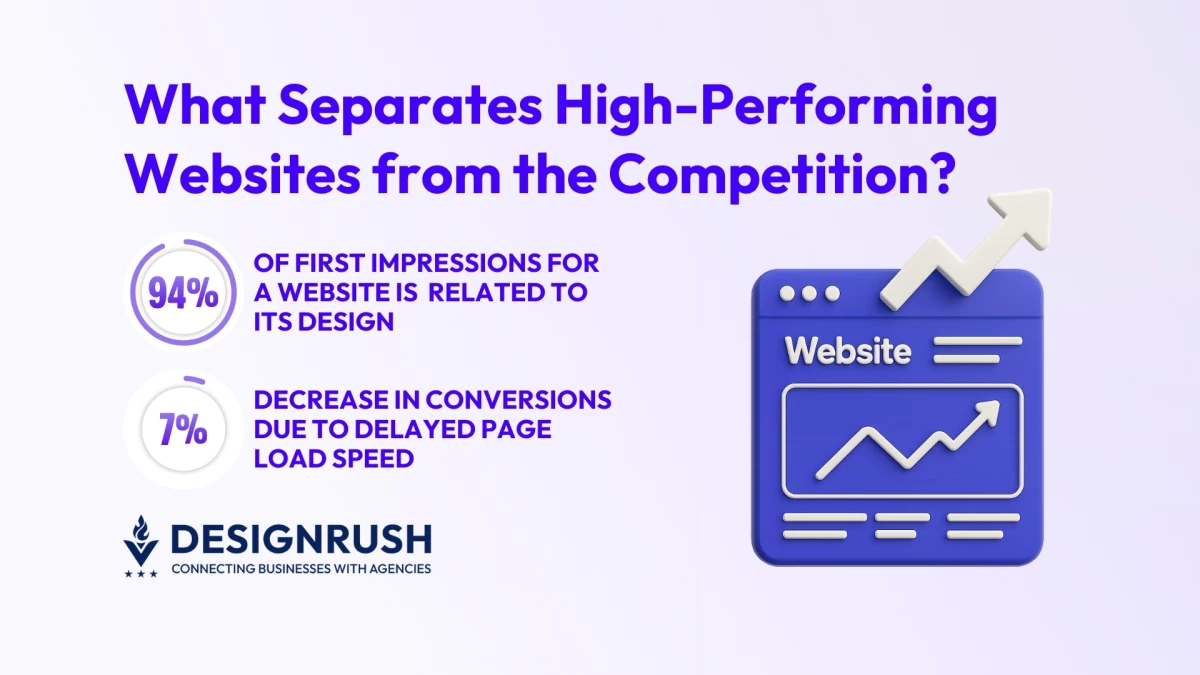
- 94% of first impressions are design-driven, calling for the need to invest in UX that immediately establishes trust and reduces bounce.
- Thoughtful UX and performance-focused architecture can boost conversions by up to 400%, guiding users smoothly toward action.
- One-second load delays reduce conversions by about 7%, making site speed and optimization a critical business priority.
94% of first impressions on a website are design-related, underscoring the importance of visual trust for user engagement.
Websites set to dominate in 2026 don’t rely on gimmicks.
Instead, they are built on three data-backed pillars: trust through design, speed and performance, and conversion-first architecture.
All while maintaining cohesive brand identity.
These traits are no longer optional; they are the baseline for digital success.
Editor's Note: This is a sponsored article created in partnership with eDesign Interactive.
Investing in a Redesign: What Companies Need
1. Design That Builds Trust in Milliseconds
First impressions are powerful, and data backs that.
In fact, users form an opinion about a site in as little as 0.05 seconds, while 75% of people judge a company’s credibility based on its website’s look.
For high-performing sites, clean layouts, intuitive navigation, and visual clarity right from the homepage are crucial to hook visitors from the get-go.
When they feel trust immediately, they’re more likely to stay and explore, and that dramatically reduces bounce.
“When users make decisions in milliseconds, design becomes a trust contract,” Jeff Nordstedt, Director of User Experience at eDesign Interactive, told DesignRush.
“If your layout overwhelms or confuses, you’ve already lost the moment that matters.”
Take, for example, eDesign Interactive’s work for Gummi Funmix, where the agency created a bold, fun visual that makes “every click feel like a party.”
The key here is simple: to be as eye-catching and convincing as you can, while staying true to your brand.
2. Speed and Performance: Conversion Killers or Enablers?
Speed is a business lever just as it is a user expectation.
According to Black Anchor’s design data, a one-second delay in page load time can slice off an estimated 7% of conversions.
Meanwhile, poor performance drives users away, with 53% of users abandoning mobile pages that load in more than three seconds.
Top-tier websites don’t accept these losses.
They optimize for fast load times, implement performance best practices (like optimizing above‑the-fold content and reducing render-blocking scripts), and treat speed as a foundational conversion driver rather than an afterthought.
eDesign Interactive stands behind this practice, reinforcing the importance of prioritizing website speed.
“Every delay erodes confidence, and every millisecond you save strengthens the path to conversion,” shared Jeff Nordstedt.
3. UX Designed for Conversion, Not Just Appearance
While good UX means looking clean and presentable, it’s also about guiding users to action.
Studies show that well-executed UX design can increase conversion rates by as much as 400%.
The best sites built for 2026 combine this with performance tuning: streamlined forms, clear calls to action, and fast-loading interactive elements.
They remove common friction points, making visitors more likely to complete desired actions.
Whether that’s signing up, buying, or requesting a quote.
eDesign Interactive understands that these moments only happen when UX reduces friction at every step.
“The difference between average UX and high-performing UX is intention. Every interaction should remove uncertainty and make the next step feel obvious,” Jeff Nordstedt, explained.
Why Brand Consistency Still Matters
When design and performance are strong, consistency becomes the final piece of the puzzle.
According to a PwC report, 32% of customers will abandon a brand after repeated digital experiences that feel inconsistent.
Top-performing sites express their brand identity not only visually but also through interaction patterns such as motion design, navigation, and content layout.
eDesign Interactive’s recent work for Ascendex is a clear example of how these can be integrated.
Even with just a two-week timeframe, the agency was able to build a fully functional landing page that leverages the company’s strengths and delivers a smooth user experience.
With that in mind, website owners must remember that every click reminds users who they’re engaging with.
Because that coherence strengthens trust, reduces cognitive load, and supports long-term engagement.
What This Means for Marketers and Design Teams
For companies planning a website redesign, especially with 2026 and beyond in mind, eDesign Interactive advises them to treat design as a strategic investment.
Sites must perform visually, load fast, and guide users toward conversion.
Because every second, every interaction matters.
With these three key pillars in mind, you begin to treat your website as a revenue engine rather than just a digital storefront.
And that’s the kind of win that delivers real ROI.