
MVP Mistakes: Key Findings
- Done right, an MVP can cut development costs by 13%, speed time-to-market by 17%, and improve efficiency by 19%.
- The biggest mistake is overloading version one; focus on one core problem and validate early.
- Move fast, but base every decision on real user insight and keep the product stable, usable, and valuable.
A minimum viable product is one of the most misused ideas in product management.
At its core, an MVP is the smallest possible effort that delivers the biggest insight into customer needs - as outlined in Forrester’s Minimum Viable Product Experiment Model.
When built right, it can cut development costs by 13%, speed up time-to-market by 17%, and improve efficiency by 19%, as reported in PwC’s Digital Product Development 2025 study.
But many teams still get it wrong.
In our interview, David Barlev, CEO and co-founder of Goji Labs, explains where teams go wrong and how to avoid the most common MVP misfires.

Who Is David Barlev?
David Barlev is the co-founder and CEO of Goji Labs, a digital product agency that helps teams go from “just an idea” to “actually launched.” Over the past decade, he’s helped build over 500 products across industries, guiding founders, nonprofits, and Fortune 500s alike. He’s also the guy who asks the hard questions early on - like, “Are we solving the right problem?” At Goji Labs, David leads a team of designers, strategists, and engineers who focus on clarity over chaos, usability over vanity, and results over hype.
Editor's Note: This is a sponsored article created in partnership with Goji Labs.
Goji Labs is a top digital product agency based in Los Angeles, specializing in app and software development, UX/UI design, and product strategy.
Goji Labs is proudly based in Los Angeles and partners with organizations like the World Health Organization and UCLA. But what drives the team most? Helping founders build products that actually work, not just look pretty on a pitch deck.
This experience shapes how they approach one of the most misunderstood concepts in product development: the MVP.
For Barlev, an MVP is a launchpad. When done well, it captures authentic user feedback and confirms whether you’re building something people actually need, and not just what you assume they do.
This practical approach helps startups avoid flying blind.
“A great MVP gives you real feedback from real users, so you’re building what people actually want, not just what you think they want,” he tells me.
And not just that, but getting the MVP stage right is crucial because first impressions matter.
“If the MVP misses the mark, you're not just wasting time; you’re burning trust and momentum.”
In other words, a poorly executed or overbuilt MVP can derail a venture before it even takes off.
However, moving fast can be risky. And with MVPs meant to validate ideas quickly, Barlev believes the key lies in staying focused.
The biggest MVP mistake startups make is cramming too much into the first version.
As he puts it, “MVP stands for Minimum Viable Product, not everything we’ve ever dreamed of in version one.”.
His take? Overloading your MVP can undermine its purpose and derail traction.
“Teams are launching quicker, but sometimes without a clear user need,” he says.
“Shiny tech is great, but fundamentals still win: Who’s it for? What problem does it solve?”
That’s where agencies like Goji Labs come in, keeping teams focused on solving one core problem effectively.
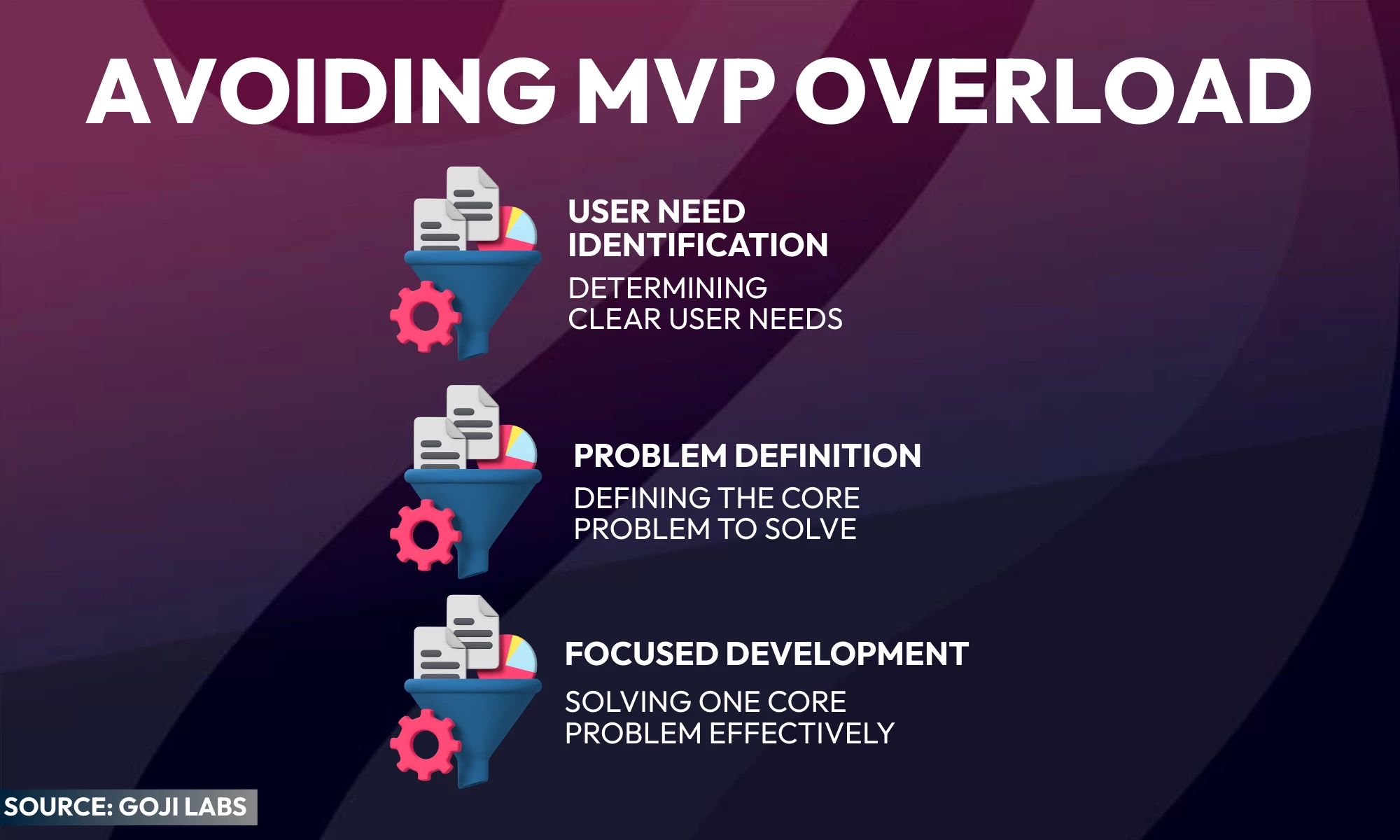
And it does so by focusing efforts on three steps:
- Starting with user research
- Validating assumptions early
- Staying focused on solving one pain point at a time
This approach anchors your MVP in real user needs rather than developer assumptions or flashy tech.
This drives every decision the team makes.
Lean in, talk to people, and listen before you build. It’s a proven way to keep MVPs focused, practical, and relevant.
Barlev tells it like it is:
“Deliver results, not buzzwords. Big clients want partners who listen well, communicate clearly, and ship quality - consistently,” Barlev says.
It’s not about flash. Clients want results built on process and real user insight.
With the right focus, moving fast doesn’t mean cutting corners. You can move fast and still do it right.
“Speed is fine; rushing is not. We move fast, but we don’t skip the parts that keep things stable, usable, and valuable,” he adds.
Here’s the bottom line for brands and agencies: MVPs stumble when teams overbuild or follow assumptions instead of real user needs.
Stick to one core problem, test early, and let user insight guide every choice.
Move fast - just don’t skip the stuff that makes your product stable, usable, and actually helpful.
MVP Mistakes & Fixes FAQs
Why do MVPs often fail?
MVPs often fail due to unvalidated assumptions and feature bloat, so teams often build for what they hope users want, not what they actually need.
How do I keep my MVP focused?
Anchor your MVP around one core user pain point, supported by user research and clear business goals. Avoid adding “nice‑to‑have” features too early.
What metrics validate an MVP’s success?
Track engagement, retention, and user feedback. If users return and recommend your product, it signals strong market fit and value.
Can speed and quality coexist in MVPs?
Yes, if speed is purposeful. Rapid development works, but only when paired with key steps like usability testing, user validation, and stable foundations.