
Enterprise Client Acquisition: Key Findings
- Clarity, collaboration, and execution are the three signals of a client relationship that’s set up for success.
- Enterprise deals are won long before the pitch. Through research, tailored value creation, and co-creation with client teams.
- Alignment and rituals build resilience. Discovery phases prevent missteps, and quarterly value reviews strengthen trust over time.
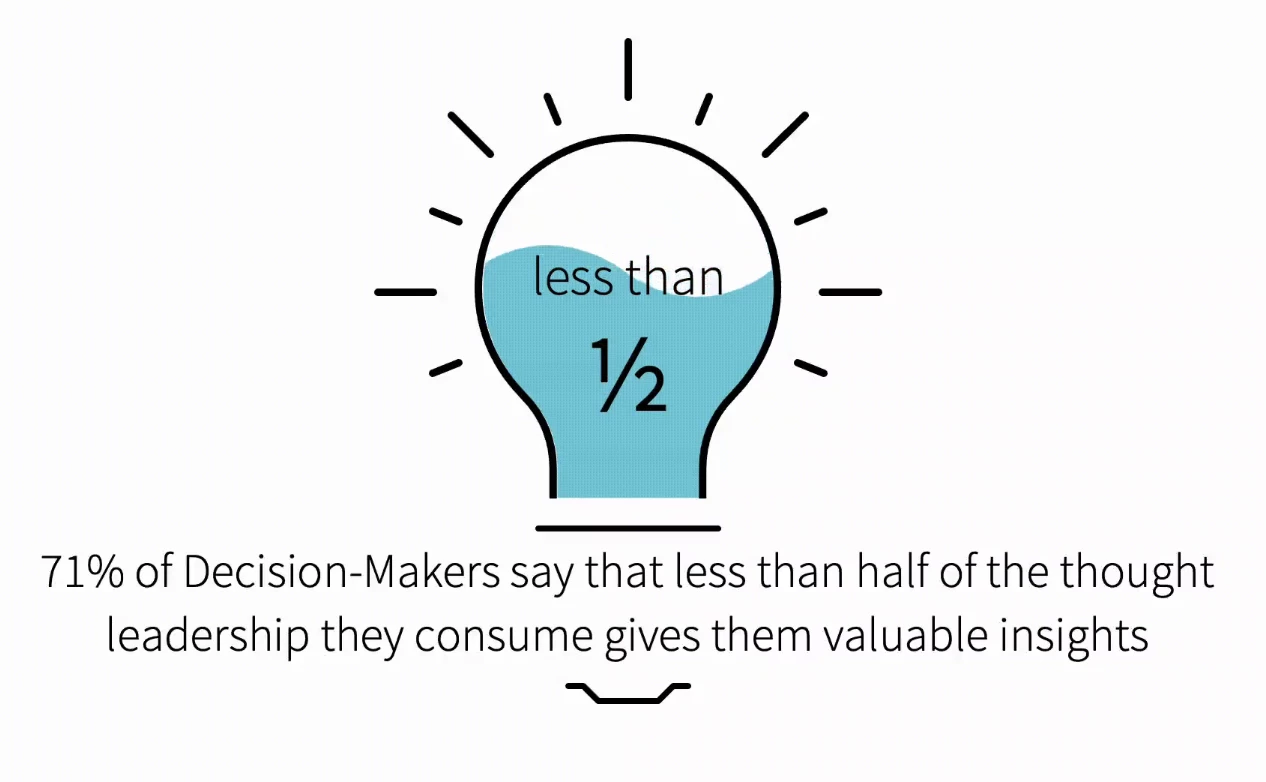
66% of global decision-makers say the pandemic led to a surge in content, according to the 2021 LinkedIn-Edelman B2B Thought Leadership Impact Report.
38% admit there’s now more than they can reasonably keep up with.
Despite this saturation, decision-makers are still paying attention: over half spend more than an hour a week consuming thought-leadership.
Meanwhile, 51% of C-level executives report dedicating more time to it now than before the pandemic.
Simply producing content or touting technology isn’t enough. Enterprise buyers are looking for partners who can cut through the noise with clarity, credibility, and an understanding of their business.
Companies like Datamatics focus on building trust through partnerships that emphasize alignment, clear objectives, and measurable outcomes, rather than just offering solutions.
In an exclusive DesignRush interview, Datamatics Head of Marketing Sumantra Mukherjee shared how his team evaluates clients, earns enterprise wins, and sustains partnerships that evolve with business needs.

Who is Sumantra Mukherjee?
Sumantra Mukherjee is the Head of Marketing at Datamatics Business Solutions and a seasoned growth strategist. With a career spanning B2C leaders like Airtel and Jio, and B2B tech innovators such as WhiteHat Jr. and Datamatics, he brings a rare blend of brand storytelling, buyer insight, and performance marketing. He’s known for treating go-to-market (GTM) as the operating system of a business, transforming marketing from a cost center into a predictable revenue engine.
Sumantra thrives in scaleups ready to sharpen their story, and in legacy brands seeking bold repositioning to stay relevant.
Mukherjee broke down the essentials of building and sustaining enterprise partnerships.
What Makes a Client Relationship Work
Strong client relationships tend to share three traits, according to Mukherjee.
1. Clarity of vision
Partnerships are most effective when a brand can define what success looks like in concrete, measurable business outcomes.
That level of clarity sets the stage for alignment from the start and ensures both sides are working toward the same objectives.
2. Openness to collaboration
Projects move faster and ideas get stronger when a client treats the agency as a true partner.
Collaboration also builds trust and makes it easier to adjust when market conditions change.
3. Commitment to execution
Mukherjee emphasizes that consistency and follow-through often make the difference between small gains and transformative results.
On the other hand, one early warning sign is misaligned expectations.
“If a prospective client is looking for immediate, dramatic results without investing in foundational work, such as accurate data, audience insights, or proper systems, it usually signals trouble ahead,” Mukherjee says.
This disconnect can quickly lead to frustration, because short-term fixes rarely deliver lasting impact without the right groundwork.
How Enterprise Clients Are Won
Securing an enterprise client rarely comes down to delivering the perfect pitch in a single meeting.
Success usually starts long before that, with research and preparation.
Studying industry shifts, competitor moves, and a prospect’s recent priorities allows the first conversation to feel informed and specific rather than generic.
Once the groundwork is in place, the focus turns to tailored value creation.
Many teams are finding success by presenting interactive scenarios that highlight likely ROI, outline timelines, and show how execution could unfold in practice.
“We also conduct collaborative sessions with the client teams, where we co-create an execution roadmap together. This approach not only ensures buy-in but also makes the client feel ownership over the solution,” Mukherjee explains.
This co-creation ensures stakeholders see their fingerprints on the plan, making it easier to secure alignment internally and sustain momentum after the contract is signed.
Ultimately, the most persuasive conversations also explain the “how.” And that’s by making execution feel tangible and achievable from the very start.
Making Complex Value Propositions Tangible
Abstract offerings like “intelligent BPM” often need to be translated into concrete business outcomes for different audiences.
The key is contextual storytelling: framing the same capability in terms that matter to each stakeholder.
“For a CMO, we emphasize faster go-to-market; for a VP Marketing, it’s about scalability. We support this with data-backed proof points, industry-specific case studies, and tailored demos that speak directly to their role’s priorities,” Mukherjee notes.
The broader takeaway: the same solution can mean different things to different decision-makers.
Anchoring value in the language of their priorities makes it easier for ideas to land.
Lessons from the Harder Projects
Not every client engagement runs smoothly. In one case, Mukherjee recalls internal misalignment across the client’s teams slowed execution and caused scope creep.
The experience reinforced a simple but crucial principle: alignment before execution.
To avoid similar challenges, he now builds in a discovery and alignment phase before projects begin.
By ensuring stakeholders agree on objectives, timelines, and metrics up front, teams can dramatically reduce friction and keep projects on track.
The lesson is widely applicable: investing in alignment early often saves time, cost, and frustration later.
Rituals That Build Long-Term Trust
Sustaining client relationships requires more than hitting KPIs. One practice Mukherjee highlights is the quarterly “value review.”
Unlike standard check-ins, these sessions take a step back to evaluate the bigger picture.
“We walk them through what’s working, where we see opportunities for improvement, and where we can push the needle even further,” he says.
These reviews create space for open dialogue, reinforce transparency, and keep both sides focused on outcomes that matter.
They also naturally open the door to deeper collaboration, since clients can clearly see the impact of the work over time.
For any B2B leader, the lesson is clear: build rituals that go beyond reporting.
Conversations about long-term value are what strengthen trust and sustain partnerships.
Enterprise Client Acquisition FAQs
Why is alignment before execution so important?
Without stakeholder alignment on goals, timelines, and metrics, projects often suffer from scope creep and delays. Building in a discovery phase up front prevents missteps and sets projects on a smoother path.
How can complex value propositions be communicated effectively?
Mukherjee emphasizes contextual storytelling. The same solution should be framed differently depending on who’s listening. For example, a faster go-to-market for a CMO or scalability for a VP of Marketing.
What role do reviews play in sustaining long-term client partnerships?
Quarterly “value reviews” give teams a chance to step back from KPIs and focus on the bigger picture. These sessions foster transparency, highlight impact, and naturally lead to deeper collaboration over time.
What’s the biggest red flag in a potential client engagement?
Expecting dramatic results without investing in foundational work. Misaligned expectations around data, systems, or timelines often lead to friction and disappointment.