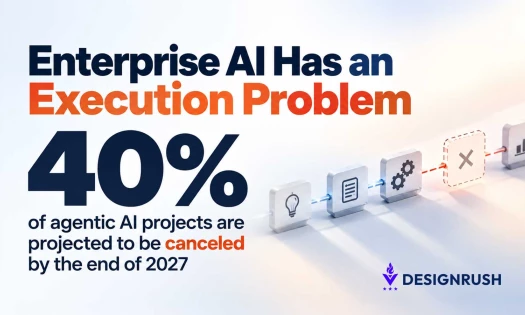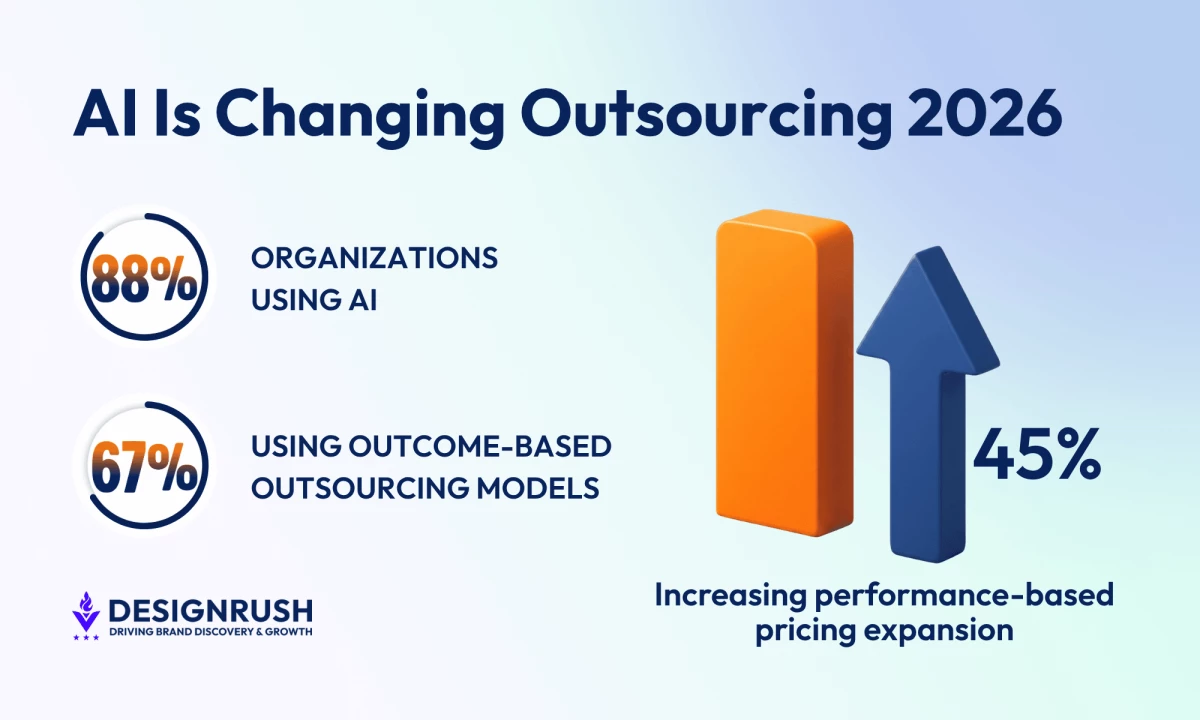

Eighty-eight percent of organizations now use AI regularly in at least one business function, according to McKinsey’s State of AI in 2025 report.
That adoption level should mean smoother operations. For most companies, it hasn’t.
PwC’s 2026 U.S. Digital Trends in Operations Survey found that 89% of operations leaders say their technology investments haven’t fully delivered expected results.
Only 27% have fully embedded an AI strategy across business units.
This indicates that attention has moved from AI adoption to whether it delivers consistent results in day-to-day operations.
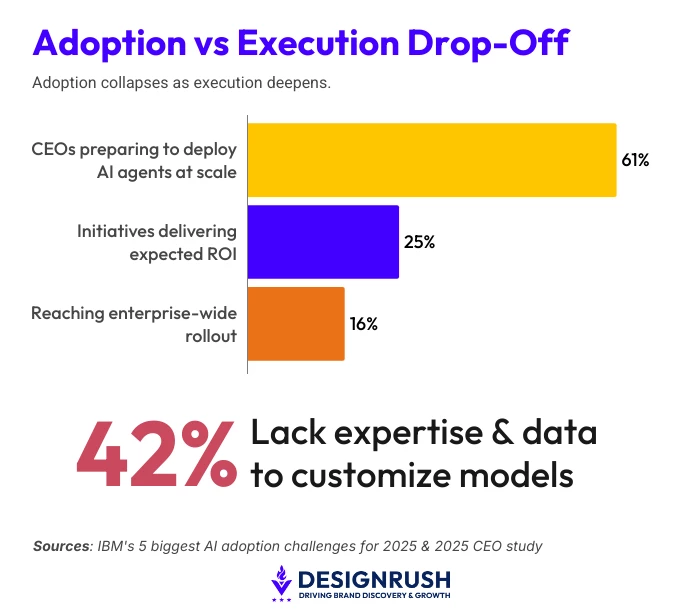
IBM’s 2025 CEO Study adds that 61% of CEOs plan to deploy AI agents at scale, but only 25% of initiatives deliver expected ROI, and just 16% reach enterprise-wide rollout.
So, the gap between adoption and delivery is where pressure builds, and that pressure doesn’t stay inside the company.
It moves into the partner relationships that companies rely on to keep operations running.
“Systems can look ready on paper. The real test is what happens when they meet live customer expectations; volume spikes, handoff failures, and edge cases that weren’t in the playbook,” says Funmi Mide-Ajala, Director of Customer Support & Digital Operations at Hugo Inc.
Hugo builds and manages outsourced customer support and digital operations teams that operate directly within client workflows, not alongside them.
The Barriers Are Operational
AI’s expansion across functions is happening faster than most internal teams can absorb.
Forty-two percent of organizations cite lack of expertise as a barrier to scaling AI, while another 42% point to data limitations, according to another IBM study.
These are operational problems that don’t resolve themselves once the tools are deployed.
That reality is driving a structural shift in how outsourcing is used.
Sixty-seven percent of companies now use outcome-based outsourcing models, according to Deloitte.
Instead of paying external partners to complete tasks, companies tie them directly to performance, measured by what the work produces, and not how many hours it takes.
Forrester’s 2025 State of Services report shows the same direction.
About 45% of service decision-makers are expanding performance-based pricing.
Meanwhile, 47% prioritize trust when selecting providers. And more than half hold monthly or quarterly reviews with partners to track results against operational targets.
"The question clients ask has changed. It used to be: 'Can you handle this volume?' Now it’s: 'Can you hold performance while we scale, without us having to manage every step of it?'” Mide-Ajala says.
Hugo’s own results align with what the data shows across the sector.
Its teams reduced client support response timesfrom over 72 hours to under 2 minutes while maintaining a 97% satisfaction rate, spanning onboarding, catalog management, and self-service systems.
That improvement came from embedding execution inside live systems, not from adding tools.
The Old Outsourcing Model Doesn't Work Anymore
The traditional outsourcing model drew a clear line: internal teams owned the work; external partners handled overflow or specialized tasks.
That line is disappearing.
Deloitte's 2025 Global Business Services survey found that 50% of organizations are expanding their operational footprints to support delivery requirements, while 58% are actively scaling generative AI initiatives.
"The clients who get the most out of this model are the ones who stop treating the partner relationship as a procurement decision and start treating it as an operating decision.
"Who owns what inside the workflow? What does good look like on a Tuesday at 3 p.m., not just at the quarterly review?" Mide-Ajala says.
Internal teams stay closer to planning and direction while external partners carry the operations.
Success is determined by whether it moves through live systems reliably, not by whether it appears in a deliverables log.
How to Structure Outsourcing and AI for Execution at Scale
The adjustment comes down to how partnerships are structured, managed, and measured:
- Evaluate partners on how performance holds under real conditions. Volume spikes, system failures, unexpected demand.
- Move contracts toward outcomes. Activity-based pricing creates the wrong incentives. Performance-based models align partner accountability with business results.
- Bring partners into live systems early. Partners embedded in workflows from the start build operational understanding that handover documents can't replicate.
- Track performance in real time, not retrospectively. Monthly reviews catch problems after damage is done, but continuous visibility lets teams correct before issues compound.
AI adoption isn't slowing down, and neither is the gap between organizations that can execute at scale and those that can't.
Companies improving outcomes build operations that hold under real conditions, internally and externally, instead of relying on ideal scenarios.