
Only 52% of mobile websites pass all three Core Web Vitals as of April 2026, according to HTTP Archive CrUX data. For page load speed alone, only 64.5% make the cut.
As a whole, mobile improved from 39% to 52% over the last three years.
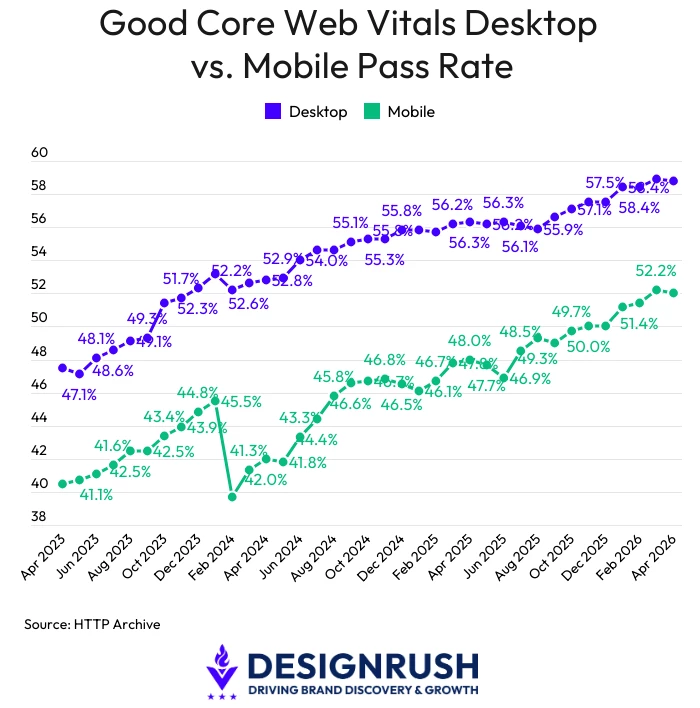 Progress is real, but mobile sites still fall short of Core Web Vitals standards.
That’s a problem since Core Web Vitals is a significant ranking factor for Google. Sites that fall short rank below competitors that score higher.
But why do nearly half of all mobile sites still fail to pass all three Core Web Vitals?
For the most part, it all boils down poor foundational design decisions that impact page load speed, UX, and site architecture.
Speed Is the First Filter
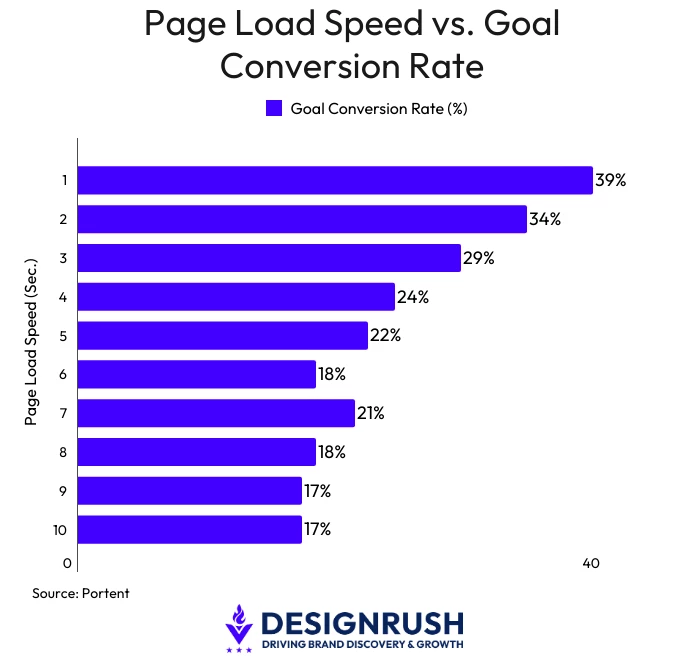
Sites that load in a second convert at nearly 40%, and when it comes to a small business site, that gap in conversion rate is the difference between a lead and a bounce.
That rate drops to less than 1% at five seconds according to Portent's analysis of 100 million pageviews across B2B and B2C websites.
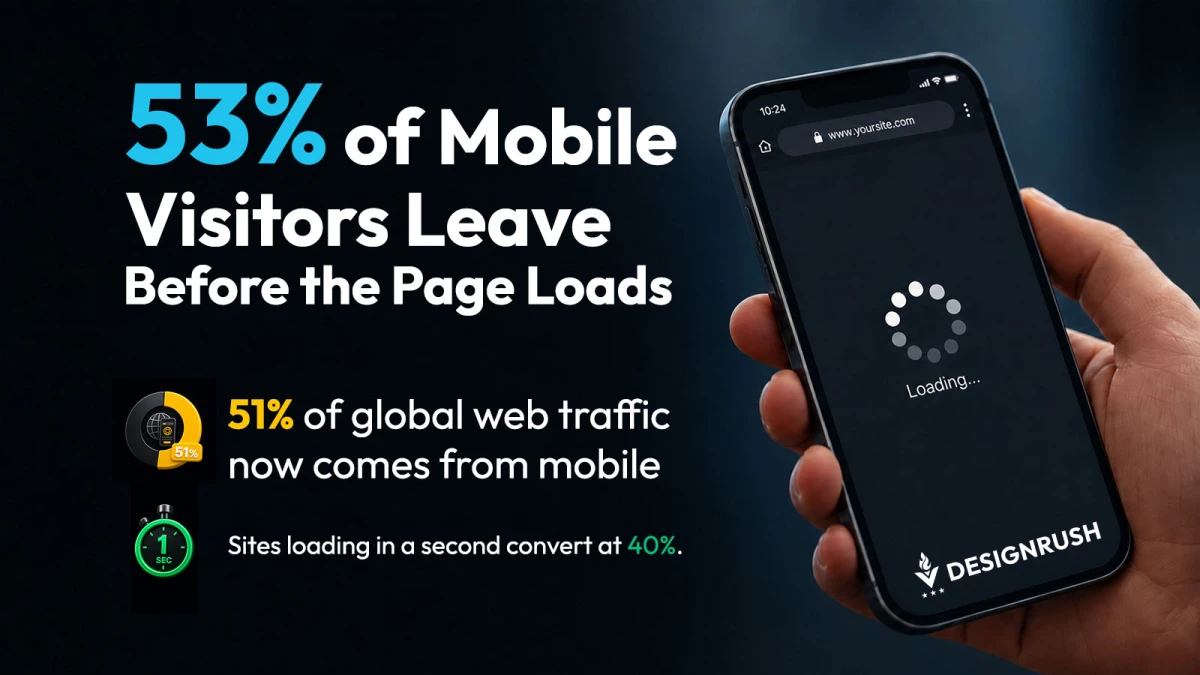
 The abandonment rate for mobile pages that take longer than three seconds to load is 53%, according to Google's own data.
Together, those numbers describe the same visitor who left before the page finished loading.
Sierra Goldstein, founder and CEO of Market Minds Creative, points to reasons why some sites struggle with page load speeds.
"Some of the sites we audit have uncompressed images and scripts loading before the visitor sees anything useful. Fix those two things, and a four-second page can load in under two seconds," she says.
What does this fix look like?
Convert .jpg and other image formats to WebP and compressing these images before upload produces measurable speed gains on its own.
Mobile UX Is Where Most Small Business Sites Break
Mobile UX is another factor that brands and business owners overlook when making design decisions.
This often leads to the many usability issues that plague mobile sites, including:
- Text too small to read without zooming
- Buttons too close to tap accurately
- Forms that require horizontal scrolling
For example, every mobile visit is made more difficult by buttons and links sized for mouse clicks, which often fall short of the 44x44-pixel minimum Google recommends for touch targets.
And when users can’t get a mobile site to work, they won’t hesitate to leave.
So instead of funneling potential customers down your pipeline, a poor mobile site funnels potential customers towards your competitors.
Given that mobile sites 51% of global web traffic as of May 2026, that means brands are wasting ad and web maintenance budgets to benefit someone else.
 According to Goldstein, the quickest way to see if a mobile website offers a poor experience to customers is to actually use the site.
"Load your own contact form on a phone and try to fill it out. Whatever frustrates you is frustrating your customers too," Goldstein says.
Site Architecture Decides What Google Finds
Page speed and mobile usability cater to the needs of users.
On the other hand, site architecture, or how a website's pages are organized, structured, and linked together, caters to the needs of search engines.
Crawlers read site architecture to quickly figure out important details about a business, such as what it sells, what time it operates, where it’s located, and more.
In the absence of clear architecture, consistent headers, and internal links, Google gets an incomplete picture, making the business difficult to properly recommend the business to users.
This is particularly costly in local search, where Google uses site architecture and site performance as direct tiebreakers.
That means a competitor with a clearer, faster, better-structured site is capable of outranking a business with stronger brand recognition but weaker technical foundations.
It is what Goldstein repeatedly sees when Market Minds Creative audits small-business sites.
"A business can have years of operation, real reviews, and real reputation. That history means little to Google," she notes.
“Site performance outweighs brand history in local search, and a newer competitor with a faster, better-structured site ranks above them on every term that matters.”
Web Design That Google Can Read Is the Only Design That Counts
Standard SEO dashboards track rankings and clicks, but the competitive distance created by poor build decisions stays invisible.
A small business owner sees traffic numbers. What a faster, better-structured site would generate instead remains out of frame.
AI search platforms like ChatGPT, Perplexity, and Google AI Overviews prefer to cite pages that load quickly and carry clean site architecture.
The same build decisions that cost organic rankings are now filtering small businesses out of AI-generated recommendations too.
It is a revenue problem with a technical cause, and the tools most small business owners use to measure performance are not built to surface it.
Overall, this means recovering search ground in 2026 starts with auditing the site as a performance signal rather than a design artifact.