
For years, the main playbook for the search industry was to improve rankings, increase traffic, and convert more visitors.
But experts at SEO Week 2026, held from April 27 to 30 in New York City, suggested that playbook is no longer enough.
View this post on Instagram
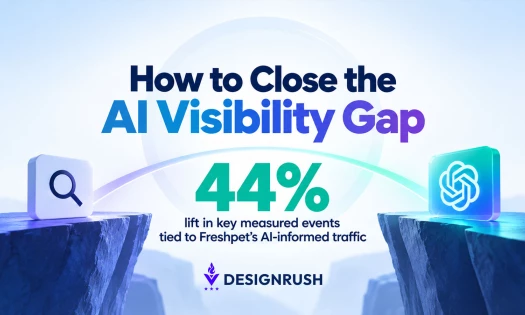
Across the many sessions held over three days, the main message was that search has become a hybrid ecosystem where traditional rankings coexist with AI search platforms that increasingly answer users' questions before they ever click a link.
That may seem obvious as people become more used to the presence of AI Overviews, ChatGPT, or Claude.
But we're all beginning to understand the true consequences of that familiarity, and how brands and marketers should actually adapt their strategies.
Key Lessons From SEO Week 2026
1. Search Is Now a Hybrid Ecosystem
Perhaps the clearest message from SEO Week was that search is no longer confined to Google's familiar list of blue links.
Today's customer might begin with an AI Overview, continue the conversation in ChatGPT, compare recommendations through Perplexity, and only later visit a website directly.
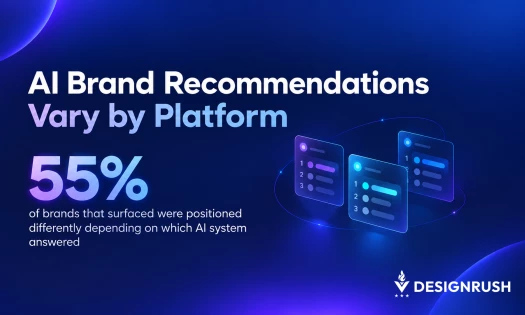
Several speakers described this reality as Hybrid Engine Optimization, arguing that businesses need to stop treating AI search and traditional SEO as separate initiatives.
As such, teams must rethink ownership.
Rather than dividing responsibility across different teams, speakers recommended assigning accountable leaders, such as Relevance Engineers or Hybrid Engine Optimization leads, who can oversee visibility across every discovery platform.
2. Rankings Are No Longer the Ultimate Scoreboard
AI-assisted search has made measuring SEO success more complicated.
In the past, rankings were the most important metric since better rankings meant more traffic, and more traffic created more opportunities for conversions.
But as users receive answers directly from AI systems, fewer informational searches reach company websites.
And in many cases, the remaining visitors arrive with clearer intent and a greater likelihood of converting.
That is why several speakers urged marketers to shift success metrics to revenue and post‑click impact.
3. Eligibility Comes Before Optimization
Many conversations focused on sophisticated AI strategies.
But speakers repeatedly reminded attendees that none of those efforts matter if search engines and AI systems cannot reliably access a website.
Technical fundamentals like crawlability, rendering, indexing, accessibility, and healthy server responses still determine whether content can even enter the pool of information available for retrieval.
Several presenters also highlighted the importance of monitoring bot health, minimizing 4xx and 499 errors, and allowing reputable AI crawlers to access public content.
4. AI Rewards Information That Is Easy to Retrieve
AI systems don't evaluate content the same way that humans do. They identify passages that answer specific questions with confidence, making structure and clarity increasingly important.
Rather than encouraging businesses to publish more content, speakers recommended creating information that is easier to extract, verify, and reference.
The clearer and more trustworthy the information, the more likely AI systems are to surface it.
5. Strong Brands Are Easier for AI to Understand
Rather than viewing brands as collections of optimized pages, several speakers described them as identifiable entities (centroid) within AI's understanding of the web.
In practical terms, businesses should aim to present a consistent identity wherever they appear online.
After all, to be retrieved, marketers should reduce semantic drift, standardize entities/knowledge graphs/schema, and align the centroid with intended positioning.
How Businesses Can Apply These Lessons
The lessons from SEO Week 2026 clearly point to a massive redistribution of search demand. And external research backs this up.
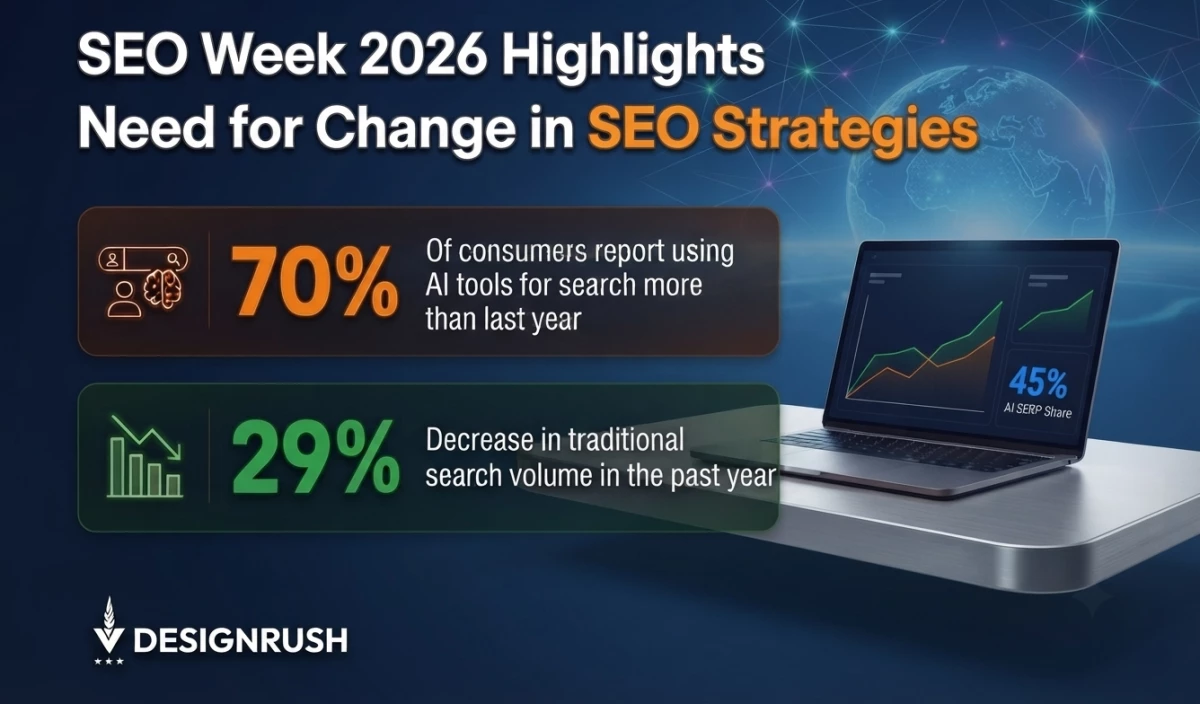
Traditional search volume has declined by 29%, according to a Search Engine Land report on a recent large-scale study that analyzed over a million high-volume keywords.
But interestingly, while 70% of consumers report using AI more, only 17% say they use traditional search less.
This means that search behavior is splitting.
AI now takes care of the informational, top-of-funnel queries. Meanwhile, traditional search continues to play a critical role in navigational and transactional intent, where users are closer to making decisions.
According to David Malmborg, VP of Sales and Strategy at Boostability, the current state of search requires marketers to adopt a less siloed approach to SEO.
"Optimization can no longer be an isolated tactical channel responsibility," Malmborg says. "It requires an organizational shift in how a brand coordinates data, engineering, trust, and editorial."
In practice, teams should start:
1. Shift the Focus From Traffic to Revenue Per Session
As AI platforms answer more informational queries directly, the traffic that still reaches a website is often further along in the buying journey.
"Teams shouldn't panic because organic traffic drops 20 or 30 percent," Malmborg says.
"The more important question is whether the visitors who still arrive are generating more revenue. If fewer sessions produce more business, the strategy is moving in the right direction."
He recommends connecting Google Analytics 4 with CRM data to monitor Revenue Per Session and Conversion Rate by Channel.
Looking at profitability instead of traffic volume provides a clearer picture of search performance and helps businesses avoid optimizing for vanity metrics.
2. Rebuild Attribution Around Modern Search Journeys
Customer journeys have become increasingly fragmented.
A buyer might first encounter a company through ChatGPT, verify its credibility on LinkedIn, search for the brand on Google several days later, and finally convert through a direct visit.
Traditional last-click attribution captures only the final interaction, overlooking the many touchpoints that influenced the decision.
This is why Malmborg encourages search marketers to move away from archaic "last-click" organic attribution.
"Instead, reporting must utilize GA4's data-driven attribution models to prove how organic and AI-driven content assists at different stages of the funnel," he says.
"The focus must be on pipeline contribution."
3. Replace Bounce Rate With Engagement Metrics
Legacy engagement metrics are becoming less reliable as AI changes user behavior.
Someone who lands on a page from an AI Overview may quickly find the information they need before moving to another stage of their buying journey.
Judging that visit solely by bounce rate can create a misleading picture of performance.
"Legacy metrics like bounce rate are increasingly irrelevant," Malmborg says.
"If a user clicks from an AI Overview, gets exactly what they need in 15 seconds, and leaves, that’s a successful interaction, not a failure."
As such, teams should lean into GA4’s Engaged Sessions metric to understand if users are actually interacting with high-value conversion elements (pricing tables, demo forms, gated assets) rather than just looking at time-on-page.
4. Measure AI Visibility Alongside Organic Performance
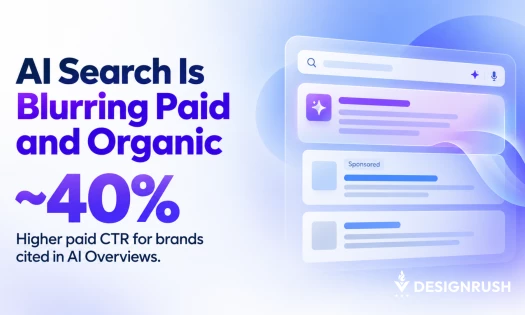
Google’s AI Overviews now appear on roughly 48% of all tracked search queries.
And this number is heavily accelerating in highly commercial sectors like B2B Tech, Healthcare, and Insurance.
When an AI Overview is triggered on a SERP, traditional organic click-through rates plummet by 61%, per a Search Engine Journal report.
Because of this, marketers must track two interdependent variables:
- AIO Appearance Rate: How often an AI Overview triggers for your target keyword set.
- Citation Rate: How often your specific URL is selected as a reference link within that AI Overview block.
Bring Search Disciplines Together
Taken individually, each of these recommendations addresses a different part of the search journey. Together, they point toward a larger shift in how businesses should approach visibility.
Businesses don't have the luxury of optimizing for Google one way and AI another," Malmborg says.
"Brands should build systems that make them discoverable wherever customers search, whether that's a traditional results page or an AI-generated response."
This is why Boostability refined its Be Found Framework (BFF) around that principle.
Instead of viewing search as a single channel, the framework organizes visibility into four interconnected disciplines that reinforce one another:
- SEO builds the technical and content foundations that help search engines crawl, index, and rank a website.
- GEO focuses on making content easier for generative AI platforms to retrieve, understand, and cite in their responses.
- SXO improves the search experience by aligning content, site structure, and user experience with visitor intent after discovery.
- AIO evaluates how AI systems interact with a website so businesses can identify barriers that prevent AI from accessing, interpreting, or acting on their content.
"These aren't separate playbooks," Malmborg says.
"They're overlapping layers of the same visibility strategy. Businesses that continue treating SEO and AI optimization as competing priorities are solving yesterday's problem."
As AI-assisted search continues to evolve, frameworks like BFF aim to give organizations a more holistic way to measure and improve discoverability across both traditional search engines and emerging AI platforms.
The Future of Search Requires a Unified Strategy
The future of search won't be shaped by a single algorithm, platform, or optimization technique.
As consumers move seamlessly between search engines, AI assistants, and other discovery channels, businesses must do the same.
Moving beyond siloed SEO initiatives and treating visibility as a cross-functional effort that combines technical performance, content strategy, user experience, and brand authority.
That's why the organizations that build unified search strategies will be better equipped to earn trust, remain discoverable, and compete in an increasingly AI-driven search landscape.