
Most small business owners come to a web design project with a rough idea of what they want and almost no idea of what they need.
That gap is the whole reason discovery exists, and it's also the part of the process clients tend to undervalue until they're in the middle of it.
We've run close to 250 projects through this process at Doodle n Dash. The pattern repeats every time.
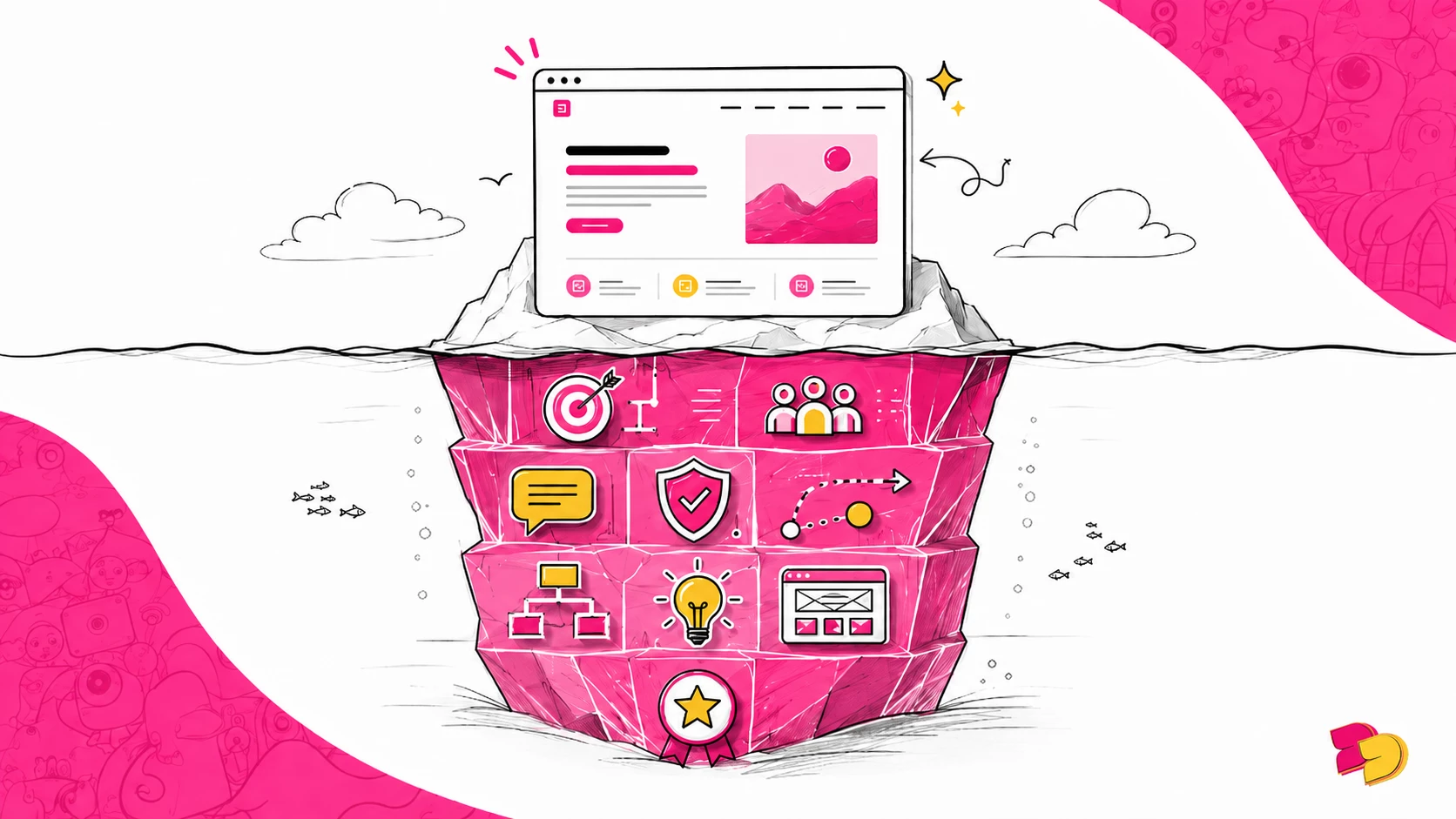
What shows on a homepage is built on everything discovery digs up first.
A client asks for a new homepage. Or says the site just looks outdated.
What they really need is someone asking questions they never thought to ask, then building a plan around whatever comes back.
Discovery Translates What Clients Really Mean
A client who runs a landscaping business or a dental practice doesn't think in terms of sitemaps, conversion paths, or CMS structure.
They think in terms of "I want more calls" or "I want people to trust us before they walk in."
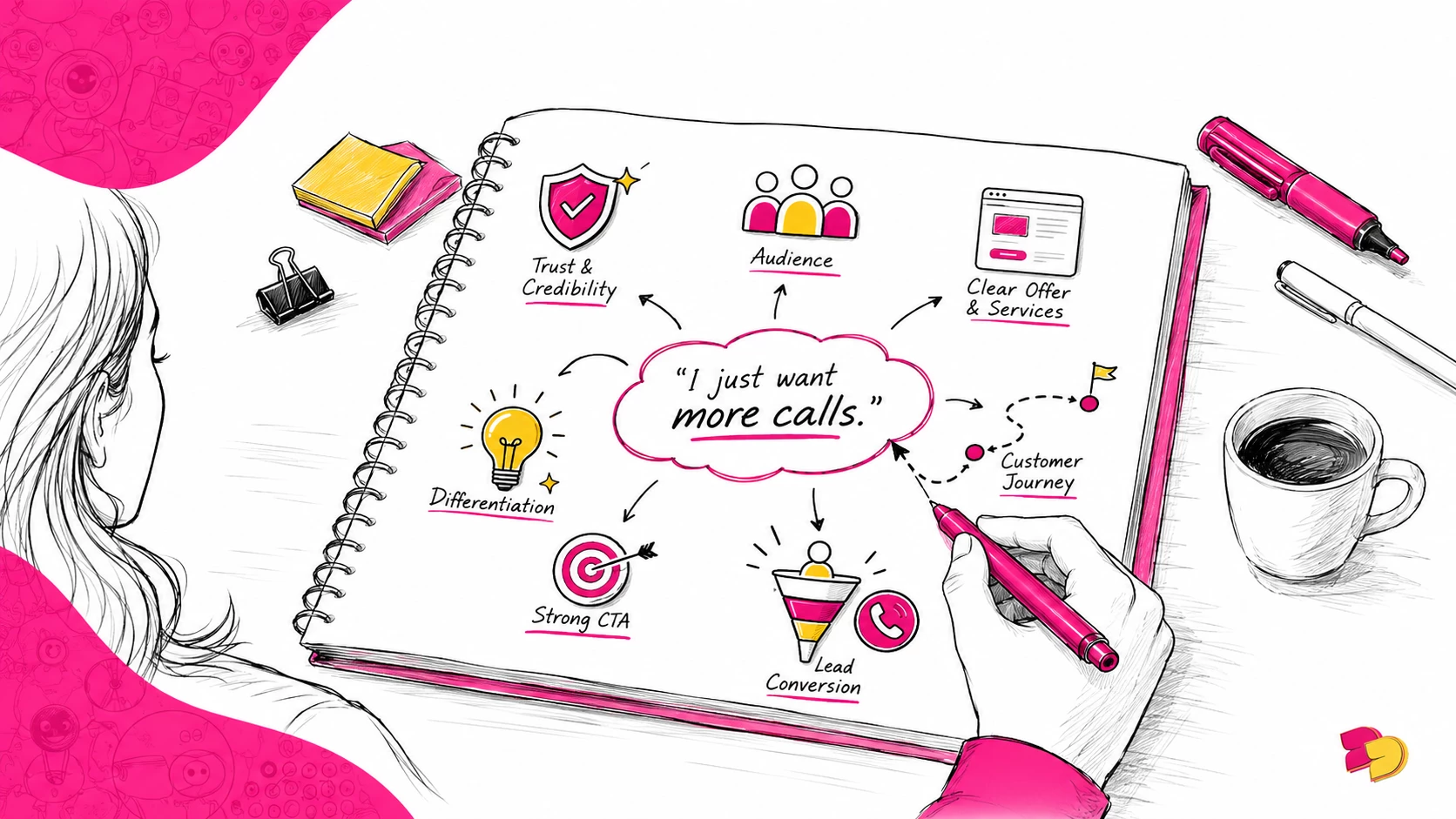
I just want more calls' turns into audience, trust, offer, CTA and more before design starts.
Our job in discovery is to take that and figure out what it requires on the technical side, without making the client sit through a lesson on web architecture they didn't ask for.
That means most of discovery is spent asking about the business, not the website. Who's the customer they're trying to reach.
What makes someone choose them over a competitor. What they're proud of that isn't showing up anywhere online yet.
The technical decisions get made on our end, based on those answers, not handed to the client as a menu of options they're not equipped to choose from.
Figuring Out How Much a Client Wants Explained
Not every client wants the same level of involvement, and assuming otherwise is its own mistake.
Some owners want to understand every decision. Others want to say what they're trying to achieve and trust us to handle the rest.
Early in discovery, we're paying attention to which one we're dealing with. The signal usually shows up in how a client answers the first few questions.
- Someone who starts asking about competitors' sites or has strong opinions about layout is telling you they want to be in the weeds with you.
- Someone who answers in business outcomes, more leads, more bookings, more credibility, is telling you they want the details handled and just want to see the result.
Getting that read right early saves everyone time later, because it tells us how much to explain versus how much to just do.
When the Original Request Needs to Change
Clients come to Doodle n Dash asking for the wrong thing more often than you'd think. Not because they're wrong about their business.
They're diagnosing a symptom without knowing the cause.
"A better homepage" often means clearer messaging. Likewise, "add more pages" often means the site has no real structure guiding a visitor toward anything.
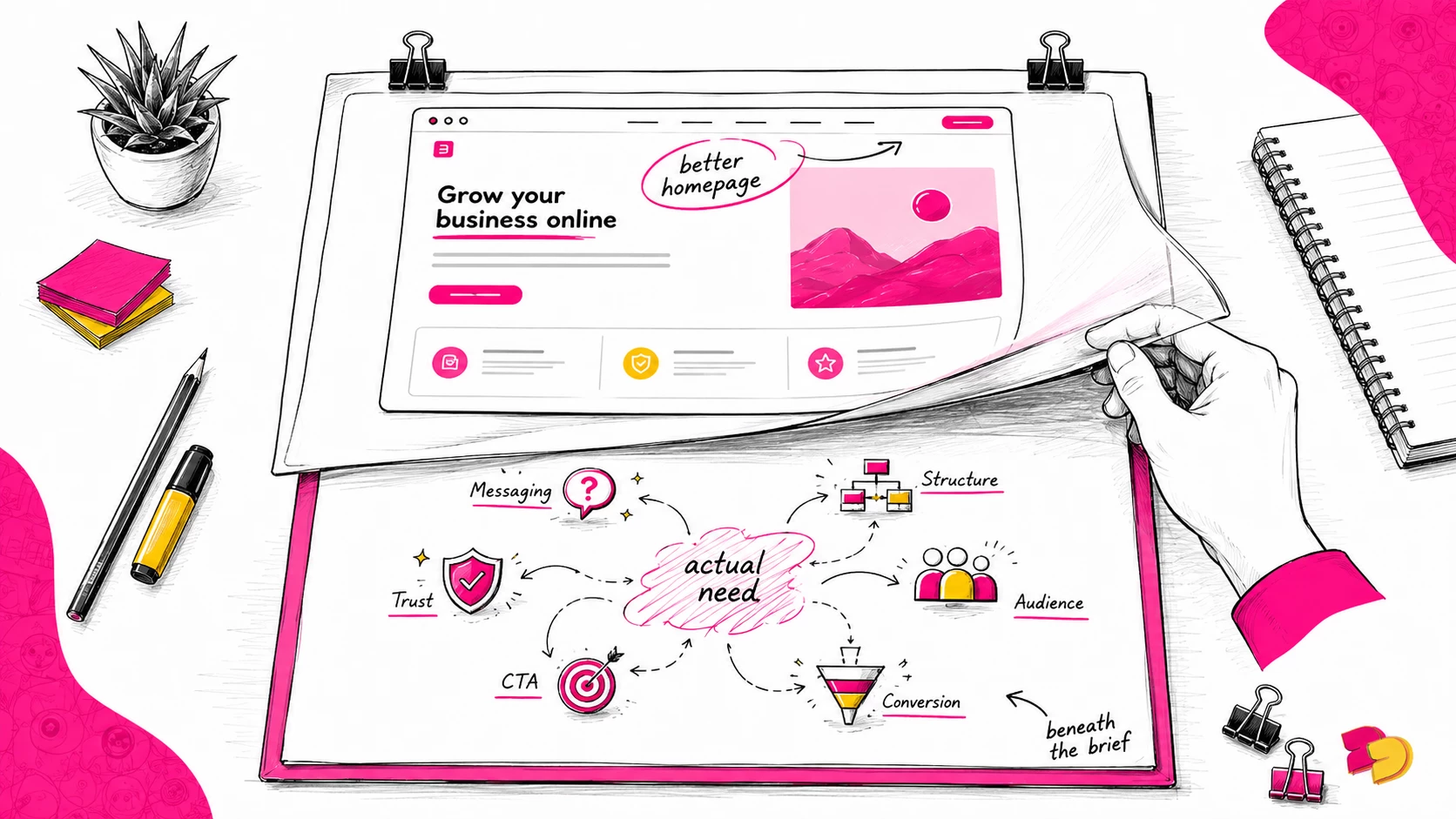
We don't override what a client asks for just because we think we know better.
But when discovery surfaces something that contradicts the original ask, we bring it back to the client directly.
Say a business claims fast turnaround as its differentiator but has never mentioned it anywhere on the site.
Discovery earns us something specific.
The standing to say "here's what you asked for, and here's what we found that might matter more," before design starts and changing course still costs nothing.
What Doesn't Get Compressed, Even Under Pressure
Some clients push to skip straight to design. Maybe a slow process burned them before. Maybe they just want to see something visual.
We understand the instinct, but there are a few things we don't compress no matter how much a client wants to speed up.
We won't skip understanding who the site is actually for. A homepage built for "everyone" speaks to no one. Fixing that after launch costs far more than catching it upfront.
We still ask what a client's business does day to day, every time. If we skip it, the assumptions show up later as an awkward copy or a confusing structure.
And we won't skip a real conversation about what success looks like for the client.
Because without that, we have no way to know if the finished site really solved their problem or just looked good in a first review.
Design built on top of skipped discovery tends to look fine and perform poorly. That's a hard thing to explain to a client who's eager to see mockups.
But it's also exactly the conversation worth having before design starts, not after a launch that underdelivers.
The Difference Between Real Discovery and a Checklist
A discovery call that just checks a box feels like an intake form. It gets through a list of questions, gets the answers on paper, and moves on.
A real discovery conversation feels more like a diagnosis. It follows up on answers that don't quite add up.
It notices when a client's tone changes talking about one part of their business versus another.
It asks a second question when the first answer was too general to build anything from.
We know discovery worked when a client walks away having learned something about their own business, not just having answered our questions.
"I hadn't thought about it that way" is usually the moment a project gets easier from there on out.
Everything after that point gets built on an answer that's true, not one that was assumed.