
Last June 4, Anthropic Co-Founder Jack Clark and Anthropic Institute Lead Marina Favaro published an article titled “When AI Builds Itself.”
The piece argued that the industry needs a coordinated mechanism to pause frontier AI development if systems reach a point where they can autonomously design and train their own successors.
Anthropic said that threshold has not been reached and may never will, but warns that it could arrive sooner than institutions are prepared for.
The overall warning from Anthropic can seem counterintuitive at first glance. After all, how could an AI company call for AI development to slow down?
But the answer lies in the pace of change itself. Anthropic's concern is that AI capabilities could advance faster than the institutions, safeguards, and infrastructure needed to manage them.
And though Anthropic focused on AI development, the heart of the issue also affects other industries.
In the marketing industry, for example, AI has made it possible to produce content, codebases, and web designs faster than ever.
For B2B brands, that can create a temptation to respond to every new search development with more articles, landing pages, and other AI-generated material.
But blindly relying on that strategy can create plenty of output without giving buyers more reasons to trust the company behind it.
This is why Paul J. Scott, chief website strategist and founder of GoingClear, says brands need to be careful about treating AI-generated content as a replacement for building that foundation.
“B2B purchases rarely happen after a single search. Buyers may spend months evaluating vendors, bringing colleagues into the process, comparing alternatives, and returning to a company's website before making a decision,” he says.
“That means they need to see evidence that a company understands their problems, has the right expertise, and can deliver what it promises. And everything on your website has to provide that evidence.”
Make The Website The B2B Credibility Anchor
B2B buyers use content to learn about a problem, but they use the entire website to evaluate the company behind that content.
A prospective customer may want to verify:
- Whether the company has experience solving similar problems
- Which industries or businesses it serves
- What its services actually include
- Whether its claims are supported by evidence
- What results it has achieved for other customers
- Whether its team has the expertise to deliver
Those answers need to exist somewhere beyond a steady stream of blog posts.
For example, case studies can demonstrate results, original research can establish expertise, and detailed service pages can explain capabilities.
“A strong website connects content to actual experience, capabilities, and results. That's what gives buyers something they can take back to the rest of the buying committee,” Scott says.
Strengthen The Technical Foundation Behind Search Visibility
That credibility also depends on whether the website makes its information easy to access and understand.
AI search gives marketers another reason to address the technical foundation of their sites instead of responding to every search change by producing more content.
According to experts at GoingClear, teams should pay attention to four areas in particular:
1. Improve site speed and Core Web Vitals
Slow pages and unstable layouts create friction for buyers and can weaken the experience surrounding otherwise useful content.
Improving loading performance, responsiveness, and visual stability helps ensure visitors can actually use the information the site provides.
2. Use structured data
Structured data gives search systems clearer information about organizations, products, services, and other entities.
For B2B websites with complex offerings, those signals can help systems understand what different pages represent and how information across the site relates to one another.
3. Keep site architecture clean
Service pages, case studies, research, product information, and supporting resources should have a logical relationship rather than being scattered across an overly complicated site structure.
This matters for AI-powered search because answer engines need accessible, understandable sources when deciding which information can support a response.
4. Check crawlability and indexation
Even strong content has little search value if search engines cannot properly crawl or index it.
Marketers should regularly check for blocked pages, broken internal links, incorrect canonical tags, duplicate content, and other technical issues that can prevent important pages from being discovered or indexed.
This is particularly important for large B2B websites, where valuable resources can easily become buried or disconnected from the rest of the site.
Slow The Content Race and Build Something Worth Citing
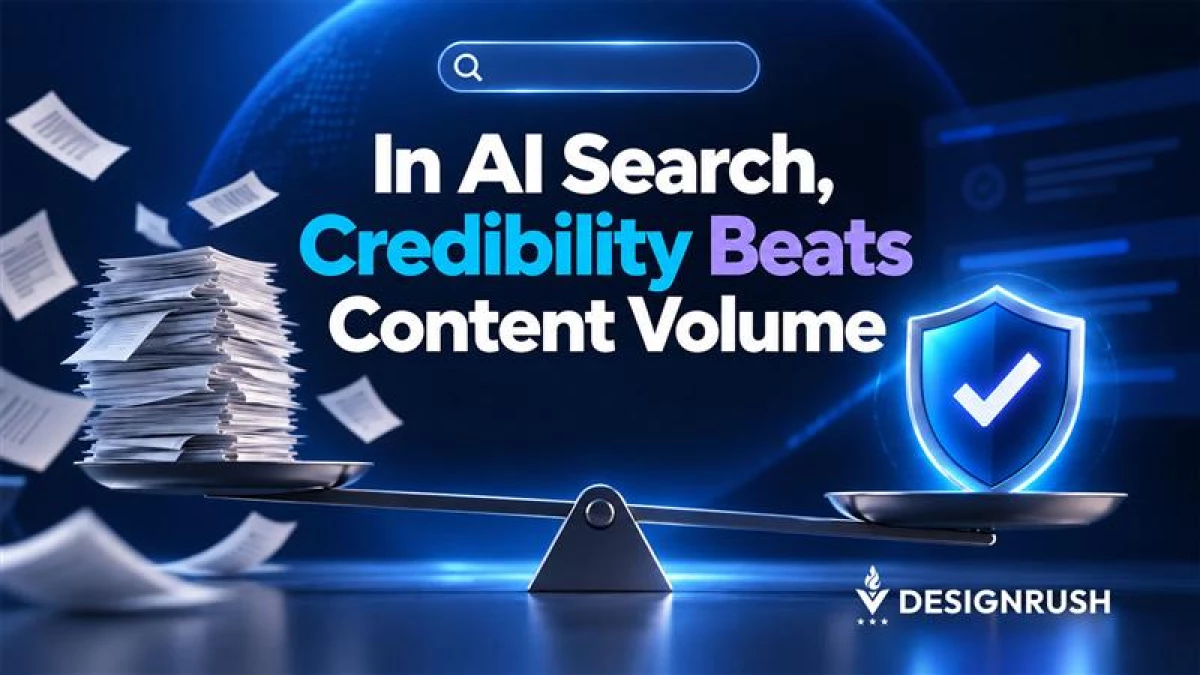
AI gives marketers a powerful and speedy production tool. But the ability to move faster doesn’t mean every part of the strategy should move at that pace.
After all, credibility can only really be built over time.
As such, B2B brands will have to build websites around the things that are difficult to manufacture at scale:
- Original expertise and firsthand experience
- Evidence-backed claims
- Strong technical performance
- Clear information architecture
- User-focused design
- Content that helps buyers make decisions
These investments matter throughout a B2B buying cycle, when different stakeholders may return to the website looking for different reasons to trust the company.