
UX Audits: Key Findings
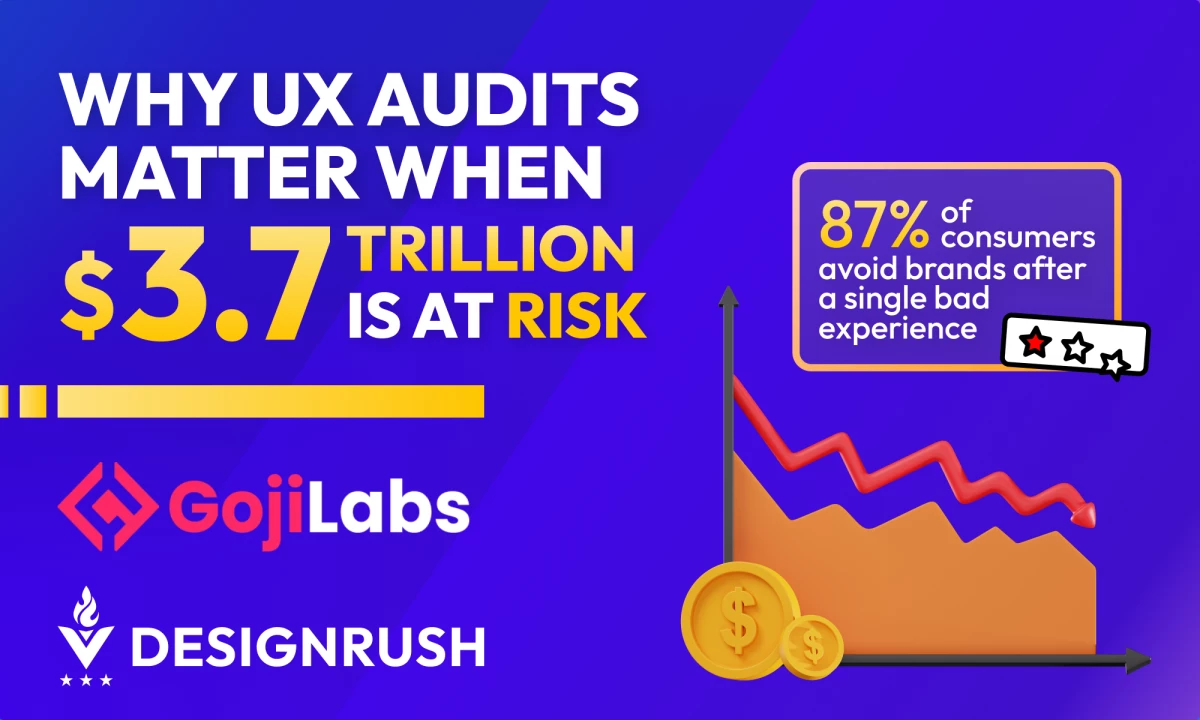
- 87% of consumers avoid brands after a single bad experience, putting $3.7 trillion in global sales at risk in 2024.
- UX audits reveal usability issues and friction points, helping teams prioritize fixes that improve engagement and conversions.
- Teams that make audits a regular part of their workflow turn insights into action and create products that perform.
Think about your last frustrating customer experience. How did it shape your opinion of that company?
One bad interaction is enough to drive people away: 87% of consumers say they’ll avoid a brand after a single negative experience, according to Accenture’s Customer Service on the Brink report.
Poor experiences don’t just hurt loyalty; they put $3.7 trillion in global sales at risk in 2024, including $1 trillion that consumers will stop spending entirely, a Qualtrics study found.
That’s why growing teams are turning to UX audits.
Goji Labs experts explain that audits surface hidden usability and accessibility issues, helping teams prioritize what really impacts performance and the user experience.
How UX Audits Identify and Solve Friction
Editor's Note: This is a sponsored article created in partnership with Goji Labs.
A UX audit is a systematic review of a digital product that identifies where users encounter friction and why.
It looks at usability flaws, design constraints, and other roadblocks in the user journey, before translating those findings into a practical plan for improvements that matter.
Instead of pushing teams toward a costly redesign, audits prioritize the fixes that deliver the most impact and keep the product effective and aligned with business objectives.
“When we run UX audits, the goal is not only to spot problems but to uncover why those problems happen and how they affect both users and the business.
The outcome should be a clear set of priorities that teams can act on quickly without getting lost in a full redesign,” said David Barlev, co-founder and CEO of Goji Labs.
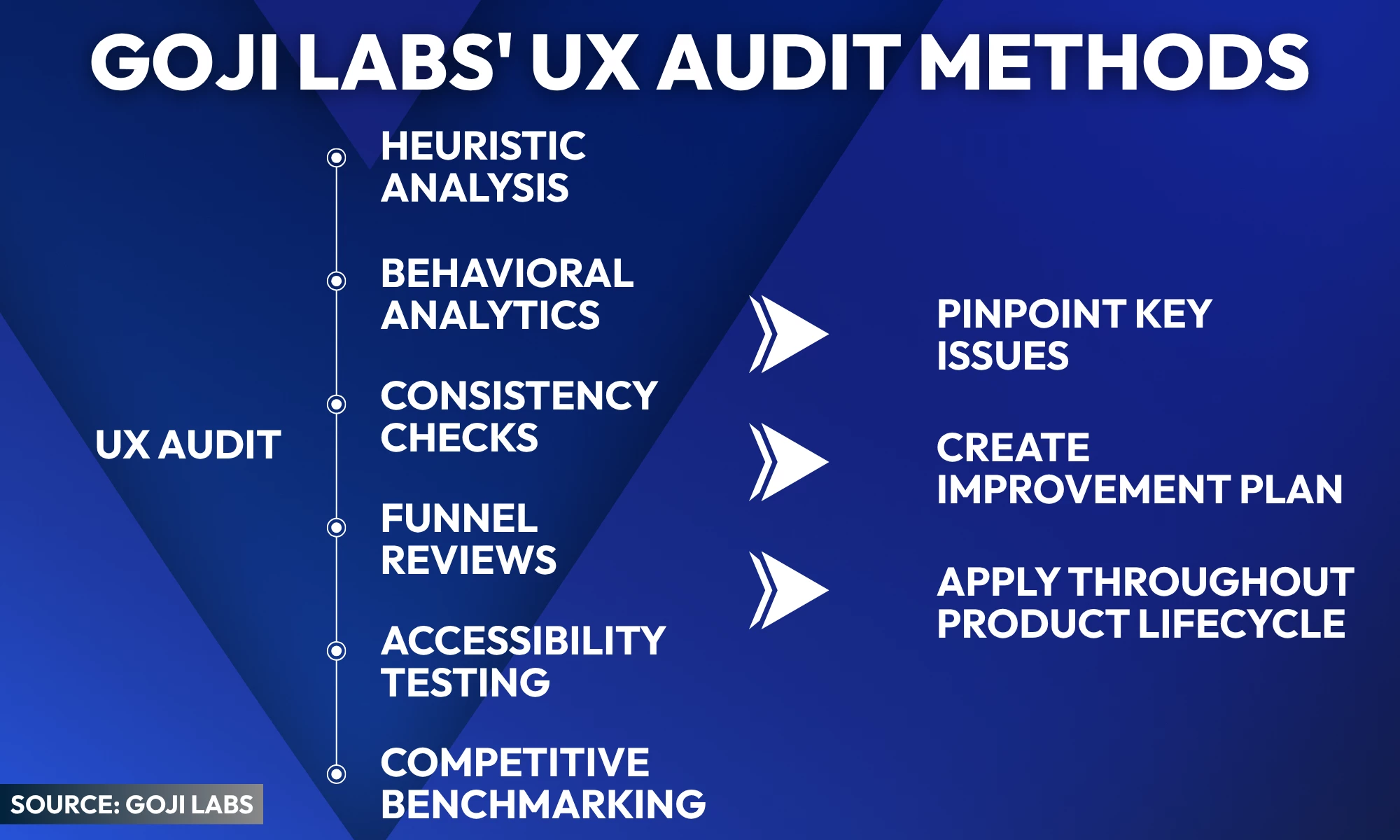
According to Goji Labs, a UX audit uses multiple approaches to uncover problems and guide improvements. These methods include:
- Heuristic analysis reviews the product against established usability principles to spot flaws.
- Behavioral analytics tracks how users interact with the product and highlights where they hesitate, struggle, or become frustrated.
- Consistency checks look at visuals and interactions to ensure the experience feels coherent across screens and devices.
- Funnel reviews reveal where users abandon onboarding, signup, or checkout.
- Accessibility testing confirms the product works for all users and meets required standards.
- Competitive benchmarking measures how the product performs against others in the market.
By combining these methods, teams can pinpoint key issues and create a practical improvement plan that can be applied throughout the product lifecycle.
For example, Goji Labs applied these UX audit methods to overhaul KCRW’s mobile app, uncovering friction points and redesigning the platform to improve usability, engagement, and member experience.
The project included a full UX audit, competitive analysis, re-architected navigation, mobile-first design, and custom features like CarPlay and Android Auto; all aligned to KCRW’s mission and audience needs.
Once teams understand where users struggle, UX audits can deliver value across the entire product lifecycle.
Goji Labs recommends scheduling an audit at these key moments:
- Pre-launch: Ensure the MVP is intuitive and ready for real users.
- Scaling: Keep new features consistent with core design principles.
- Performance dips: Diagnose why engagement or conversions are slipping.
- Funding or M&A prep: Demonstrate usability strength to investors.
- Major updates: Check for new friction whenever significant changes are rolled out.
Regular audits help teams maintain accessibility, address emerging issues early, and keep updates aligned with user needs.
Growing teams rely on audits to uncover issues users face but rarely report, giving a clear picture of what is holding performance back.
These often include:
- Cluttered user interfaces: Too many elements or competing information slow users and make decisions harder.
- Unclear calls to action: Users hesitate or abandon tasks when the next step isn’t obvious.
- Inconsistent navigation: Confusing menus or layouts interrupt user flow and reduce retention.
- Accessibility gaps: Leaving out users with disabilities limits reach and creates compliance risk.
- Mobile challenges: Poor responsiveness or tiny tap targets frustrate users on handheld devices.
Once these usability and accessibility issues are uncovered, fixing them becomes a strategic priority rather than a cosmetic update.
Turn UX Audits Into Strategic Advantage
Ready to fix what really holds your product back?
Follow Goji Labs’ approach: treat UX audits as a core business practice. When friction is uncovered and addressed, engagement improves, errors drop, and conversions grow.
Teams that make audits a regular part of their workflow turn insights into action, creating products that perform and building a lasting edge over competitors.