
"Spider-Man: Brand New Day" released in theaters July 31, followed by a marketing campaign valued at $309 million and a series of Hollywood records.
The film hit $120 million in pre-sales and pulled in $927 million worldwide on its opening weekend, marking the second biggest in film history.
Even the trailer hit 1 billion views in four days, with 718.6 million of those in the first 24 hours, making it the fastest to ever to hit that mark.
View this post on Instagram
The brand partnership roster behind the film is also one of the largest ever assembled for a superhero release.
160 different brand partners, including BMW, Samsung, Little Caesars, Liquid I.V., and even Lionel Messi each built their own activations around the film.
Some brands weaved themselves into the film's storyline, while others bought a license and a release date.
This key difference should shape how agencies pitch their next entertainment tie-in.
Brands That Wrote Themselves Into the Story
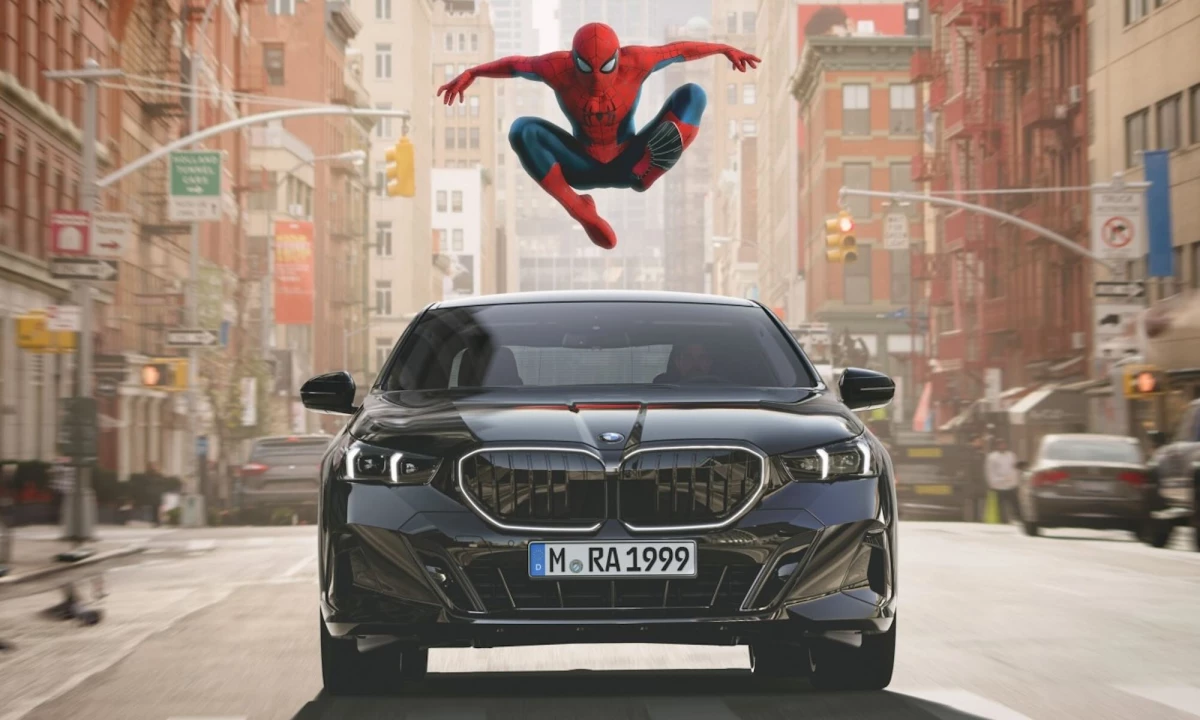
BMW went furthest of any partner, with both the iX3 and 5 Series written into the film's plot.
Tom Holland was filmed with a BMW 5 Series in Glasgow during production, before the carmaker built a campaign around the film's premiere.
It included a one-off, special-edition vehicle called the "BMW iX3 Flow, Spider-Man: Brand New Day" edition.
A separate teaser film called "The Big Screen" shows a father and son watching Spider-Man news from inside their BMW iX3.
The hero lands on the car's hood moments later.
Samsung took a similar route without appearing on screen quite as literally.
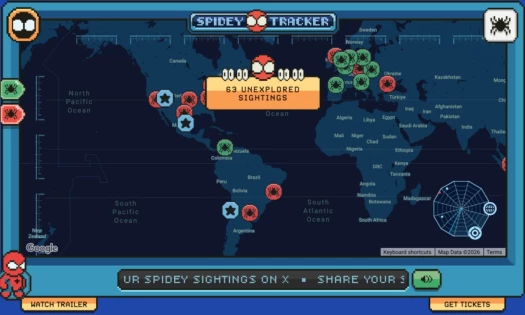
Spider-Man uses a Galaxy Z Flip inside the film. Ned Leeds tracks him using a Galaxy Z Fold and Galaxy Watch through an in-story tool called the Spidey Tracker.
Samsung then built an interactive version of the same tracker for fans, which lets them follow the film's marketing rollout using the device the character uses in the story.
Messi's standalone spot puts him inside a coffee shop where he meets Tom Holland's Peter Parker, who steps away and returns as Spider-Man.
The two then go on a web-slinging tour of the city skyline together.
It marks Messi's first entry into a superhero film campaign, putting the placement in front of his 515 million Instagram followers, the second-largest audience on the platform.
View this post on Instagram
Liquid I.V. took the same approach by building a spot around an in-film appearance.
The commercial features Jacob Batalon as Ned Leeds, backed by a climbing wall activation in New York and nationwide retail packaging.
ASUS ROG also appears in several scenes of the movie, with a "Brand New Power" campaign built around the placement across billboards, transit ads, and e-commerce.
View this post on Instagram
Each of these partners built something that required the film's plot, characters, or devices to make sense.
None of these would have worked as generic ads with the logo swapped out.
Brands That Licensed the Logo
The larger group of partners built activations that borrow the film's imagery without requiring any of its actual story.
Building on its product placement inside the film, Little Caesars introduced the Webberoni Pizza, topped with a shredded pepperoni web pattern.
View this post on Instagram
The brand also hosted a pop-up in Brooklyn recreating Peter Parker's apartment for fans to explore.
McDonald's paired a Spider-Man meal with a branded bucket hat in India, and a backpack charm tied to a Happy Meal in Singapore.
poppi launched limited-edition Spider-Man can designs across its prebiotic soda lineup in the U.S., one of several first-time partners this cycle.
View this post on Instagram
Nike put out a Spider-Man colorway of its Mind 001 AMP shoe, with sole nodes designed to recreate the sensory pull of the character's suit.
Walmart sells a popcorn bucket shaped like a steel girder with a Spider-Man figure hanging from the side.
Takis released four themed chip flavors, while Dr. Pepper's Mexican division put out two collectible cans featuring the New York skyline and Spider-Man's chest logo.
View this post on Instagram
None of these brands needed to know a single plot detail and a license, a color palette, and a release date were enough.
The popcorn bucket sells itself to people buying movie tickets, while a chip flavor can sell itself off the shelf, on impulse, while the movie is still in theaters.
These brand activations are built for retail conversion during a fixed window, which closes when the box office run ends.
The gaming partners sit somewhere in between.
Fortnite added Tom Holland's "Brand New Day" suit, a Web Shooters mythic item, and a Friendly Spider-Man NPC which will be available August 1.
View this post on Instagram
Battlegrounds Mobile India reworked part of its Erangel map into a Spider-Man-themed city district with web-swinging mechanics.
These games took more work to build than something like a themed can, and they lean on the character more than on anything from the actual film.
Two Different Products for Agencies to Sell
The difference between these two approaches shapes what a brand should expect from an entertainment deal, and also what it should pay.
A brand that is written into the film's plot gets exposure that lasts much longer after the marketing window closes.
View this post on Instagram
Of the 165 brands in the campaign, Deadline reported that only four appear as actual cameos inside the film.
Little Caesars, Samsung, ASUS, and BMW all got on-screen moments, alongside Liquid I.V.'s bodega appearance, while the other 160 or so bought their way onto shelves instead.
BMW's vehicles will appear in "Brand New Day" every time it streams, airs on television, or gets referenced in future Marvel films.
A limited-edition can will be pulled from shelves once the theatrical run ends, while in-film placements will be seen for years after the film circulates.
View this post on Instagram
This gap shows up in what each side actually costs to produce.
In-film integration requires negotiation during production, sometimes years before release, and involves the studio's creative team from the start.
Logo licensing, on the other hand, can be arranged much closer to launch and priced accordingly.
View this post on Instagram
Agencies advising clients on entertainment partnerships should treat these as different products, each with its own timeline and cost.
A brand with a multi-year budget and a long-term association goal should pursue in-film integration, the way BMW and Messi did.
A brand looking for a short, high-volume sales spike during a release should be pursuing the licensing route McDonald's and Takis took.
View this post on Instagram
Three things this campaign shows agencies structuring entertainment partnerships:
- In-film integration outlives the release window: BMW's vehicles remain part of the film permanently, giving the brand exposure every time the movie is watched again.
- Logo licensing is built for the launch window: Collectible packaging drives impulse purchases during the release period alone.
- Match the partnership type to the campaign goal before signing: Long-term association and a short retail spike need different deals entirely.
The four cameo brands had years of lead time and a seat at the table during production, while the others had a release date and a licensing fee.
Neither is a bad deal, but they're not the same deal.
Our Take: Which Brands Got the Better Deal?
We'd say that neither side got the objectively better deal.
They bought different things, and the mistake would be judging one against the other's scorecard.
BMW and Messi paid for brand value that compounds every time the film gets watched again, while poppi and Takis paid for a five-day spike in attention.
View this post on Instagram
Both of these are reasonable purchases, so long as the buyer knew which one they were making.
The job for any agency structuring one of these deals is to spell this out before the contract exists.
Not tier one versus tier two, but equity versus attention, and a clear answer on which one the budget was built for.
Brands negotiating entertainment partnerships need agencies who understand the difference between a licensing deal and a story integration.
Check out the top entertainment marketing agencies in our directory.