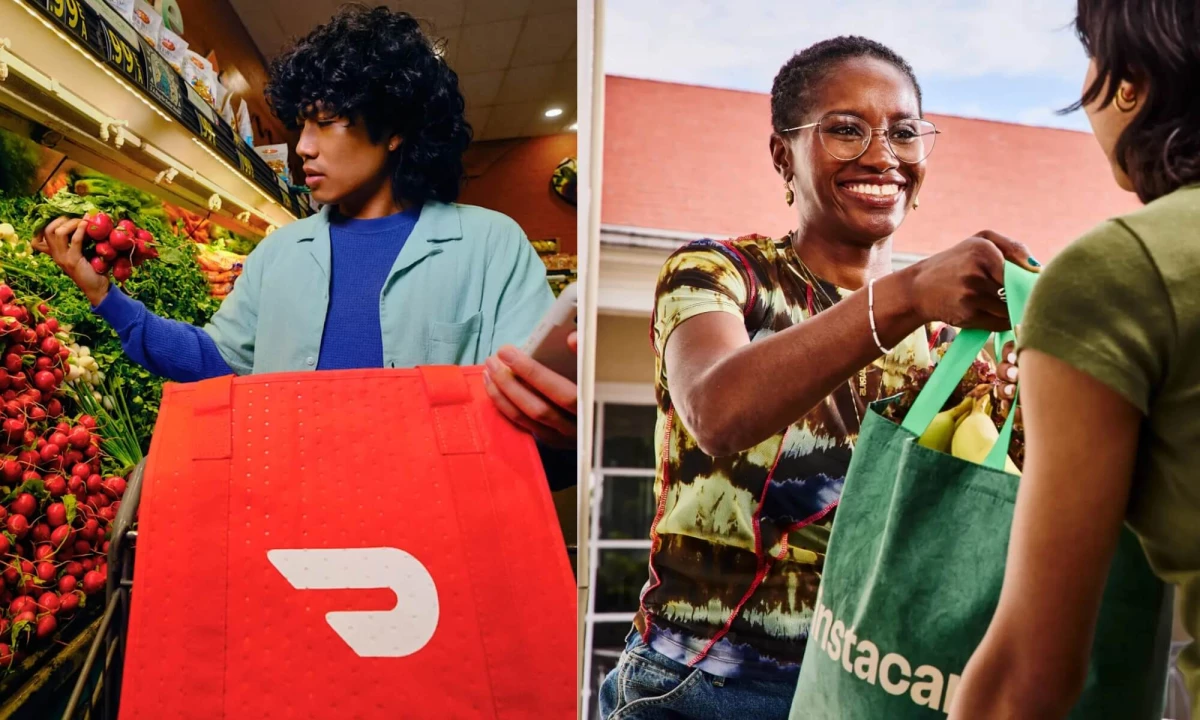

DoorDash wants the weekly grocery run, and it's paying $17 billion to get it.
The delivery platform announced Thursday that it has agreed to acquire Instacart, which operates as Maplebear Inc., at $65 per share.
This price sits 26% above where Instacart’s shares closed on October 22 and values the company’s equity near $17 billion.
Today we’re announcing @DoorDash’s intent to acquire @Instacart. Both DoorDash and Instacart share a mission to help local businesses succeed. Together, we could give grocers and retailers of every size the best of both in one service: DoorDash's delivery network and Instacart’s grocery and fulfillment technology, along with the advertising and AI tools each company has built. Until closing, DoorDash and Instacart will keep operating as separate, independent companies. Find out on how we’re helping Main Street compete and keeping more dollars local: https://t.co/hjCDE6fLCC For important additional information, read more here: https://t.co/OhGX576XtD
— The Dashboard | DoorDash (@TheDashboard) October 29, 2026
Instacart shareholders can take their payout in cash, DoorDash shares or a split of the two, with cash making up at least 75% of the total.
Tony Xu, co-founder and CEO of DoorDash, opened his case for the deal with the daily work of delivering groceries.
"Grocery is one of the hardest things to get right online. Someone has to pick a ripe avocado, find a substitute you’d choose yourself, and get the ice cream to you before it melts," Xu said.
Instacart CEO Chris Rogers described the deal as the next step in a 14-year effort to serve retailers.
"Instacart has transformed online grocery by helping retailers of all sizes compete and grow, and joining forces with DoorDash allows us to do even more,” Rogers said.
The pitch rests on a resource gap.
Big online retailers now run their own delivery fleets, warehouses, membership programs, and artificial intelligence shopping assistants.
A grocer with slim margins has little room to copy all of it.
DoorDash argues that the merged company could hand small and large stores alike the same technology, which the companies see as a path to business growth for local retailers.
Xu also tied the plan to neighborhood spending.
While it's still early innings, Xu explained that "when more people shop local, more dollars stay local."
One Membership Fee for Two Apps
The acquisition presents some benefits for consumers.
DashPass and Instacart+ subscribers would be billed once instead of twice, and DoorDash puts the combined savings at roughly $100 million a year.
Additionally, Instacart customers would gain access to over 50,000 more stores, adding to the nearly 100,000 already listed on the app.
DoorDash to buy Instacart for $17 billion in big consolidation for grocery delivery
by u/wds1 in news
DoorDash plans to leave Instacart’s name, app, and enterprise technology products in place once the deal closes.
It also pledges not to require grocery exclusivity, and stores can keep working with any delivery platform they prefer.
Shoppers on the Instacart side get to decide whether they accept DoorDash orders or stay with Instacart alone.
For grocers, the plan covers more than delivery.
Instacart’s technology could power grocers’ own websites and retail media networks, which would produce new sales and ad revenue.
Meanwhile, DashMart Fulfillment Services would give stores more room to handle online orders.
Consumer brands would get a bigger option for advertising to online shoppers.
Amid the Acquisition
The announcement arrives while DoorDash faces scrutiny over worker pay.
According to the Associated Press, New York City reached a $131.5 million settlement with DoorDash in September.
Just last month, DoorDash couldn’t seem to find the money to pay their deliveristas — until our administration forced them to give back $131M+ in stolen wages and penalties. This week, they’ve managed to find $17 billion to acquire one of their main competitors. Corporate consolidation means higher prices, harsher exploitation, and greater economic inequality for New Yorkers. We’ve stood up to these giants before. That doesn’t stop now.
— Mayor Zohran Kwame Mamdani (@NYCMayor) October 29, 2026
This comes after the city said more than 260,000 delivery workers received short, missing, or late payments.
DoorDash will also cover roughly $16 million in penalties and other costs and accept city monitoring of its pay practices.
The American Economic Liberties Project, which campaigns against monopolies, wants regulators to stop the deal.
CNN reported the group’s claim that the merged company would hold close to 60% of third-party grocery delivery.
Closing depends on a vote by Instacart stockholders and sign-off from regulators, among them agencies in Canada and Israel.
DoorDash is targeting the end of 2027 or the first half of 2028 for completion, and the two companies will run as independent businesses until that point.
A Fifth of Grocery Is Online
DoorDash and Instacart are combining in a category that keeps moving online.
U.S. online grocery sales rose 20.7% in the third quarter of 2026 and reached a record 20.9% share of total grocery spending, according to Brick Meets Click.
September set a household record, with almost 64% of U.S. households placing online grocery orders, per the same survey.
Walmart and Amazon will keep adding delivery speed during the long wait for regulatory approval.
Brands that advertise and sell through grocery apps can take three lessons from the deal:
- Map spending by app: One parent company could soon sell ad space on both platforms, and brands should know their current spend on each before contract talks begin.
- Ask for shared reporting: Instacart customers could shop at about 150,000 stores after the deal, and brands should request one measurement standard across them before consolidating budgets.
- Keep a second grocery channel active: Walmart and Amazon hold large online grocery shares, and brands should keep testing there to protect their bargaining power.
Marketers will get one larger place to buy grocery attention, and the strongest plans will keep an exit on every contract.
Our Take: Will Local Grocers Trust the Company That Owns the Basket?
Groceries are the most honest purchase a household makes, because nobody performs for the cereal aisle.
A basket shows what a family eats, when it runs out, and how much it will pay to skip the drive.
DoorDash stands to hold a very large pile of them.
We think that's the most tactical part of the deal, and the very reason the combined company will be hard for packaged goods brands to ignore.
The weak spot is the pitch to local grocers, who are asked to trust a partner that also competes for their best customers.
The no-exclusivity pledge is a promise about the future from the company that will hold the keys, and we would ask for it in writing.
Until that paperwork exists, we would call this a smart deal for DoorDash and an open question for everyone who sells through it.
Looking for marketing partners that can reach online grocery shoppers?
Connect with a top digital marketing agency in our directory that helps brands plan retail media campaigns and compare delivery platforms.