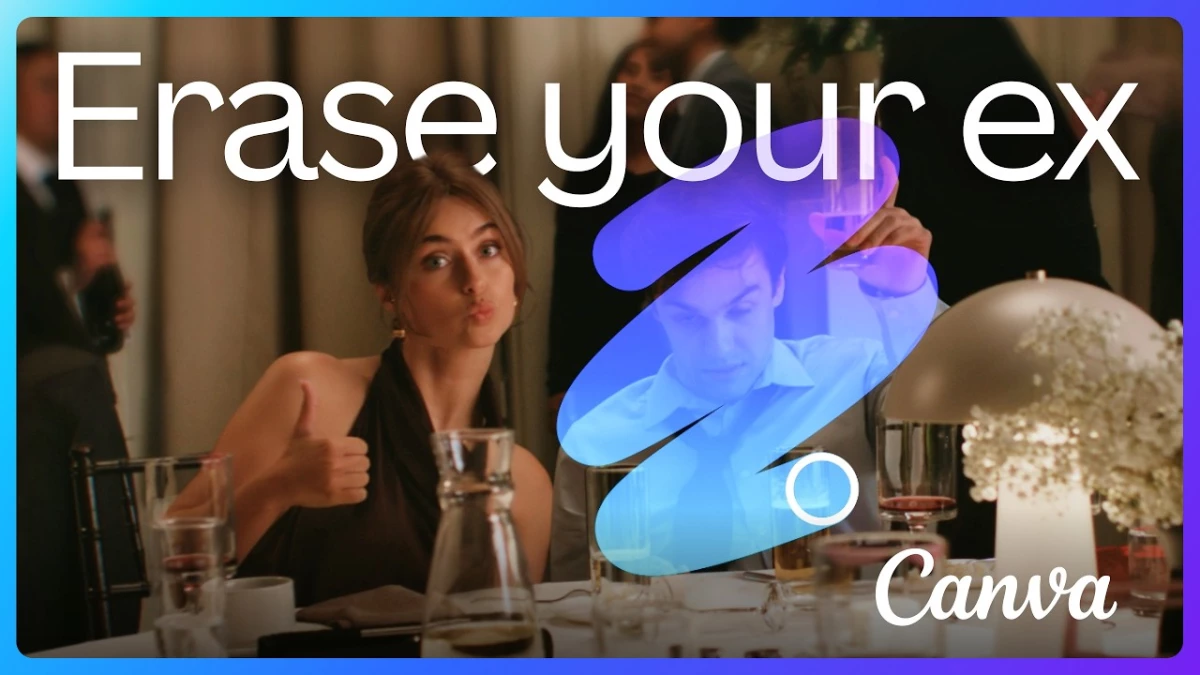

Canva has a new question for North America.
The design platform has debuted "What Will You Canva Today?" as its new brand platform.
The launch includes out-of-home, social, and three TV spots from Goodby Silverstein & Partners (GS&P).
The first spot aired Sunday, Nov. 1, during NBC's Sunday Night Football.
The campaign is also the first work to come out of Canva's partnership with the agency.
GS&P created the TV spots and led the social and OOH work alongside Canva's in-house team.
The split shows which jobs a brand with its own creatives still hands to an outside shop.
Dana Marineau, CMO of Canva North America, explains the problem the campaign is meant to solve.
"Everyone from students and teachers to entrepreneurs and parents use Canva to create anything from work presentations to birthday party invitations," the CMO said in a press release.
"So many people know and love Canva, but they may not know everything that’s possible on the platform today."
The platform rests on three ideas.
Breadth covers everything from printed invitations and holiday cards to websites, whiteboards, coffee mugs, and sweatshirts.
Simplicity says users do not need to be professional designers to collaborate, create, share, and print.
Lastly, pride speaks to the ownership people feel over something they made themselves.
Canva pitches this pillar against a world where AI can generate content in seconds.
For over a decade, Canva asked people the question "What will you design today?"
The product has since grown to include websites, social assets, and video and photo editing.
Canva decided the old line no longer covered everything the platform does.
Margaret Johnson, CCO at GS&P, says the range of the product drove the creative work.
"Canva’s superpower is the vast number of things you can make with it, from work presentations to social posts to printed posters," she explained.
The agency used one creative brand strategy to hold stories for several audiences, and each execution shows Canva working in real life.
Marineau shares that this approach is why GS&P won the assignment.
To her, the agency "helped define new categories and drive real business growth, and they’re both a strategic and a creative partner."
The account joins a new-business year for GS&P that also brought in American Express, NBA 2K, and Doritos Global.
Agencies pitching to in-house-heavy brands should lead with positioning, since execution is the part that these teams already own.
Canva's protection has to come from the work itself, so it needs to keep showing real people making real things. o
And who knows, Adobe Express users may just start wanting to Canva, too.
Three Comedy Spots Show Canva Working
Each of the three TV spots is a small comedy drawn from an everyday scene.
"Erase Your Ex" follows a woman who fiddles with old photos of boyfriends she now regrets.
When one of them texts to say he misses her, she clicks Undo, brings the original picture back, and posts it.
"New Drink" puts a café’s marketing staff in a shared file as they brainstorm a menu addition live.
Ideas range from a birthday cake to an espresso with flaming hot honey, and the group settles on a lavender latte.
They then lay out the promotional poster together and print it from the same platform.
Lastly, "Promposal" shows a teenager redoing his dance invitation over and over while a friend updates him on which classmates already have dates.
Once he picks the right person, he prints the finished sign through Canva.
The out-of-home work focuses on the people doing the creating.
Each portrait is shot from the screen's point of view, looking up at someone in the middle of a project.
The images keep the messy concentration and sticking-out tongues that come with real effort.
Eleven personas appear in the series. They include:
- A teacher who designs every sign the classroom needs
- A college student who ends up making every slide for a group project
- A vlogger designing a logo for the first time
- A job seeker whose cat sits beside him as he finishes a resume
The portraits give Canva a human answer to the AI-generated content that its pride pillar warns about.
Brands selling AI-assisted tools can protect their brand identity the same way, by keeping visible human effort in the frame.
Why an In-House Team Still Hires Agencies
Canva ended 2025 with more than 265 million monthly active users worldwide and over 31 million paid users.
These users pushed annual recurring revenue to $4 billion, co-founder Cliff Obrecht told TechCrunch.
This leaves a large group who know the brand but may not use everything inside it, which is the very gap that Marineau describes.
Canva’s setup also reflects an industry norm.
The Association of National Advertisers (ANA) found in its 2023 study that 82% of members have an in-house agency.
Even so, 92% of respondents still work with external agencies.
Advertisers said they send outside shops the tentpole and marquee campaigns, plus work that their in-house teams lack the time or skills to handle.
Canva fits this pattern, giving GS&P the marquee TV spots while sharing social and out-of-home with its own team.
The campaign offers three lessons for brands that run in-house teams.
- Assign outside partners the work where a new point of view matters most: Canva gave GS&P the TV spots and shared the social and out-of-home work.
- Give each product strength its own scene: Canva’s three spots show photo editing, group collaboration, and poster printing separately, so viewers see range without a feature list.
- Track how well users understand the full product: Canva’s 31 million paid users against 265 million monthly users shows how much room exists to teach the rest.
The user numbers give Canva a large audience to educate.
However, the new platform will need its own awareness and usage data to show that the agency partnership is working.
Our Take: Can a Brand Name Survive Becoming a Verb?
Xerox has long asked people not to use its name for every photocopy, while Canva is asking people to say its name on purpose.
We admire the nerve, because a verb sticks in a way that no slogan does.
Once people use a brand name as a verb, the brand owns the category in consumers' heads, the way everyone Googles and nobody Bings.
The risk comes when someone says they will Canva a poster and opens a different tool, which is also how aspirin and thermos went generic in U.S. courts.
Canva's portraits will serve as the defense, since each one connects the word to a real person in the middle of a messy project.
Adobe is already courting agencies with automation, with six holding companies building on its CX Enterprise agentic AI platform since April.
We'd still back Canva's name to survive as a verb, as long as GS&P and the in-house team keep a real person in every spot.
Looking for a partner that can sharpen your brand platform, keep a campaign consistent across channels, or manage creative for a complex product?
Explore these top brand positioning agencies on DesignRush.