
Levi’s spent four hours filming every second of its newest holiday ad.
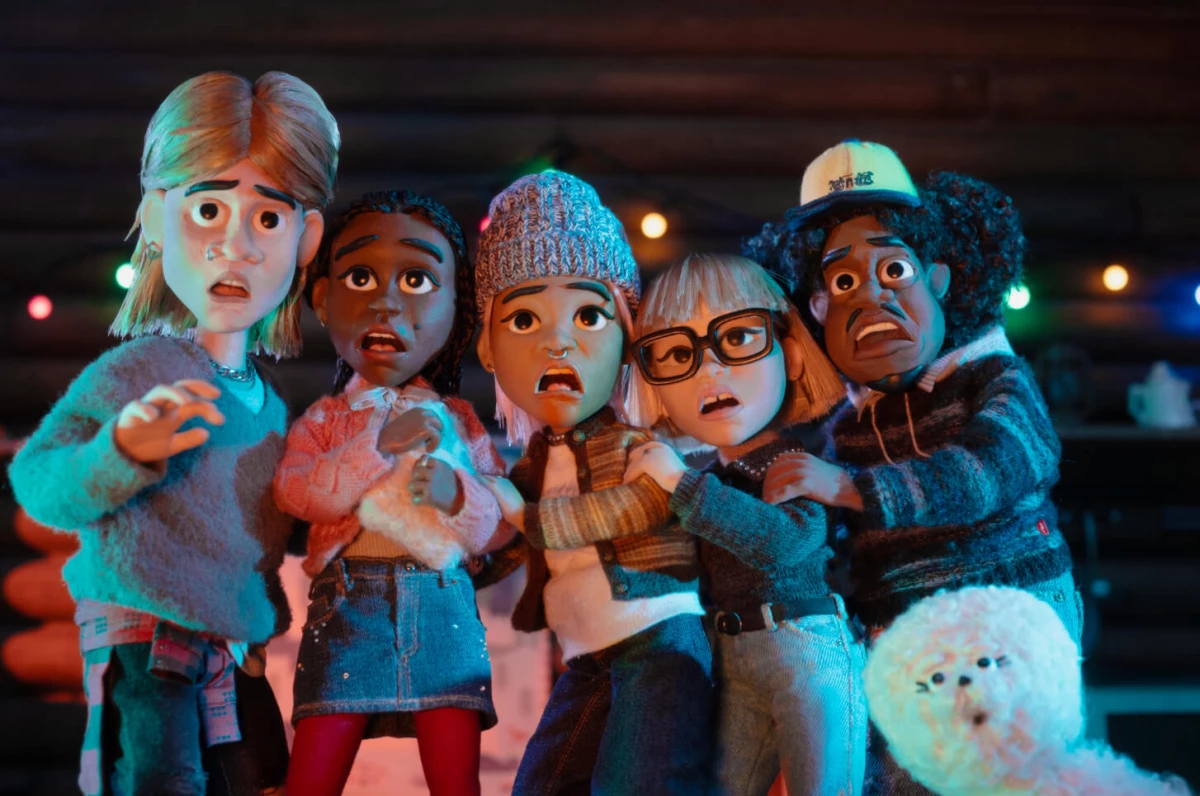
"Let’s Get Fuzzy," the brand’s Holiday 2026 campaign, stars Fuzzyeti, an oversized creature the brand calls Gus.
The stop-motion Claymation film follows him from feared outsider to welcome guest, a story Levi’s says speaks to the shared wish to belong during the holidays.
Handwork shapes the art direction from the first frame to the last.
Artisans built the sets and characters by hand.
The Claymation format also looks back at "Clayman," a 1995 Levi’s commercial from BBH London that the company’s historian describes as the first full-length ad shot entirely in clay.
Kenny Mitchell, Levi’s Global CMO, described the project as a chance to show off human skill.
"Our Levi’s Let’s Get Fuzzy campaign was an opportunity to experiment with immersive and tactile world-building across retail, digital and social," he said.
He added that the film honors the handmade skill and human creativity the brand is known for.
The campaign also supports a larger goal.
"Let’s Get Fuzzy is another step in our ambition to be the world’s leading denim lifestyle brand," Mitchell said.
Sweaters carry that goal this season, giving a film about a furry outsider a clear job on the shop floor.
Gus Goes From Outsider to Guest
The film follows a simple arc.
Gus starts the story as a creature people fear and ends it as a guest they welcome.
The handmade world around him gives that change a physical presence.
Artisans also recreated each outfit the characters wear, with the clothing on screen showing the same handwork as the sets.
The product lineup matches that cozy tone.
Women’s styles include the Charlotte Crewneck Cardigan and the Ava Quarter-Zip Sweater, while the Presidio Crew Sweater and the Miles V-Neck Sweater cover the men’s side.
Levi’s designed the knits to go with denim, corduroy, and outerwear.
The campaign runs across retail, digital, and social so shoppers can meet Gus in stores and online.
Levi’s also promotes a wider set of cold-weather layers, including fleeces, flannels, thermals, Truckers, corduroys and hats.
The brand links those pieces to denim fits such as the 501 Loose, 578 Baggy, Ribcage and Loose Taper, letting a shopper who comes in for a sweater see the jeans that go with it.
Proof Points for Human-Made Holiday Ads
Levi’s needs its holiday quarter to deliver.
Direct-to-consumer made up 45% of third-quarter net revenues and grew 2%, and the company said that channel fell short of its internal expectations, per its earnings release.
Luckily for them, shoppers are leaning toward human-made work.
Canva’s 2026 marketing and artificial intelligence report found that 78% of consumers would rather see ads made by people, even if the tech could produce higher-quality ones.
Prada makes a similar case in its "Drawing Prada: Animated by Hand" holiday campaign, which uses pencil-drawn animation and a behind-the-scenes video of the process.
Handmade production gives Levi’s a marketing strategy that rivals cannot copy by simply typing a prompt.
Brands that want the same proof can take three lessons from the launch:
- Reinforce the hard work with numbers: Levi’s cites four hours of filming per second of animation, which gives viewers proof that people made the work, and real effort was put in making it.
- Ground handmade work in your own archive: The Claymation format recalls the 1995 "Clayman" ad, giving the campaign a heritage angle.
- Hire partners who can show their craft: Agencies that document handmade work give clients proof to share.
Ultimately, we believe a film that shows its labor gives shoppers a reason to trust the sweaters on screen.
Our Take: Is Handwork the Best Answer to AI Backlash?
Feeds are filling up with AI slop, and anyone can produce a glossy ad in an afternoon.
We think brands should back human-made creative now more than ever, and proof that a person made the work is the scarce thing.
Levi’s creative direction deserves credit for seeing that early, with a character and a world built entirely by hand.
We would commission the handmade work now, while it still stands out.
Overall, it's brands like Levi's that fund handmade work now that will own the look audiences trust as AI ads keep multiplying.