
Google has started rolling out hotel booking in AI Mode to U.S. travelers searching in English.
Travelers can compare hotels and pay with Google Pay when a partner offers checkout, the company said in its August 27 launch announcement.
And finally, we’re introducing hotel booking through AI Mode in Search, so you can discover and book your next hotel in one conversation. Simply tell AI Mode about your upcoming trip and your hotel preferences to get a visual list of options, complete with guest reviews and key factors to compare. Then, tap “Continue on Google” to complete the booking securely with Google Pay.
— Google (@Google) August 27, 2026
Google named ten partners will activate checkout over the coming weeks. The online travel sites are Booking.com, Expedia, Hotels.com, Priceline, and Trip.com.
Meanwhile, the hotel chains include Hilton, Marriott International, IHG Hotels & Resorts, Choice Hotels International, and Wyndham Hotels & Resorts.
A "Continue on Google" option appears next to each partner in the list of booking options. The hotel or booking platform stays with the merchant of record and handles customer service.
The announcement, however, does not say how a hotel outside those groups takes part in checkout.
AI Mode already pulls real-time data to compare hotels, so a hotel can end up in the comparison whether or not it offers checkout. That puts a hotel’s own website behind a summary Google wrote.
In this DesignRush interview, Anjelika Lours’ Kour, Creative Director and Managing Partner at creative web design agency DD.NYC®, explains what the site has to say now.

Who Is Anjelika Lours' Kour?
Anjelika Lours' Kour has built her career around a clear principle: creative work must deliver both artistic quality and commercial results. Over two decades, that approach has taken her from Ecuador to Hong Kong to Manhattan, shaping her work at the intersection of design, strategy, and business.
Today, she serves as Creative Director and Managing Partner at DD.NYC®, leading projects for clients including FIFA World Cup 26 NYNJ, Scholastic and Workday. She also runs @globalnewyorker, a travel platform featuring curated recommendations and experiences. Her work has received recognition from the Webby Awards, the Anthem Awards, and Pentawards.
Google Moves the Comparison Into AI Mode
Travelers tell AI Mode about their trip and their hotel preferences, and it returns a visual list of hotels with guest reviews and key factors to compare.
Google describes AI Mode as a tool that finds recommendations across the web. Hotels are already preparing for that.
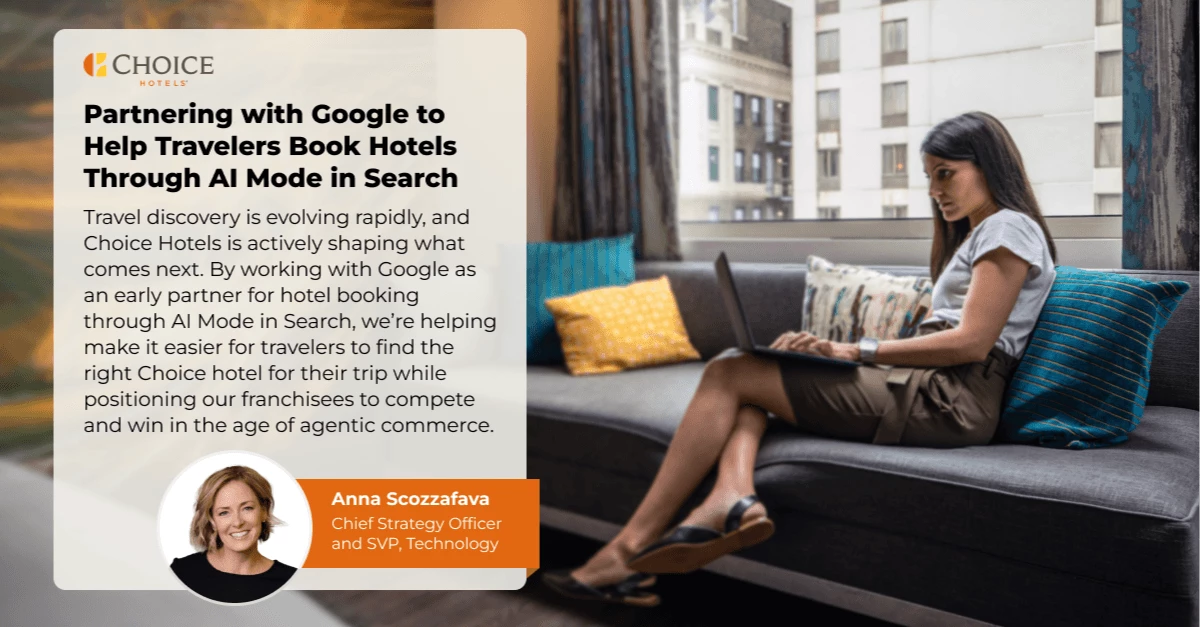
In fact, Choice Hotels said it is focused on ensuring its properties show up "clearly, accurately, and compellingly" in AI-powered experiences.
Kour audits a hotel the way a guest would, by searching for it on her phone before she clicks anything. A year ago, she would have started on the homepage.
Now, most travelers' first impression is a summary Google wrote, and the hotel had no hand in it. She compares that summary with the website and the Google Business Profile.
"They almost never fully match. The room count is off, a restaurant that closed two years ago is still listed, the photos were taken before the renovation," she says.
Kour sees the same mismatch as a traveler, when a search result describes a different place than the one she checks into.
"The website still has to sell the stay, but it’s now also the source material for everything written about the property, so when it's vague or out of date, every summary built from it ends up vague and out of date too," she adds.
As a result, what matters is whether the description given elsewhere matches what the property itself presents.
Room Pages Need Answers in Plain Text
Google's announcement does not say which signals shape the hotel list.
Research on AI answers offers one lead. Schema is far more common on pages AI cites, yet adding it did not lift citations on pages already cited, according to Ahrefs.
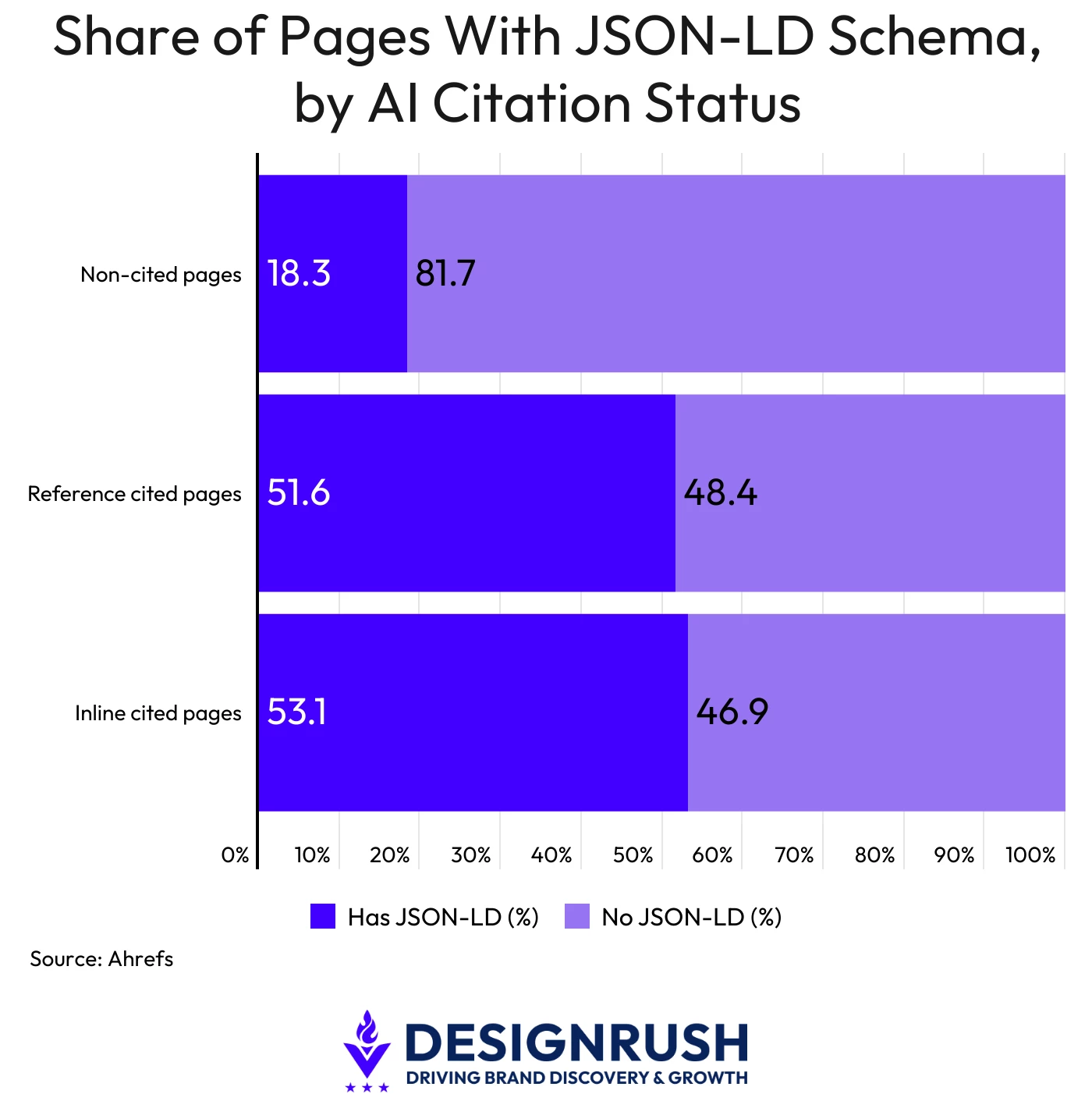 The test followed 1,885 heavily cited pages that added JSON-LD schema, code that labels page details for machines. Citations on ChatGPT and Google AI Mode barely moved.
A separate test found that five AI tools, including ChatGPT and Google AI Mode, read only visible text when they open a page.
Although neither test covers hotel booking, they are the closest evidence available of how AI tools read a page, and both favor plain wording.
A room page should say outright what markup would only imply. That leaves hotels with more control than they think, Kour says. Her list starts with consistency.
"Make sure every fact on the website matches the Google Business Profile and the major booking sites, because any conflicting information makes the hotel look unreliable to people and machines alike," she says.
"Give every room type its own page with real details like square footage, bed size, view, and what the bathroom actually has, instead of one gallery with a 'starting from' price."
She also recommends structured data, which lets search engines read the property, rooms, amenities, and policies without guessing.
Schema stays useful, Ahrefs notes, for rich results and other search features. The visible text is the part a hotel controls.
Luxury Properties Carry the Hardest Brief
AI Mode compresses each hotel into a handful of points, so two five-star hotels in the same neighborhood can look nearly identical.
A luxury stay sells on what that format leaves out, and the hotel’s own page has to carry it.
Kour sees that problem as both a designer and a guest who writes recommendations on @globalnewyorker, a platform built by DD.NYC®.
Asked which details of a luxury stay are hardest to put into words, she points to the ones that make her book a place again.
They include how quiet the hallway is at night and the staff remembering how you take your coffee on the second morning.
"Brochure copy fails because it describes everything at the same volume," she says.
"Words like 'luxurious,' 'curated' and 'unparalleled' tell me nothing, and honestly AI is now writing those same sentences for every property on earth."
What works, in her words, is "being specific." She recommends writing about a single time of day in a particular room and using photography that looks like someone stayed there.
Real people from the hotel should speak as well, whether the GM or the head concierge.
Hawkridge Led With the Land
Kour’s team faced a version of the hotel problem at Hawkridge, a luxury land development in Austin.
Specifically, listings and brokers could give buyers acreage, price, and location, but nothing that explained why anyone would want to live there.
There was no finished place to walk through yet, so, as Kour explains, the website had to do the emotional work.
"We built it around the land itself, the light, the views and the pace of life out there, and kept the specs one click away for when people were ready for them," she says.
The website was nominated for a Webby Award in the Real Estate category.
Yet for a hotel, Kour would go further on the practical side.
"Guests want the feeling first, and then they want very specific answers right away, like which rooms face the water or whether the pool is heated in October," she adds.
"A luxury site can deliver both without reading like a spreadsheet."
AI Mode can reduce a luxury hotel to the facts that make it comparable. Still, the website has to restore the reasons that make it worth choosing.
Independent Hotels Compete on Personality
Google’s launch partners are chains and online travel sites, so an independent hotel enters the same comparison without a chain’s loyalty program behind it.
That is why Kour advises these hotels to stop trying to look like a chain, since they will never beat one on consistency and loyalty points.
"What an independent does have is a point of view, and that’s exactly what tends to get flattened in a comparison list. So put that on the website and be very specific about it," Kour says.
In particular, she wants hotels to talk about:
- Who owns the place and why,
- Which neighborhood it is in,
- What is around the corner that guests would never find on their own,
- The details that exist only at the property.
Details like these make a hotel easy to recommend, which is what Kour does on @globalnewyorker. The places she writes about are almost never the biggest names.
"They’re the ones with a clear personality that I can describe to a friend in a sentence," she explains.
Alongside this, she looks ahead to the guest’s next stay.
"Independents should also invest in the direct relationship, through email, their own booking engine, and a reason to come back," she adds.
In turn, the comparison list decides which hotels get considered, and the direct channel decides which ones guests return to.
AI Mode Splits Persuasion From Checkout
A hotel website has traditionally done two jobs at once. It persuades the visitor, and it takes the booking. AI Mode splits them.
The comparison list takes over persuasion, and for partner bookings, Google’s own flow takes over room type, cancellation policy, and payment.
A booking made through a partner checkout does not pass through the hotel’s site, so falling site conversions do not by themselves point to a page problem.
Hotels can run the same trip prompts in AI Mode every month and compare how each answer describes the property.
When an answer gets a detail wrong, the room page is the first source a hotel can correct.