

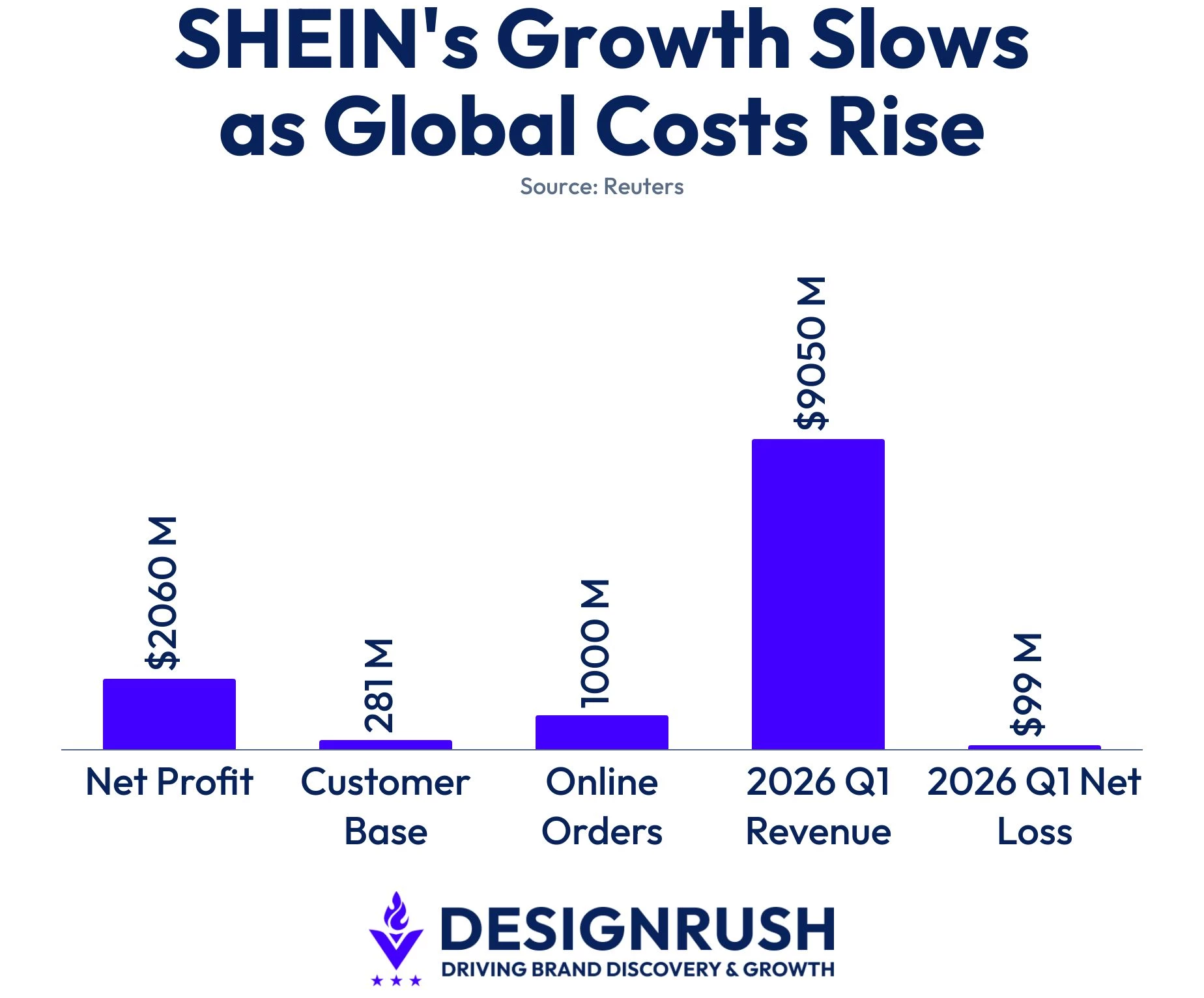
SHEIN reported a $99 million net loss for the first quarter of 2026, reversing a $395 million profit a year earlier.
New U.S. import tariffs, higher logistics costs, and softer demand drove the reversal.
A $328 million non-cash charge on convertible preferred shares accounted for much of the rest.
The Singapore-headquartered retailer disclosed the figures in its Hong Kong IPO draft prospectus, filed on Sunday.
China's securities regulator cleared the listing on July 10, after earlier attempts in New York and London stalled.
The filing gives investors their first full view of SHEIN's books, including planned price increases in the U.S.
The numbers show how quickly external policy changes can influence pricing, customer demand, and global expansion plans.
Duty Repeal Cuts U.S. Revenue
Net revenue edged up 1.1% to $9.05 billion, from $8.95 billion a year earlier.
But U.S. revenue fell 14.3% to $2.04 billion, dropping the market to 22.5% of the quarterly total.
SHEIN pointed to the removal of the de minimis exemption in May 2025, which had let packages under $800 enter the U.S. duty-free.
China-origin products shipped to American shoppers now carry duties of 10% to 87.5%.
Europe is the next pressure point, as the EU imposed a €3 customs duty on low-value e-commerce imports this month.
Europe supplied about a third of SHEIN's revenue in 2025, and the retailer said the fee will raise selling costs and likely dent short-term orders.
The Iran war also cut Middle East demand and delayed deliveries, according to the filing.
Fulfillment now consumes 47.7% of net revenue, up from 45.6% across 2025, while marketing takes another 15.8%.
Gross margin improved to 67.9% last year, which puts the squeeze on distribution and customer acquisition.
The same cost pressure frames SHEIN's $100 million purchase of Everlane in May.
Catterton sold the sustainability brand carrying roughly $90 million in debt, and common stockholders received nothing.
Owning a U.S.-founded label hands SHEIN a retail brand it can market domestically, which softens the tariff math on every cross-border parcel.
Cost Per Order Climbs as Shoppers Hit 281 Million
SHEIN's active customers reached 281 million in the 12 months through March, up from 241 million.
Order frequency held flat near four purchases a year, so growth now depends on adding shoppers.
Each new shopper costs more to reach, which helped push net profit down 38.7% to $2.06 billion in 2025.
SHEIN has earmarked its IPO proceeds for technology and AI investment.
Automation would have to defend margins faster than rising ecommerce marketing spend erodes them.
SHEIN's IPO filing carries three lessons for retail marketers watching cross-border costs:
- Low prices depend on stable trade rules. Retailers should diversify fulfillment strategies to reduce exposure to policy changes and protect margins.
- Global growth requires regional flexibility. Brands should adapt pricing, logistics, and inventory planning to local regulations to preserve demand.
- Scale alone does not guarantee resilience. Companies should strengthen operational efficiency to maintain profitability as compliance costs increase.
As regulators reshape international e-commerce, competitive advantage will depend on supply chain strategy and consumer demand.
Our Take: Is SHEIN's IPO Priced for a Business That No Longer Exists?
The growth story in SHEIN's prospectus ended in May 2025, when the U.S. closed the de minimis loophole.
We think that investors are being asked to price a company that has already stopped operating the way it did.
More than 90% of SHEIN's revenue last year came from goods sitting in Chinese warehouses, the exact setup that tariffs are now punishing.
Competitor Inditex earns a net margin above 15% on Zara, roughly triple that of SHEIN's 4.9%, with inventory sitting closer to its shoppers.
Everlane and the AI spending point at the same rebuild, a SHEIN that holds stock in the markets it sells to.
Anyone buying this IPO is funding this rebuild, and it will take years of retail brand work before the margins show it.
Meanwhile, luxury retailer Ralph Lauren recently proved that premium positioning can still drive record growth.
It surpassed $8 billion in annual revenue on the back of strong China sales and full-price demand.
Looking to navigate similar pricing and supply chain challenges?
Work with these top AI supply chain companies to help improve operational resilience and customer retention as market conditions evolve.