
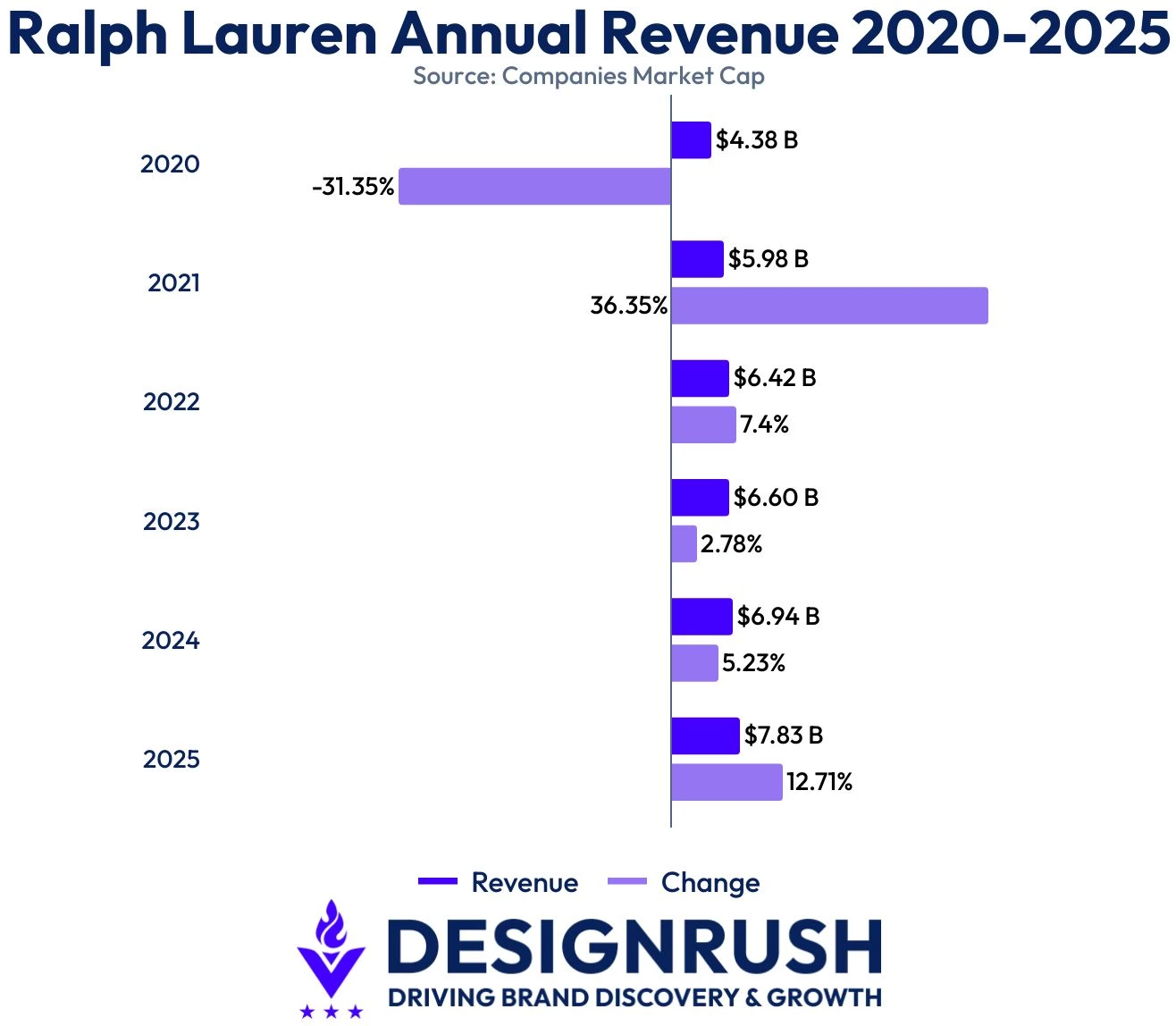
Ralph Lauren surpassed $8 billion in annual revenue for the first time in its history.
This caps a fiscal year defined by full-price demand, geographic expansion, and stronger margins.
Q4 FY2026 revenue came in at $1.98 billion, up 16.6% year-over-year, while earnings per share climbed 23.4% to $2.80.
Asia delivered the company's strongest regional growth, with sales rising 28% during the quarter.
China stood out with sales climbing 51%, helped by Lunar New Year campaigns and expansion across key cities.
Meanwhile, North America revenue rose 8%, and digital sales gained momentum as more shoppers bought directly from Ralph Lauren's stores and website.
"Our top and bottom line results exceeded expectations, supported by our diversified drivers of growth and our strongest quality of sales to date," President and CEO Patrice Louvet said in the Q4 earnings call.
Luxury brands are dealing with weaker consumer spending, especially in Europe.
Yet, Ralph Lauren continues to see demand for premium products while keeping shoppers willing to pay full price.
Affluent buyers are still driving luxury demand, but the market is narrowing as middle-income consumers pull back.
Holding this positioning in this kind of environment is a signal that Ralph Lauren's brand equity is doing real work.
The Full-Price Strategy Pays Off
Ralph Lauren spent the last few years cutting back on discounts and focusing more on premium shopping experiences across stores and online channels.
This marketing strategy helped the company sell more items at full price during the quarter.
Women's apparel, outerwear, and handbags each grew more than 20% during the quarter and the full year.
The company also increased spending on marketing, fashion events, sports partnerships, and social media campaigns.
Marketing now makes up nearly 8% of the company's annual sales.
"There's no absolute ceiling for our marketing investment as a percentage of sales. The determining factor here is the return on investment (ROI) we achieve," Louvet said.
The growth highlights how fashion brands are focusing more on brand image and stronger online engagement to keep shoppers interested.
China Leads the Global Luxury Charge
China's luxury market declined by 3% to 5% in 2025, as consumers grew more selective and prioritized value-driven purchases.
Ralph Lauren's outperformance there points to a brand that consumers are consolidating their spending around.
Louvet's strategy, focused on cutting markdowns, reducing wholesale dependence, and pushing full-price sales, is what brought the brand back to its luxury roots.
Ralph Lauren's China results show what premium pricing discipline looks like when it compounds over several years.
- Geographic diversification reduces pressure. Brands should spread growth across multiple countries to reduce risk.
- Selling products at full price helps protect brand value. Retailers should cut back on constant discounting to maintain profit margins.
- Younger consumers respond to sustained visibility. Marketers should stay active across sports, fashion, and social media to remain relevant.
When brands keep demand strong without relying heavily on discounts, profits become more sustainable over time.
Our Take: Can Ralph Lauren Maintain Growth?
Yes, though maintaining this pace may become tougher next year.
Ralph Lauren posted strong growth across nearly every region during FY2026, with annual revenue up by 14.6% and a 34.5% increase in earnings per share.
China remains a major growth driver, though management expects growth there to slow as comparisons become tougher.
We're also seeing the company spend more on marketing and premium brand positioning to keep demand high.
This strategy can continue to work if wealthier shoppers keep spending, though softer consumer confidence in Europe could create pressure later in the year.
This shows how luxury brands with strong online reach, cultural relevance, and pricing power are staying ahead while weaker players face slower demand.
While Ralph Lauren grows through stronger full-price sales, LVMH's sale of Marc Jacobs reflects wider industry pressure as luxury brands reevaluate portfolio strategies.
Fashion and luxury brands need partners who can strengthen retail strategy, pricing, or consumer engagement. Explore these Top Luxury Branding Agencies in our directory.