
Supply Chain Disruptions: Key Findings
- eCommerce brands lose an estimated $1.6T annually due to weak, slow-to-recover supply chains that can take up to four months to stabilize.
- Digital Manufacturing Networks help prevent costly disruptions by using real-time data to forecast demand, reroute production, and track materials end-to-end.
- Companies should invest in predictive analytics, modular suppliers, and integration-friendly systems to gain faster recovery, higher trust, and sustained growth.
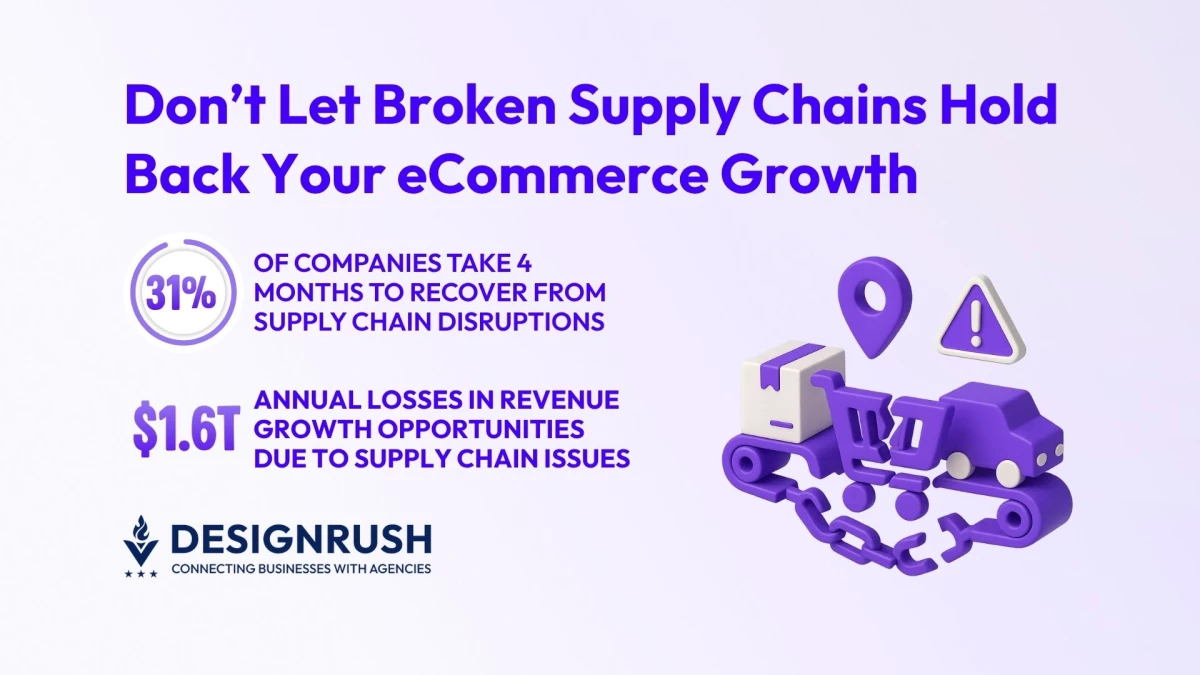
According to statistics from Accenture, businesses miss out on an average of $1.6 trillion in revenue growth opportunities due to supply chain vulnerabilities and disruptions.
In fact, 31% of companies take a full four months just to recover from a supply chain disruption.
To make matters worse, new government policies and tariffs threaten to make supply chain disruptions a more common occurrence.
These figures should make eCommerce executives pause.
In recent years, there’s been an emphasis on customer experience, personalization, and flashy digital storefronts in eCommerce.
And in truth, these are all fundamental to the success of a modern eCommerce website.
However, the truth is that these matter little if an eCommerce site cannot deliver a product on time.
All of these serve as a reminder that growth doesn’t rely on marketing or design alone. Operational stability plays a massive role as well.
To survive this new reality, eCommerce brands must move from reactive logistics to proactive, digitally empowered supply strategies.
Otherwise, brands expose themselves to expensive risks such as:
- Lost revenue from stockouts and abandoned carts
- Emergency fulfillment costs that eat into margins
- Reputational damage and customer churn when delivery promises aren’t met
- Data blind spots that distort forecasts and weaken decision-making
“Many eCommerce leaders still underestimate how fragile growth becomes without operational resilience. When supply chains depend on outdated systems or manual forecasting, every disruption ripples through customer experience and profitability,” said Joseph Heller, CEO and Founder of THE/STUDIO.
And with the growing number of threats to the global supply chain as of late, it’s imperative to shift towards flexible manufacturing.”
So the question for eCommerce leaders today is not “how do we sell more?” It’s “how do we deliver better?”
Deploy Digital Manufacturing Networks to Gain Resilience
One of the best ways to answer that new questions is to use Digital Manufacturing Networks (DMNs).
DMNs are interconnected systems that link suppliers, factories, logistics providers, and demand signals through shared data.
In other words, DMNs like THE/STUDIO replace the old linear chain with a responsive digital solution, one that can flex and adapt when global markets shift overnight.
These systems revolutionize supply chain stability and growth for eCommerce companies, allowing them to:
1. Forecast Smarter
Modern forecasting can’t rely on spreadsheets or last quarter’s sales data.
Built-in analytics now make it possible to anticipate potential supply and demand mismatches before they have an adverse effect.
This way, brands can:
- Identify early signals of product shortages or surpluses.
- Run “what-if” models and stress-test for price shocks or shipping delays.
- Optimize inventory placement by region, reducing fulfillment time.
2. Scale Faster
Shifting production across facilities or geographies based on fluctuating consumer demands is necessary for brands looking to scale faster.
Modular, multi-supplier architecture allows this with ease.
Likewise, forward-thinking operators can maintain a buffer capacity. This prevents small disruptions from growing into operational crises.
3. Build Operational Resilience
Predictive alerts flag supplier risks before they lead to progress-halting bottlenecks.
Logistics dashboards also help track materials in motion. This gives teams visibility from raw inputs to delivery.
Advanced traceability tools can also follow each component through the chain, ensuring both quality and compliance.
How eCommerce Brands Should Pivot
For many eCommerce businesses, moving from traditional supply chains to DMNs may sound intimidating.
But this kind of resilience doesn’t require a massive overhaul, thanks to how DMNs operate.
It does, however, require adopting a mindset of continuous optimization, not crisis management.
“The goal is not to rebuild from scratch but to evolve continuously, layering technology and data-driven decisions over existing operations to create a smarter, more responsive supply chain,” said Heller.
To start building that foundation, eCommerce brands should:
- Audit supply vulnerabilities. Identify where information or accountability drops off, from supplier visibility to shipping delays. Every blind spot represents a potential disruption.
- Pilot before scaling. Test a digital manufacturing network with a single product line or fulfillment center to evaluate its impact on lead time, cost, and reliability.
- Choose integration-friendly partners. Pick a platform that offers seamless integration with your existing ERP, logistics, and eCommerce systems. This allows you to adapt quicker compared to a full-on replacement.
- Invest in data infrastructure. Empower teams with predictive analytics, real-time dashboards, and exception alerts. These help surface issues before they escalate.
- Align supply strategy with customer promises. Delivery speed, customization, and sustainability goals should be supported by an equally agile and transparent backend.
Reclaim Growth by Fixing What’s Behind the Buy Button
Clever ads, sleek UX, and generous discounts tend to be the lead actors when it comes to attracting the attention of consumers.
But it’s in what happens backstage that truly drives growth and brand trust for eCommerce companies.
In this case, it’s the eCommece companies that out-innovate their competitors when it comes to rerouting production in hours, forecasting demand in minutes, and acting on real-time data.
Because when your supply chain can’t keep up, your digital storefront is essentially just an empty promise.