
Our analysts track the weekly developments reshaping organic visibility and AI discovery. Brands building search programs can partner with vetted SEO agencies for strategic implementation.
The metrics SEO teams track stopped predicting the outcomes they care about, and three stories this week make the same point.
- SEO consultant Mark Williams-Cook's satirical cats.txt file passed every "proof" used to sell llms.txt, and ChatGPT has since reversed its call.
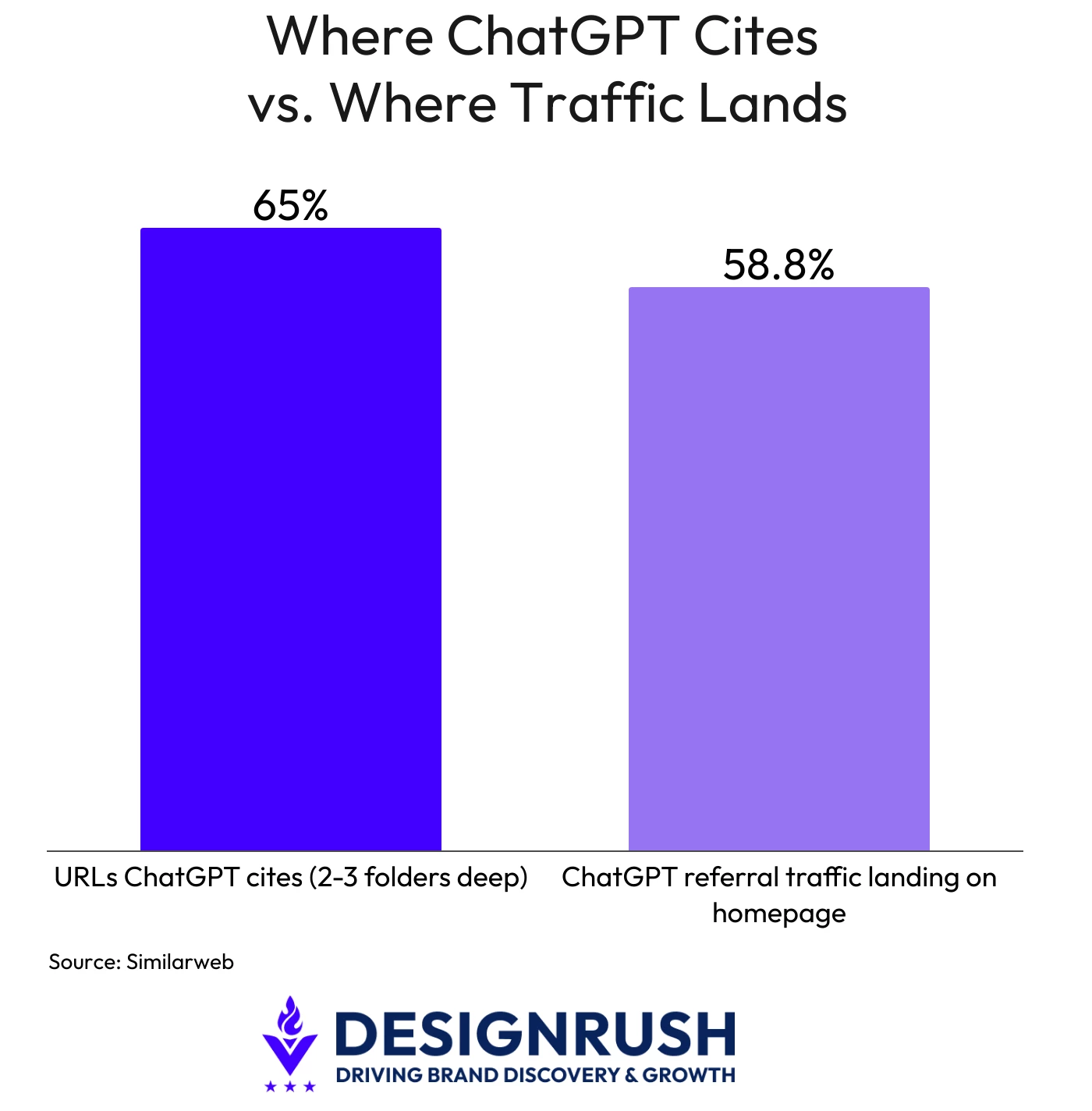
- AI referrals send buyers to the wrong page, with 65% of ChatGPT citations pointing to deep content while 58.8% of traffic arrives at homepages.
- Google ranking volatility spiked into August 5 and 6, the fourth unconfirmed swing since mid-July, and Barry Schwartz says it matters less each time.
Here's what these three have in common, and the full story behind each one.
Our Take: Does the GEO Industry Have Any Real Evidence Yet?
The GEO industry sells four proofs for llms.txt, and a file about office cats cleared all four without breaking a sweat.
We'd argue that settles it, because a crawler fetching your page proves the crawler works and nothing else.
Then ChatGPT flipped and started calling cats.txt a joke, after the discourse caught up around an unchanged file.
So the fourth proof, asking a model whether a tactic works, hands vendors their own marketing back as evidence.
We believe that the first agency that connects AI citations to revenue in a client report will win every pitch it enters.
A Fake Standard Clears All Four llms.txt Proofs
SEO consultant Mark Williams-Cook invented cats.txt, a satirical web standard for declaring a website's office cats.
The spec covers their jobs, their breeds, and how often they purr.
He built it to test the exact four claims the industry uses to sell llms.txt as a real ranking mechanism.
- AI bots crawl the file.
- Google indexes it.
- An LLM repeats a fact that exists only in it.
- ChatGPT itself endorses the tactic.
The plan was to seed the internet with enough earnest-sounding text that AI systems would treat his fictional cats as real.
Other SEOs joined in and gave him the exact test he needed, and all four came through.
ChatGPT, asked whether the file helps rankings, said yes. Ask ChatGPT about cats.txt now, and it will tell you the file is a joke.
Nothing about the file changed, only the volume of people writing that it was a gag.
The model was never assessing the standard at any point. It returns a running average of whatever the industry wrote most recently.
How the joke web standard cats.txt took the fancy of some SEOs and became cited at the same evidential level as llms.txt for optimizing websites for search and #AI discovery. https://t.co/lCmqfiU8jf via @sejournal
— Tom Pick | #B2Bmarketing guy (@TomPick) August 7, 2026
Worth a read. #SEO#cats
The real data already said the same thing.
Google added a note to its AI optimization guide in June saying llms.txt files are not required for Search and carry no ranking effect.
Ahrefs checked 137,000 domains and found that 97% of the roughly 38,000 valid llms.txt files got zero requests in May.
None of that stopped the four proofs from applying just as well to a file about cats.
The test worth applying to any vendor claim is whether the proof would still hold if the page were nonsense.
Most of what gets sold as SEO strategy right now would fail it.
ChatGPT Sends 58.8% of Referrals to Homepages
The gap between the pages that ChatGPT cites and the pages it delivers to visitors is wide enough to break most AI attribution setups.
Similarweb's 2026 Generative AI Landscape report found 65% of cited URLs sit two or three folders deep.
Aleyda Solis, who contributed to the report, calls cited pages and traffic pages separate populations that need separate assessments.
Previsible found a third destination in 6.77 million AI-referred sessions across 166 sites.
28.8% of ChatGPT referrals arrive at internal site search pages.
The visitor arriving from ChatGPT has already done the comparing, so the homepage they hit needs to move them to the next step.
Similarweb found that these users are 2.5 times more likely to visit a recommended brand's site within seven days.
The homepage has become a conversion rate optimization problem that most teams still treat as a brochure.
Ranking Movement Matters Less Now
SEO journalist Barry Schwartz made the sharper point about this week's volatility.
Rankings matter less than it used to, because Google sends less traffic to publishers regardless of position.
This is the same math driving publishers to consider blocking Google's crawler entirely.
SEO chatter over unconfirmed volatility spiked into August 5 and 6, the fourth swing since mid-July.
Google hasn't confirmed an update and may never, with the last confirmed change being June's spam update.
Site owners on WebmasterWorld and Black Hat World reported swings in both directions, with some traffic dropping 50-70% overnight.
Rewriting a content strategy during an unconfirmed swing turns a temporary wobble into a permanent loss.
SEO Industry Insights
Anastasia Kourou spotted queries like "yes" and "yes, go on" in her Search Console performance report.
John Mueller pointed her to Google's documentation, which has said for months that an AI Mode follow-up counts as a new query.
Each follow-up gets its own impression, position, and click data. The dedicated generative AI reports still don't break out queries at all.
Lily Ray asked Microsoft for page-level filtering on queries in Bing Webmaster Tools.
Krishna Madhavan replied that the team will work on it, which is an acknowledgment and not a ship date.
@lilyraynyc thank you for the request. Ack. We will work on it :)
— Krishna Madhavan (@kmadhavan77) July 31, 2026
Both platforms generate more AI query data than their reports can segment, leaving SEO teams unable to tell an AI Mode follow-up from a normal search.
Three checks worth running today:
- Verify what your GEO tactics actually measure. AI citations do not automatically equal visibility or authority.
- Review AI referral landing pages. Traffic from cited content needs a clear path after arrival.
- Check Google updates before blaming AI Overviews. The wrong diagnosis leads to the wrong recovery strategy.
The common thread is measurement, since every signal in this roundup is easy to produce and hard to connect to money.
For a breakdown of AI Overviews hitting 43% of searches, familiar brands winning in AI, and Google's thin content crackdown, check out last week's SEO roundup.
If a satirical file about cats can pass every test your GEO vendor uses as proof, what exactly are you paying for?
These top SEO agencies help brands separate AI visibility that converts from AI visibility that just happened.