
Each week, our analysts track the developments reshaping organic visibility and AI discovery. Brands building search programs can partner with vetted SEO agencies for strategic implementation.
Fan-out queries are now the primary driver of AI Overview citations. Most SEO teams are still optimizing against a model that no longer applies.
Google officially launched Search Profiles for publishers and creators.
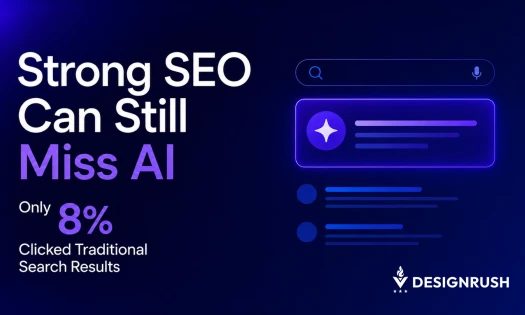
Sixty-eight percent of searches on the platform ended without a click in the first four months of 2026, per SparkToro.
Here is what search news looked like this week.
AI Overview Citations No Longer Favor Page One
Only 38% of cited pages also rank in the top 10 for the same query, per an Ahrefs analysis of 863,000 keyword SERPs and 4 million AI Overview URLs.
That figure stood at roughly 76% in July 2025.
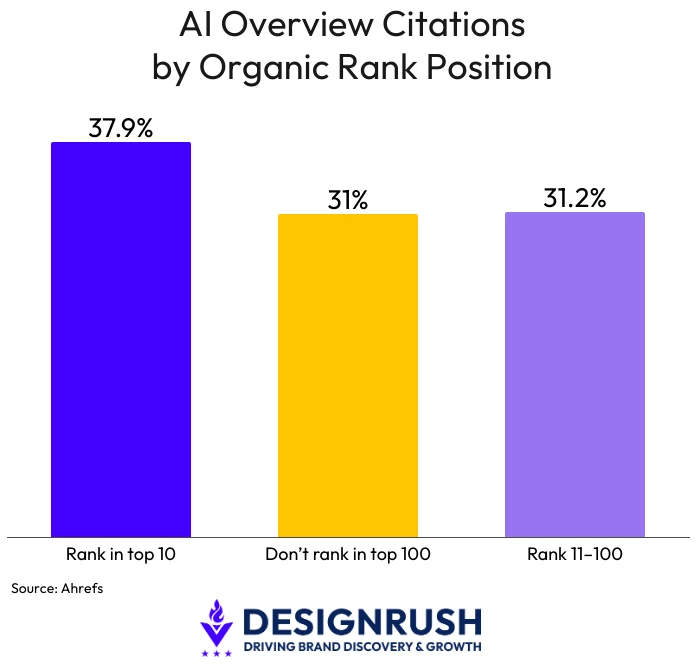 Google runs multiple related sub-queries, called fan-out queries, when an AI Overview triggers, pulling citations from those results rather than from the original query alone.
A synthesis of 54 AI citation experiments by Cyrus Shepard of Zyppy scored fan-out rank at 9.3 out of 10, search rank at 9.4, and URL accessibility at 9.5.
LLMs.txt scored 2, with no credible evidence that it influences AI citations in Search.
Schema.org now publishes usage statistics for individual schema types, showing how many domains actively use each markup element before practitioners commit to implementing it.
YouTube URLs accounted for over 18% of citations from pages outside the top 100, per the same Ahrefs study, making the platform the most cited domain in AI Overviews.
May Core Update Reset Source Authority
The May 2026 core update triggered what Aleyda Solís describes as an intent-destination reset.
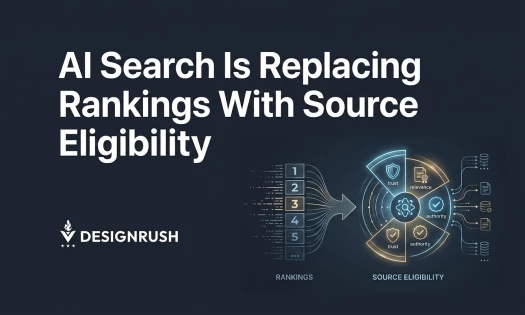
Rankings consolidated around the source type that best matched each query's intent and expected result format, regardless of domain authority.
Canonical destinations gained. Intermediary layers lost ground, even when their authority was high.
Reference brands such as Cambridge and Merriam-Webster gained sharply while pronunciation tools and dictionary aggregators dropped 60% to 70% in the UK.
Forums and Q&A sites contracted. YouTube, X, Pinterest, and Fandom held flat to positive.
Source type confidence outweighed link authority, the same dynamic now driving AI citation selection, and makes this core update a more direct GEO signal.
Google Launches Search Profiles
Google officially launched Search Profiles, claimable pages where publishers and creators centralize their articles, videos, and social posts.
Eligibility requires a minimum following of 100,000on YouTube, Instagram, or X, or 300,000 on TikTok. The feature launches in the U.S. first.
View this post on Instagram
The 100,000-follower threshold means the feature currently applies to publishers already operating at media scale, not to most brand-owned channels.
Claiming a profile can trigger a Knowledge Panel, and raises visibility through Preferred Sources.
That advantage currently applies only to publishers who already have significant distribution elsewhere.
Most Google Searches Now End Without a Click
In the first four months of 2026, roughly 68% of U.S. searches on the platform ended without a click, up from around 60% in 2024, per SparkToro.
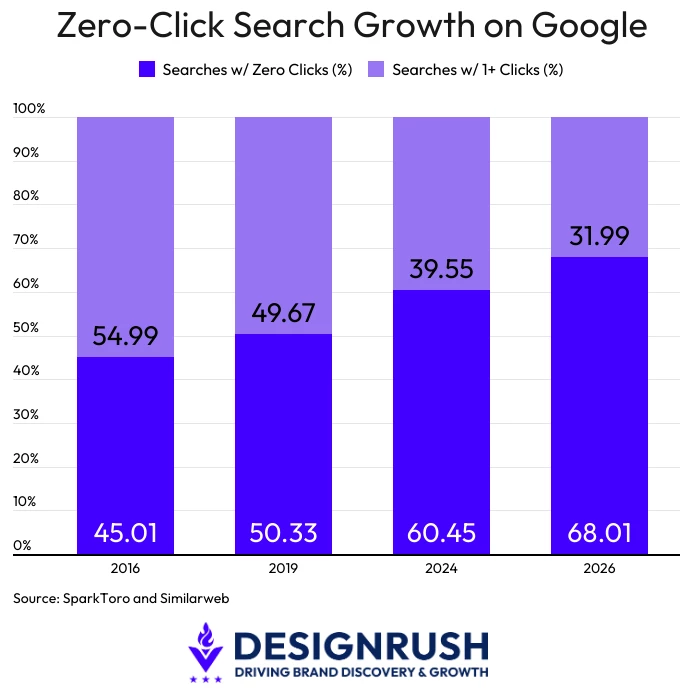
AI Overviews now appear on more than 20% of all searches. When present, click-through rates drop by nearly 60%. The 68% figure is likely a floor.
AI Mode surpassed one billion monthly users at I/O 2026, with queries more than doubling every quarter, and the SparkToro data predates most of that growth.
The exposure is highest where SEO investment has historically been heaviest.
Comparison queries trigger AI Overviews 95% of the time. Question-format queries trigger them 86% of the time, per Seer Interactive research across 49,000 tracked queries.
Publishers losing clicks on those pages can use Search Console impression data by query type to identify where citation optimization has the most leverage.
Over the same period, referral traffic from Claude grew 386%, per SE Ranking research across more than 101,000 websites.
At 1.40% of total AI-referred traffic, it remains a small channel, but it is growing faster than any other AI platform tracked in the study.
For publishers tracking where non-Google traffic originates, that trajectory is worth a dedicated segment in analytics.
SEO Industry Insights
On LinkedIn, Chris Long flagged that Google Trends appears to be inflated by AI sub-queries running behind the scenes.
The platform uses an average of nine of those sub-queries per user prompt, with peaks as high as 28, per Nectiv research.
They register in the tool's data, making some terms appear at all-time highs without a corresponding rise in human demand.
Topic clusters built on that data may be targeting artificial demand rather than real user intent.
Researcher David Konitzny found that heavy navigation reduces how much content ChatGPT Deep Research processes per page.
Cyrus Shepard amplified the finding, noting that while Google is sophisticated enough to parse page layout, most LLM crawlers are not.
Fascinating. Can too many navigation links eat your "LLM reading budget" when AI bots crawl your site?
— Cyrus SEO (@CyrusShepard) June 10, 2026
As SEOs, we know that Google is very, very good at understanding page layout + what to ignore/pay attention to
Other AI crawlers, probably not so much https://t.co/Ysx0yNX2Es
The tool reads through a fixed window of approximately 5,700 characters.
Pages with under 20 navigation links give 78% of that window to actual content, while those with 60 or more links give only 33%.
Responses in the thread noted that pages designed for humans and search engines may no longer be optimized for AI consumption.
Three priorities from this week:
- Audit topic cluster depth. Use Search Console to identify which related sub-queries your priority pages rank for, then build supporting content around the gaps.
- Claim your Google Search Profile. Go to creators.google/profile to claim your profile before the global Preferred Sources rollout begins.
- Count navigation links on highest-value pages. Remove or consolidate navigation elements above 60 links to free up LLM reading budget for actual content.
Our Take: Is the GEO Measurement Stack Broken?
The stack is not broken. It is measuring a search engine that has been partially replaced by a different one running underneath the same interface.
We think that distinction matters more than any individual tactic. The problem is that the system doing the citation work now runs underneath it.
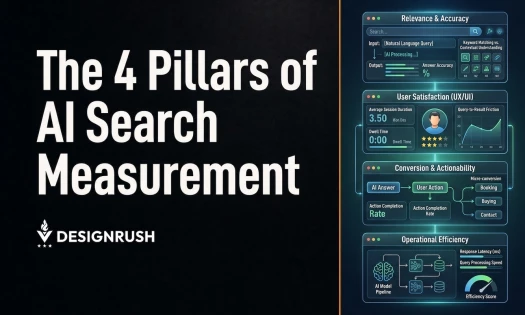
Yet no measurement framework has been built for the layer that drives AI responses.
Teams losing citation ground are often not doing anything wrong. They are optimizing for the visible part while the system making citation decisions operates one level below it.
Content built on firsthand experience, proprietary data, or expert depth that no aggregator can reproduce is the citation path that survives a measurement framework in flux.
For analysis on the AI toggle without click data, Web IQ's agent infrastructure, and the May core update completion, check out last week's SEO roundup.
If fan-out queries are now the primary citation driver, which pages on your site rank for the sub-queries your target audience generates?
These leading SEO agencies help brands stay visible as AI systems change, which content gets cited and which gets filtered out.