
Responsible AI Development: Key Findings
- Half of Americans now feel more concerned than excited about AI, making responsible development the new baseline for winning user trust.
- Enterprises increasingly demand explainability and safety in AI tools, turning responsible development into a gateway for faster sales cycles and defensible adoption.
- “Move fast and break things” no longer works in AI, because trust failures carry real human and business consequences that are far harder to undo.
How much do you trust AI?
Data shows lots of people are still on the fence.
A Pew Research Center study found that 50% of Americans say they feel more concerned than excited about the increased use of AI in daily life.
Additionally, 57% of consumers believe the societal risks of AI are high, a clear sign that public skepticism is growing.
Despite the growing mistrust and wariness towards AI in general, nearly every industry is moving toward deeper integration.
This raises a challenge for tech startups and AI developers caught in between: how can they push for more AI, yet still earn the trust of a skeptical market?
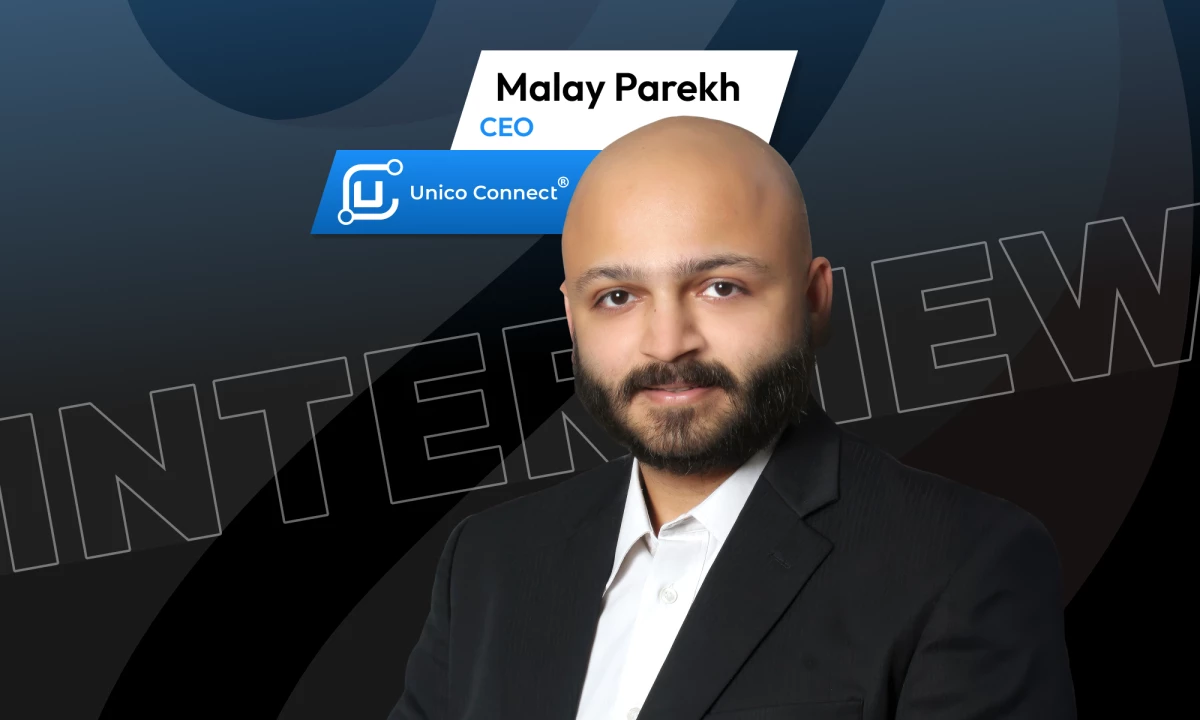
For Malay Parekh, CEO of leading AI software development agency Unico Connect, it all boils down to prioritizing responsible development and transparency:
“Responsible AI is becoming the foundation for long-term adoption. Teams that invest in safety and transparency early are the ones that can scale in high-trust environments,” he says.
In our interview, Parekh highlights how, contrary to popular belief, responsible AI development isn’t a constraint on innovation and scale, and why teams should move past the old “move fast and break things” mindset.

Who Is Malay Parekh?
Malay Parekh is the CEO of Unico Connect, a leading digital product development agency that specializes in building intelligent, scalable, and secure mobile, web, and AI applications. With extensive experience in international projects, he has guided startups and enterprises through digital transformation by leveraging traditional technologies and visual development platforms like Xano and WeWeb. Under his leadership, Unico Connect has become known for delivering fast, maintainable, and future‑proof solutions.
Responsible AI Development Is Not a Constraint
Many founders still treat responsible AI practices as limitations or compliance hurdles. Parekh argues that this framing misses the point.
Responsible development shouldn’t be seen as a set of brakes. Instead, it should be viewed as a strengthening system that is vital for companies that want products to scale safely and gain trust in skeptical markets.
Responsible AI development offers several strategic advantages that many teams overlook:
- Enterprise readiness and faster sales cycles. Enterprises increasingly demand explainability, auditability, and safety as buying criteria. A responsible development approach reduces procurement hurdles and accelerates the path to adoption.
- Lower long-term product risk. Bias testing, privacy controls, and structured monitoring reduce the likelihood of high-cost incidents later. This mirrors the NIST AI Risk Management Framework, which emphasizes governance and measurable risk reduction.
- Brand trust and defensibility. In a crowded market where capabilities converge, trust becomes differentiation. Teams that can prove how their models behave over time win users, regulators, and partners more consistently.
“When evaluation, guardrails, and monitoring are built in early, teams ship faster later down the line because they avoid repeated rework and incident management,” Parekh says.
Responsible AI is an accelerator of sustainable scale, not a slowdown.”
However, he also understands that adopting this mindset can be difficult, which is why Unico Connect ties responsible AI directly to business outcomes.
“We connect responsible AI directly to business outcomes,” he says.
“We show that trust and compliance are not abstract ethics goals, they reduce enterprise onboarding friction, protect brand value, and improve model performance in production.”
Likewise, Parekh and his team make it a point to keep their own process transparent, emphasizing discipline across the full AI lifecycle rather than a one-time checklist.
To be more specific, Unico Connect focuses on core practices such as:
- Risk classification and use case scoping. Map use cases to a risk tier and define required controls, inspired by EU AI Act risk categories and the NIST AI RMF.
- Data governance and privacy-first design. Validate data lineage, consent, retention rules, and PII handling, aligning with client policies and applicable data protection requirements.
- Bias and fairness evaluation. Test for representational gaps and outcome disparities across protected or business-critical cohorts, then adjust via data balancing, prompt and model tuning, or rule-based overrides.
- Explainability and traceability. For predictive models, document features, rationale, and sensitivity. For Gen AI and RAG systems, log sources, retrieval steps, and outputs so that decisions are reviewable.
- Safety guardrails and red teaming. Implement prompt and output filters, policy constraints, and adversarial testing to reduce hallucinations or unsafe responses.
- Continuous monitoring. Track drift, error patterns, feedback loops, and model updates with a clear audit trail, including what changed and why.
“All of these make every model decision explainable, testable, and defensible in enterprise settings," Parekh concludes.
Leave the “Move Fast and Break Things” Mindset Behind
Many tech startups are still subscribed to the philosophy of “move fast and break things.” After all, it’s this very mindset that has helped hundreds of startups to establish themselves.
And “if something ain’t broke, don’t fix it,” right?
Yet in AI, the idea of speed for its own sake is fundamentally incompatible with modern AI software development.
“Breaking things” in AI has very different consequences than breaking a feature on a traditional app.
Mistakes can manifest as biased decisions, privacy leakage, misinformation, or unsafe automation, things that feed into the growing uncertainty users feel about AI in the first place.
These failures affect real people and real businesses, and they are far more difficult to undo.
Unfortunately, this is a struggle that Parekh sees often:
“Startups struggle to let the mindset go because speed is their survival strategy, and responsible AI can feel like an added process.”
“But in reality, AI products now operate in trust-sensitive environments, especially with enterprises, and the cost of a trust breach is existential.”
The question then becomes how early-stage teams can break free from outdated instincts.
Fortunately, it just needs a few tweaks in how teams should think and approach AI development:
- Responsibility before velocity. Value accountability and foresight over speed for speed’s sake. Progress isn’t progress if it ends up eroding trust.
- A collective impact mindset. Shift from “what can we build?” to “what should we build, and for whom?”
- Human-first design. Anchor decisions in human dignity, rights, and well-being, rather than metrics or “growth hacks.”
Rethink How You Build for the Future
Responsible AI is becoming the defining skill set for teams that want to scale without stepping into avoidable crises.
For Parekh, the lesson is simple enough to guide early decisions:
“Treat trust as a product feature, not a policy doc,” he says.
“Build with real user safeguards from day one: clear data consent, measurable quality, explainable outputs, and continuous monitoring after launch.”
“If you can show how your AI behaves, how you control risk, and how users can challenge outcomes, you earn credibility with customers and regulators.”