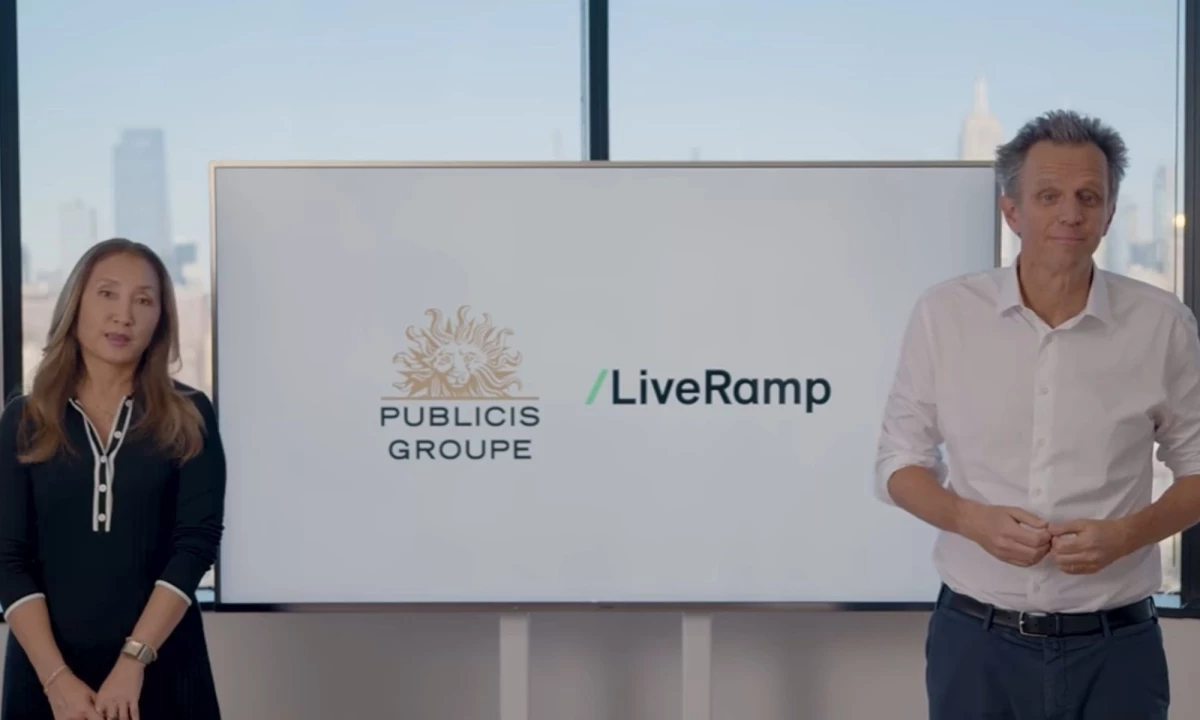

Publicis Groupe completed its $2.2 billion acquisition of LiveRamp.
It gives the advertising group a new way to sell data infrastructure and AI services to enterprise clients.
The Nov. 2 closing also introduces a competitive distinction for agencies using LiveRamp.
A proposed Federal Trade Commission (FTC) order requires five years of continued access to LiveRamp's standalone products.
Meanwhile, it allows Publicis to develop integrated products with its own technology.
The deal was announced in May 2026 and received FTC approval to proceed under a proposed consent order in October.
LiveRamp will retain its brand, with Scott Howe continuing as CEO.
Publicis CEO Arthur Sadoun said clients face a choice between surrendering data to major platforms or spending time and money on custom technology.
"Our answer is the industry's first AI growth engine," Sadoun said in the company announcement.
He describes a connected system that gives clients ownership of their data, technology, and AI assets.
The acquisition gives Publicis a commercial advantage in developing this offering.
But the FTC's conditions put limits on how it can use LiveRamp's existing customer relationships and data.
Independent auditors will check compliance every six months for the first two years, then once a year after that.
LiveRamp customers can order their own data protection audit once a year, at their own expense.
Those who think that Publicis broke these rules can also take unresolved disputes to third-party mediation.
25,000 Publishers Feed Publicis' AI Growth Engine
The new offering combines LiveRamp's data connectivity platform with Publicis' existing technology and agency services.
Epsilon supplies customer identity capabilities, while Publicis Sapient handles technology infrastructure.
Marcel provides the group's agentic activation layer.
Publicis' combined system lets clients:
- Enrich first-party data
- Personalize content
- Activate campaigns
- Measure business outcomes
- Generate intelligence for their own AI agents
Publicis says the platform connects clients to 25,000 publishers and 500 technology and data partners.
It also promises zero platform lock-in, with clients choosing their own technology and partners.
LiveRamp's clean rooms and zero-copy capabilities also support data collaboration.
Brands can work with retailers, streaming platforms, and other partners while keeping underlying datasets in their existing environments.
Publicis says clients retain ownership of their data and AI assets.
They can also choose their technology partners without committing to Publicis' proprietary systems.
It calls the engine a new addressable market in agentic business transformation.
The engine then lets Publicis sell technology and data infrastructure alongside its traditional agency services.
LiveRamp's $813M Revenue and 846 Customers
LiveRamp gives Publicis an established technology business with an existing subscription base and enterprise relationships.
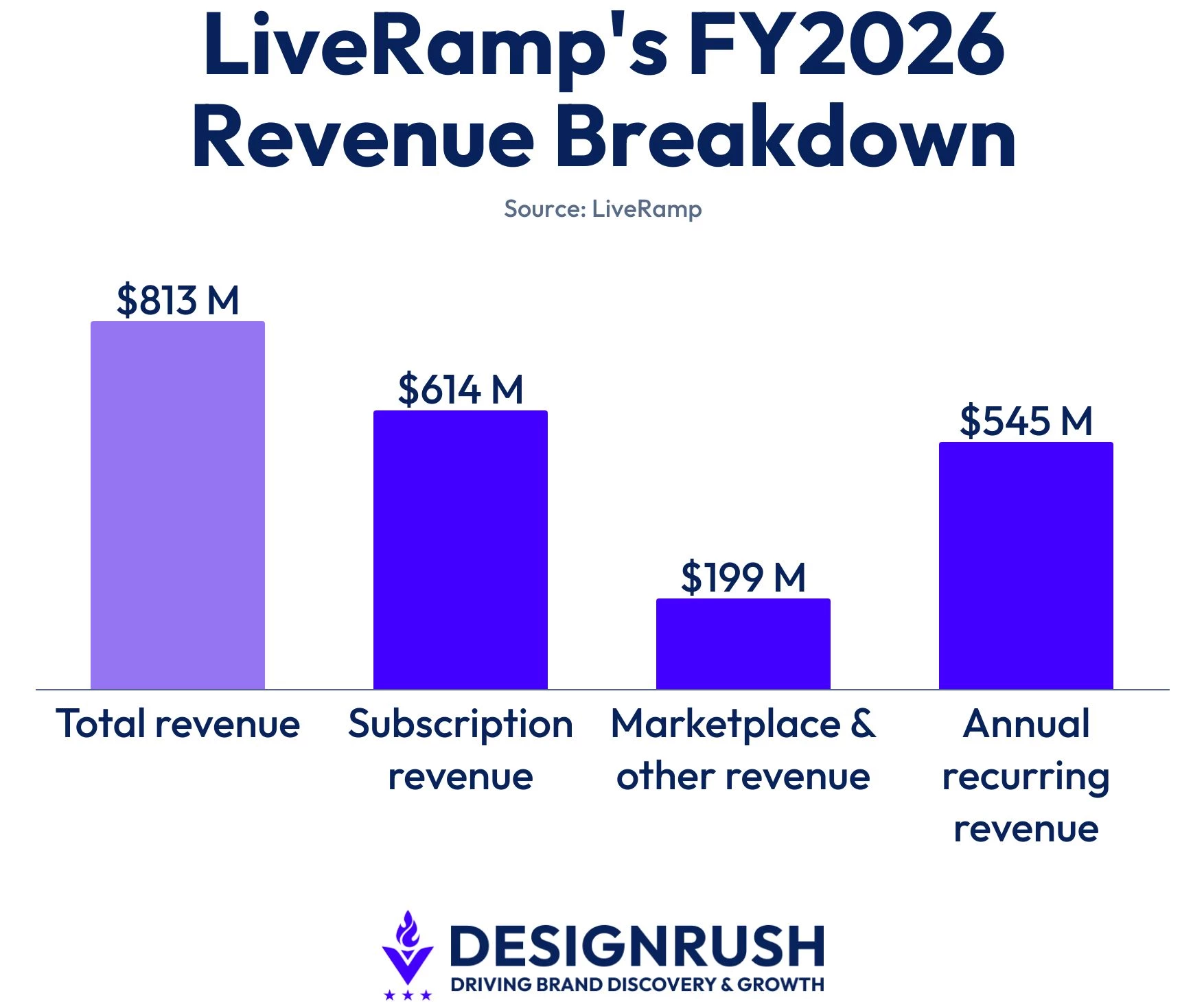
The company reported $813 million in revenue for its fiscal year ending March 31, 2026, up 9% year over year.
Subscription revenue accounted for $614 million, while annual recurring revenue reached $545 million.
LiveRamp closed the fiscal year with 846 direct subscription customers, and 133 of them pay more than $1 million a year.
These figures indicate established enterprise demand for its data services.
The acquisition now allows Publicis to extend LiveRamp's relationships through its wider agency and consulting capabilities.
Three considerations follow for agencies assessing similar investments.
- Proprietary technology creates new revenue opportunities. Agencies should identify technology assets with established customers to generate recurring revenue.
- Enterprise adoption validates commercial demand. Agencies should assess subscription revenue and high-value customer relationships to prioritize in-demand products.
- Integrated services can increase client value. Agencies should connect data, technology, and execution capabilities to deliver measurable business outcomes.
Publicis' acquisition demonstrates how established technology revenue can support an agency group's expansion into enterprise AI services.
Our Take: Can FTC Rules Protect LiveRamp's Neutrality?
Five years of regulatory oversight can make LiveRamp's neutrality measurable.
We trust these FTC rules to keep the platform's standalone products neutral for five years, and the protection stops there.
Publicis can still develop integrated products with LiveRamp and choose which customers receive them.
Omnicom moved up its LiveRamp exit within days of the May announcement and is putting its identity work on Acxiom's Real ID.
The commercial risk emerges if clients view the integrated product as essential to competing for enterprise accounts.
Rival holding companies should price out a backup identity provider now, while the FTC protections still have years left on them.
Publicis' LiveRamp acquisition joins a wave of agency consolidation, with holding companies buying up data and AI capabilities.
Explore more deals in DesignRush's roundup of top mergers and acquisitions.
Agencies developing proprietary AI products and enterprise data services can compete on technology ownership, integration, and measurable value.
Check out these top AI development companies on DesignRush.