
Omnicom x IPG: Key Findings
- Omnicom's $13.5 billion acquisition of IPG just redrew the entire advertising map, creating the largest global agency and spiking the pressure for integrated client solutions.
- The merged entity now commands unprecedented reach in data, media buying, and technology, forcing every competitor to immediately match and deliver end-to-end solutions.
- Holding companies are now expected to act as integrated tech platforms, a shift that will accelerate consolidation and redefine what “full-service” really means.
Omnicom has officially closed its acquisition of IPG, in a deal valued at a whopping $13.5 billion, creating the largest advertising holding company globally.
The move recalibrates what enterprise clients should expect from agencies and signals a new competitive standard for the industry.
This massive deal completely resets what enterprise clients should now expect from a global agency partner.
Consolidation was already happening, but this merger completely turned up the heat.
The message is simple: holding companies must now function as unified platforms, ditching the messy, sprawling agency collection model.
For brands, this shift is critical, as it promises to smash internal silos to deliver a perfectly integrated service model.
This will create higher expectations for measurable outcomes tied directly to clean, actionable data.
Scale, Data & Unified Services
The merger was first announced back in December 2024 as a stock-for-stock deal.
Now finalized at $13.5 billion, it instantly pushes Omnicom to a scale the industry hasn’t seen before.
Under the agreement, IPG shareholders received 0.344 Omnicom shares for each IPG share.
This means the new company is split roughly 60.6% legacy Omnicom and 39.4% legacy IPG.
The combined group now services direct competitors across major categories (think AT&T and T-Mobile in telecom or State Farm and GEICO in insurance).
This puts even more pressure on how conflicts and category structures will be managed going forward.
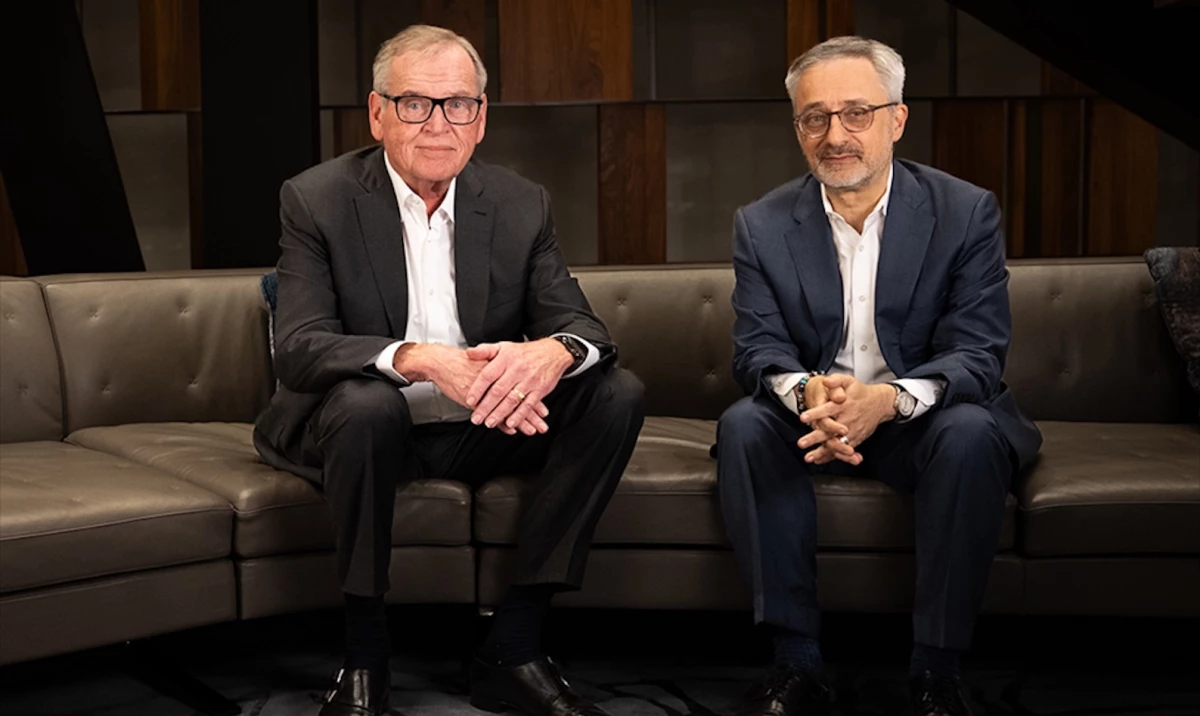
“This is a defining moment for our company and our industry,” Omnicom Chairman and CEO John Wren said in a press release.
“With the completion of the deal, Omnicom is setting a new standard for modern marketing and sales leadership — creating stronger brands, delivering superior business outcomes, and driving sustainable growth.”
Wren remains Chairman & CEO, Phil Angelastro remains EVP & CFO, and Philippe Krakowsky and Daryl Simm serve as Co-Presidents and COOs.
Krakowsky, Patrick Moore, and E. Lee Wyatt Jr. have also joined the Omnicom Board of Directors.
The company’s full leadership team will be announced on December 1.
Operational Shifts & Industry Impact
Rivals now face immense pressure, as they must either merge or significantly upgrade their infrastructure to keep pace.
“Big brands want agency partners who connect strategy, creative, media, and data," Gabriel Shaoolian, CEO at full-service agency Digital Silk, shared with DesignRush.
“The Omnicom–IPG merger makes this the new baseline for driving measurable results, and it puts real pressure on agencies to prove they can deliver outcomes at the same level of coordination.”
John Wren highlights our disciplined approach to integration planning, which minimizes disruption to day-to-day operations and is reflected in the new business we’ve won. $OMCpic.twitter.com/37wrezaAUb
— Omnicom (@Omnicom) October 21, 2025
Clients, meanwhile, will expect more data-driven, end-to-end solutions from a single partner instead of a patchwork of services.
And as competition tightens, every major holding company will need to prove it can deliver that level of seamless integration without slowing down.
- End‑to‑end, data‑driven services become baseline expectations: With this merger, “full‑service” increasingly means integrated creative, media, data, CRM, all in one place.
- Singularity becomes a liability: Agencies that remain compartmentalized (creative vs. media vs. data) may struggle to compete for large, global clients who will favor unified partners.
- Holding companies must now act as platforms: The new model emphasizes operational integration, shared infrastructure, and centralized capabilities from agencies.
Our Take: Will This Merger Actually Improve Outcomes for Clients?
In our view, it can, but only if the execution matches the ambition.
A merger of this scale gives Omnicom and IPG the kind of unified data, media, and creative power that clients have been asking for.
But we think the real test is whether the new organization can actually function as one coherent system rather than a massive network stitched together on paper.
From our perspective, the opportunity is huge.
If leadership can break down internal walls, align incentives, and truly merge capabilities, clients will see faster decision-making, clearer strategies, and more measurable impact.
But we also believe the risk is very real.
A combined organization this large can struggle with bureaucracy, conflicting cultures, and client overlap that slows down progress.
Omnicom reorganized our most advanced data and technology assets — Omni, OmniAI, ArtBot, and Flywheel Commerce Cloud — into an end-to-end platform organization to drive our strategy forward. $OMCpic.twitter.com/OrUrOuyiWS
— Omnicom (@Omnicom) July 15, 2025
If the integration becomes too heavy or political, it could create new obstacles instead of eliminating old ones.
In our opinion, the industry is watching this deal closely because it signals a future where scale and integration become the minimum standard.
Whether this merger sets the benchmark or becomes a warning story will depend entirely on how well the combined company adapts, simplifies, and delivers for clients in the year ahead.
If the industry is consolidating at the top, your creative edge matters more than ever. Partner with the top creative agencies in our directory.