-author-avatar_mobile-webp.webp)
Key Takeaways
- 75% of potential clients judge a law firm’s credibility by its websites
- Websites with clear messaging, mobile-first design, fast load times, and strong CTAs have helped law firms boost conversions by 40% or more
- Chatbots assist visitors, qualification questionnaires assess legal needs, and lead scoring identifies which inquiries are most likely to convert
Law firms in competitive markets like New York City and Miami are losing potential clients, not due to poor legal service, but because their websites underperform.
75% of potential clients judge a law firm’s credibility by its website.
This means outdated designs, poor web navigation, and slow load speeds are costing businesses thousands of potential clients a year.
The good news is that these can all be solved.
Digital Silk, a leading digital agency, estimates that firms that invest in conversion-optimized websites see a boost of 40%+ more inquiries, and that’s not all.
Firms can also experience higher client retention, stronger brand authority, and a competitive edge in saturated markets.
The award-winning agency also highlighted three critical website mistakes that could be driving potential clients away.
Tip 1: Avoid These 3 Legal Website Mistakes
In competitive markets such as NYC and Miami, even small website missteps can drive clients away simply because a competitor’s website feels more professional and approachable.
To stay ahead, avoid these three common mistakes:
- Unclear Messaging and Poor UX: Many law firm websites overwhelm users with complex legal jargon, cluttered layouts, and confusing navigation. They become an obstacle, not the helping hand they need.
- Slow Load Times: Speed matters online, and with more than 60% of legal searches occurring on mobile devices, an unresponsive site is a major liability. If it takes too long, potential clients will move on to the next firm.
- Lack of Trust: Potential clients want reassurance. They want to read testimonials, case results, attorney credentials, and strong calls-to-action. Without these readily avialable on the website, it will be harder to build trust with clients.
Tip 2: How to Fix These Mistakes
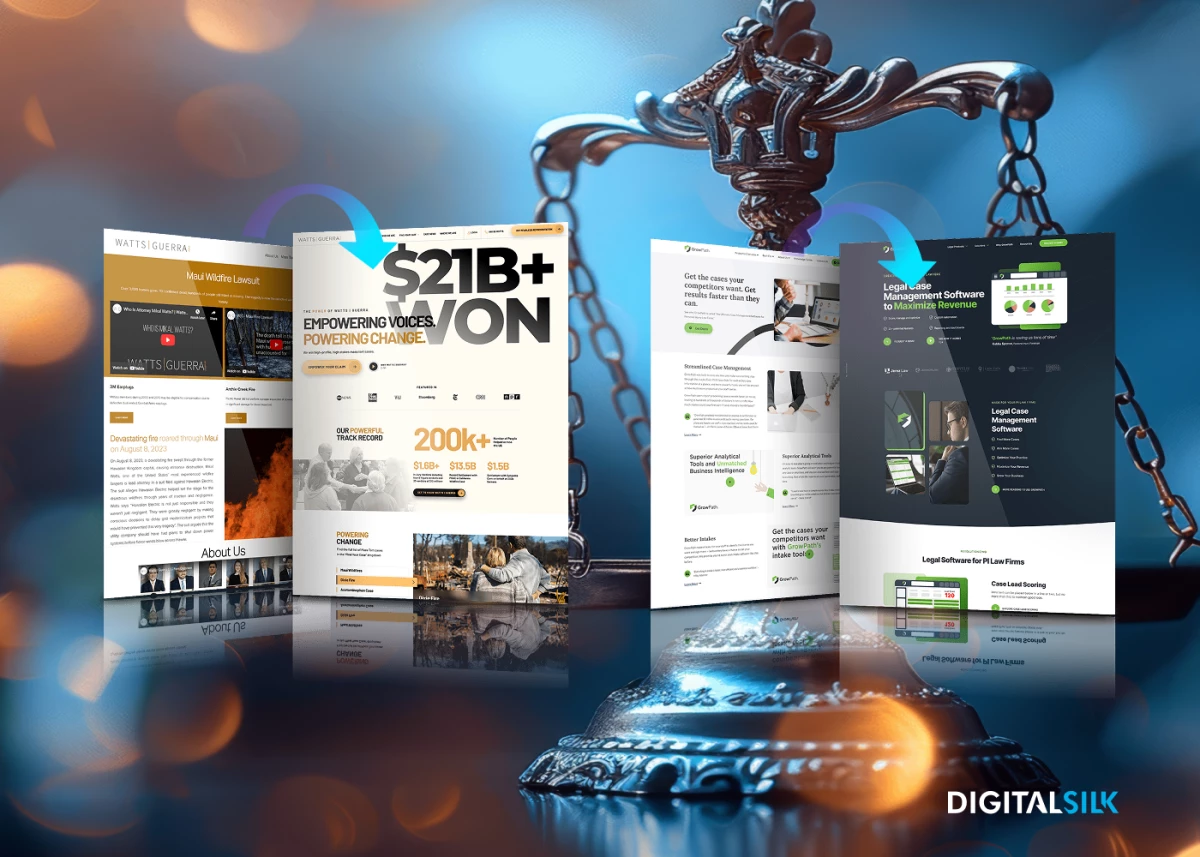
Now that the key challenges have been identified, Digital Silk outlined strategic improvements to transform law firm websites from missed opportunities into powerful client-conversion tools.
-content-large-webp.webp "Digital SIlk websites")
Here are four essential steps:
- Clarify Messaging and Improve UX: Use client-friendly language, organize content with clear headings, and create intuitive navigation. Ease-of-use matters, so much so that law firms that streamlined their UX and improved load speeds saw a 45.9% increase in user engagement.
- Implement SEO-Optimized Content: Keyword-rich blogs, FAQs, and service pages help increase visibility and attract leads. Optimizing content for SEO has significantly increased traffic for many law firms and that might be the most important factor. After all, there’s no point in having a great site if no one visits it.
- Optimize for Speed and Mobile: With most legal searches happening on mobile, optimizing images and streamlining backend performance are essential for ensuring a website functions effectively where it matters most. In fact, firms that adopted a mobile-first approach have seen up to a 72% increase in mobile leads.
- Build Trust and Drive Action: Showcase real client reviews, compelling case studies, attorney bios, and strong calls-to-action. This will help build credibility and trust. Firms with strong CTAs and simplified navigation have seen up to a 121% increase in consultation requests.
Tip 3: 8 Must-Have Features for Legal Websites in 2025
It’s not enough for a law firm’s website to look polished and accessible.
To truly stand out, a legal website requires the right features, especially if the goal is to convert visitors into clients on the spot.
From smart search tools to media content, the following elements are essential for guiding users, and encouraging them to take action.
- Smart Attorney Directory: A searchable, structured attorney directory allows visitors to easily find the right legal expert for their needs. Each profile should include detailed bios, headshots, areas of practice, and contact forms.
- Advanced Search Tools: AI-powered search tools enable users to quickly locate relevant attorneys, services, and legal resources. This feature reduces user friction and ensures potential clients find exactly what they’re looking for.
- Live Chat and Smart Scheduling: AI-driven chatbots can engage with visitors in real-time, answering basic legal questions and guiding them through the process. When integrated with scheduling tools like Calendly, they can also book consultations automatically.
- Instant Consultation Pop-ups: Strategically timed pop-ups can nudge potential clients to book a consultation at key moments. If done wrong, they can harm the user experience, but if designed tastefully, these pop-ups can dramatically increase conversions.
- Hyper-Targeted Local SEO: Optimizing a website for specific local legal searches can significantly improve visibility. Incorporating localized keywords and creating dedicated city or neighborhood landing pages increases the likelihood of appearing in searches such as “best immigration attorney in Manhattan.”
- Trust Elements: Testimonials and detailed case studies provide potential clients with tangible proof of a law firm’s success. Showcasing case outcomes — such as settlements, verdicts, or dismissals — alongside verified client reviews helps establish credibility and trust.
- Video Content: Video content adds a personal and trustworthy dimension to a law firm’s website. Short clips explaining complex legal topics and introducing attorneys create a human connection, helping clients feel more confident in their choice.
- Accessibility Compliance: Website accessibility ensures that all users, including those with visual, hearing, or motor impairments, can navigate and engage with the site. ADA-compliant websites not only meet legal requirements but also reinforce a firm’s professionalism, inclusivity, and commitment to client service.
Tip 4: 3 Ways AI is Transforming Legal Websites
There are very few sectors not affected by AI these days, and law firms are no exception.
According to Digital Silk, AI-powered tools not only streamline intake processes but also dramatically improve lead qualification and conversion rates.
Here are a few examples of how to leverage AI to provide an improved experience.
- AI Qualification Questionnaires: Dynamic, interactive forms that ask tailored legal questions help law firms gather key information before consultations. Understanding details such as case type, urgency, and location in advance allows for more efficient and informed client interactions.
- AI Chatbots and Virtual Assistants: Modern AI chatbots are highly effective and they are available 24/7. They can handle frequently asked questions, guide users to relevant pages, and pre-qualify leads. They can also sync with scheduling tools to book consultations instantly.
- AI-Driven Lead Scoring: AI tools analyze user behavior in real-time, like how long someone spends on specific pages, whether they return multiple times, or if they engage with chat. This data can be used to assign lead scores, helping firms identify high-value prospects and personalize follow-ups.
Winning Clients Starts with a Strong Website
In an era where clients rely on Google or AI-driven search tools before reaching out, a law firm’s website often serves as the first (and sometimes only) chance to make a strong impression.
Partnering with an agency like Digital Silk provides law firms with the expertise needed to transform their websites into effective tools for building trust and generating qualified leads.
-author-avatar-webp.webp)