
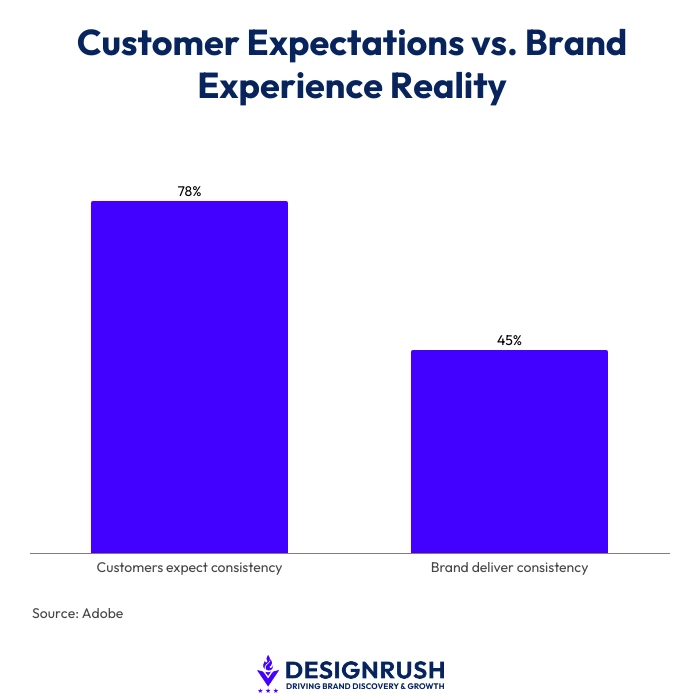
Seventy-eight percent of customers expect consistent experiences wherever they interact with a brand, according to Adobe’s 2025 AI and Digital Trends report.
Unfortunately, only 45% meet this expectation.
In the financial sector specifically, even small disconnects can change how trustworthy a company feels.
For example, a polished homepage followed by a confusing sign-up process or outdated interface can create hesitation before customers even finish registering.
That's one of the problems that design and development agencies like Goodface witness daily.
As specialists in fintech UX and product design, Goodface works with platforms that have outgrown their original digital experience and need branding, interfaces, and websites to feel more connected.
The agency’s CEO, Max Yakubovych, explains that the issue rarely comes down to a single broken touchpoint.
“Most fintech brands often don't have outdated branding or a UX challenge in isolation. They face a consistency problem. And that's usually what's costing them customers, before those customers can even articulate why they left,” he says.
YouTube channel, Business Microlearning, breaks down how thoughtful design creates confident fintech users:
How Emerald24 Unified the Customer Experience
For fintech companies, delivering a consistent experience requires more than strong branding alone.
It means aligning visual identity, user journeys, and product interactions so customers encounter the same level of clarity and confidence at every touchpoint.
For Emerald24, a UK-based digital banking and payments platform, the customer experience no longer reflected the sophistication of the product itself.
The visual style, structure, and navigation were outdated and failed to represent key capabilities like multi-currency accounts and advanced payments. This meant that the first impression customers got didn't match the platform they were about to use.
Goodface refreshed the digital banking visual identity with a green gradient system and glass-style design elements, applied consistently across the interface, making the platform feel more cohesive.
The redesign also had to support very different types of users, from business owners looking for simplicity to finance teams managing more complex workflows.
“The difficult part wasn’t adding more functionality but making complex financial workflows feel manageable for very different kinds of users,” Yakubovych explains.
Why UX Clarity Affects Fintech Customer Confidence
Onboarding is often the first real interaction people have with a fintech platform, which is why early friction leads to a bad impression of the brand.
"People don't want to stop and think about where to click next when they're dealing with financial products," Yakubovych says. "If users start feeling uncertain during important moments, confidence drops pretty quickly."
Case in point, INSART states that 70% of financial institutions lost clients last year due to slow or complex onboarding.
Insights from Deloitte also echo this, finding that 38% of new customers abandon mid-process purely because it takes too long.
As Emerald24's original onboarding process bundled identity verification, document submission, and validation into a single dense flow, Goodface knew what had to be done.
They broke this down into smaller, single-action steps that users could move through progressively and return to without starting over.
“In doing so, we reduced onboarding times by half, from 40 - 60 minutes to as little as 20 - 30 minutes,” Yakubovych adds.
Why Fintech Websites and Apps Need To Feel Connected
Many fintech customers now move between devices mid-task, whether they’re onboarding, making payments, or reviewing accounts.
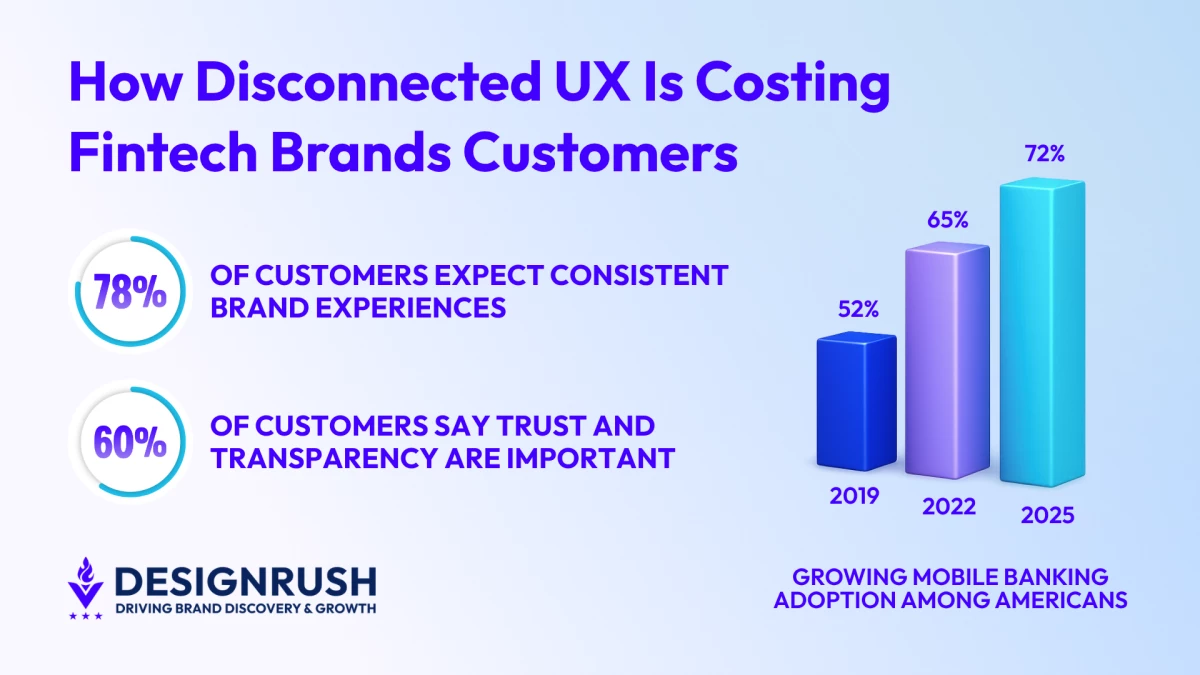
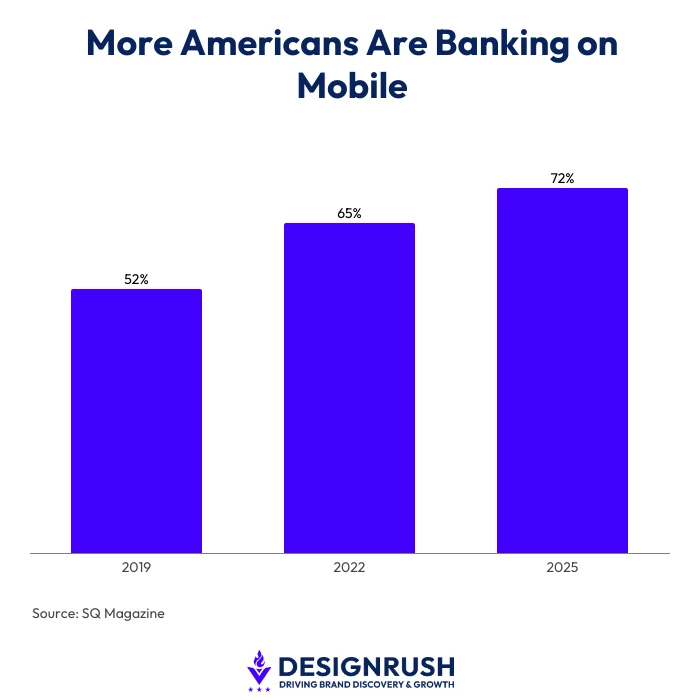
Insights from SQ Magazine show that the majority of customers are managing their finances on mobile, with 72% of U.S. adults now using banking apps, up from 65% in 2022 and 52% in 2019.
"Users switch between devices all day without really thinking about it. What stands out now is when experiences don't connect properly or suddenly feel unfamiliar," Yakubovych explains.
Emerald24’s product experience was designed around users moving between web and mobile during key actions like onboarding and account management.
To meet this, Goodface designed flows that supported that behavior so users could hand off between devices mid-task and pick up where they left off without losing context.
The web and mobile apps were built as a single connected system to feel like part of the same experience rather than two products that happened to share a name.
On the website side, navigation and content were restructured so corporate clients, partners, and individual users could each find what they needed without the platform feeling like it was pulling in three directions at once.
View this post on Instagram
Why Brand Consistency Matters
In fintech, customers are constantly being asked to trust what's happening on the other side of the screen.
This is a tough ask, especially when they're moving money, verifying identities, connecting bank accounts, and sharing sensitive information.
Customers start questioning the platform long before they consciously decide that they don’t trust it.
"Customers might not use the words 'brand consistency' when they talk about a product, but they notice when something feels off between the website, the app, and the overall experience," Yakubovych adds.
That reaction can happen surprisingly fast.
Even a minor change in design language or a small inconsistency in layouts between touchpoints can make a platform feel less dependable.
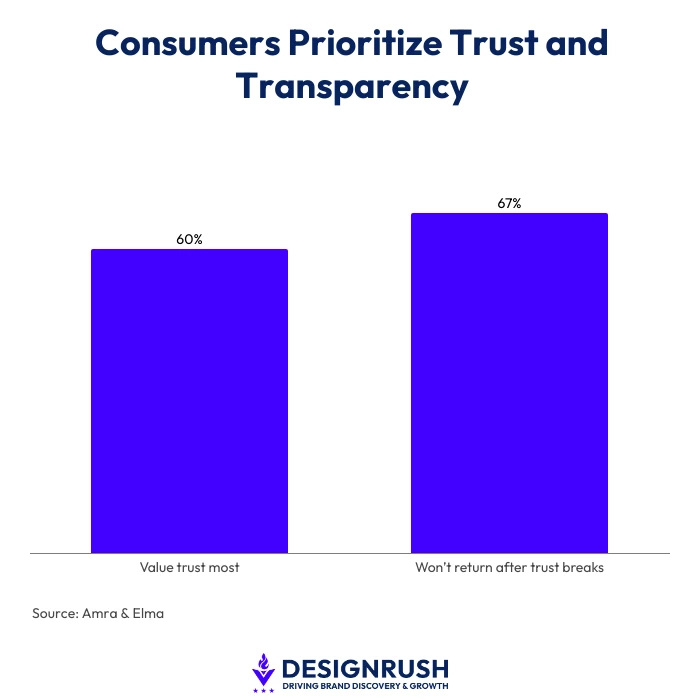
Research backs this up, with 60% of consumers saying that trust and transparency are the most important traits they look for in a brand.
Meanwhile, two-thirds of consumers won't return to a company once that trust is broken.
As fintech competition intensifies, maintaining that sense of trust and familiarity is becoming important, not only for attracting customers but also for keeping them engaged.
Fintech UX Is Becoming a Customer Retention Strategy
Fintech companies now compete heavily on usability, particularly as customers often remember whether a platform feels easy to navigate and reliable enough to return to.
“Customers remember how a product made them feel long before they remember individual features. When experiences feel clear and familiar every time, people are naturally more comfortable continuing to use the platform,” Yakubovych says.
Emerald24’s revamped website reflects that broader thinking, with onboarding, navigation, and mobile interactions designed to feel more connected across the customer journey.
To achieve this, fintech leaders should focus on:
- Faster onboarding without unnecessary friction
- Consistent UX across web and mobile platforms
- Navigation that supports different types of users
- Branding that reflects the sophistication of the product itself
Even though customers rarely leave all at once, leaders in the fintech space need to ask themselves how many small moments of friction they can afford before customer trust starts slipping away.