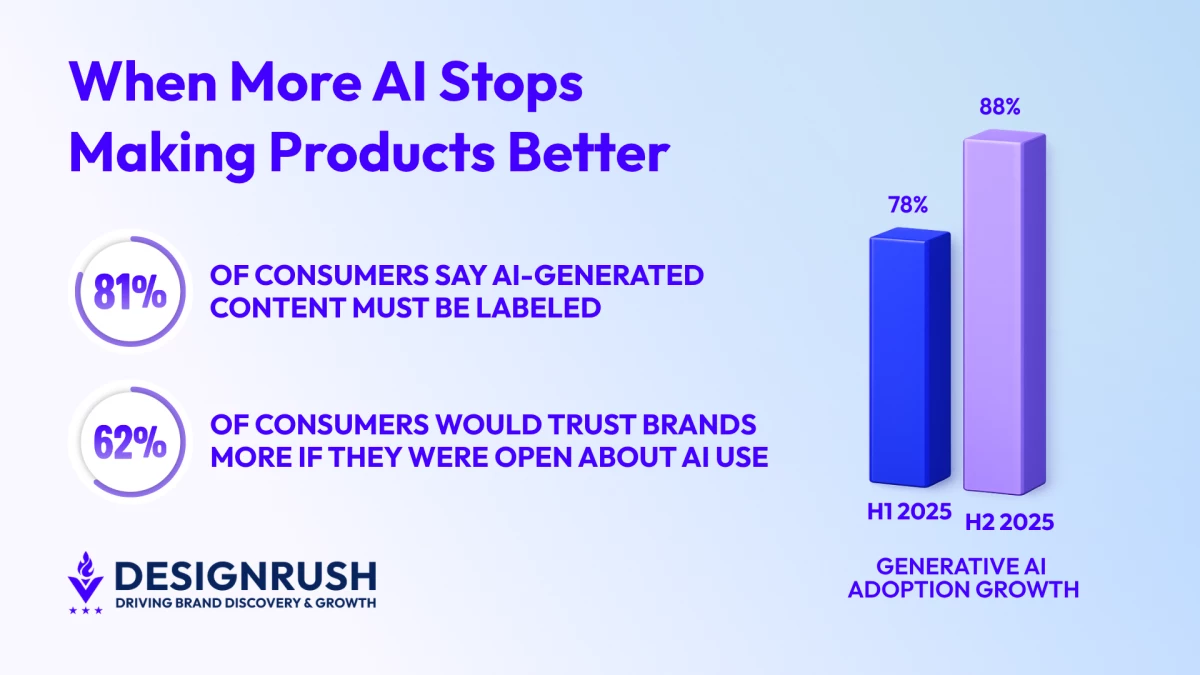

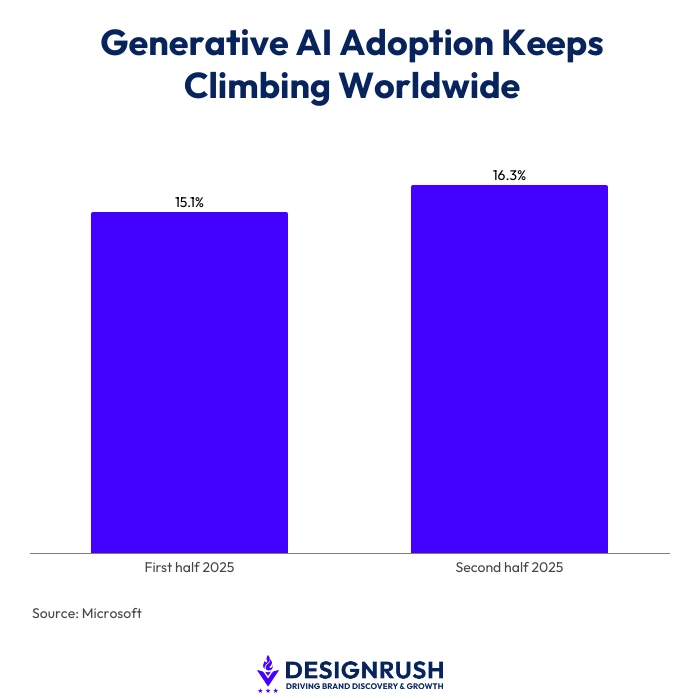
Generative AI adoption reached 16.3% of the global population in the second half of 2025, up from 15.1% in the first half, according to Microsoft's AI Economy Institute.
Yet as AI features continue appearing across software platforms, many product teams are beginning to question whether every new addition is improving the user experience or just adding another layer of complexity.
That's according to Nielsen Norman Group's latest State of UX 2026 report, which points to growing fatigue around AI experiences that feel rushed, confusing, or disconnected from what users actually need.
It’s also a trend that leading evidence-based UX and UI design agency, UX Team, is seeing more frequently as organizations rush to integrate AI into existing products.
The agency's co-founder and Director of User Experience, Chris Gieger, explains that many companies are focusing on implementation before fully understanding where AI can create value for users.
"The findings suggest that after years of rapid deployment, companies are reaching a point where adding AI is no longer the challenge. Making it useful is," he says.
YouTube channel, Skymography, shows just how bad AI fatigue is getting:
Why AI Fatigue Is Growing
Product teams are being asked to justify where AI belongs in the user experience.
For many organizations, the rush to introduce AI has added another layer of responsibility for product, design, and development teams.
After all, building the feature is one thing. Keeping it useful, explaining it to users, and proving its value over time is another.
That becomes difficult when new AI features create more work without making the experience better.
In those situations, teams can find themselves investing resources into capabilities that struggle to gain adoption or deliver tangible results.
The problem is that these teams forget to ask themselves what problem the technology is actually solving.
"Users have become incredibly good at spotting the difference between AI that genuinely helps them and AI that was added because a roadmap demanded it,” Gieger says.
“The next generation of successful products will not be defined by how much AI they contain, but by how seamlessly that intelligence supports the user's goals.”
AI Center breaks down how AI fatigue is leading to workplace exhaustion and burnout:
The AI Trust Problem
Consumer trust is where poorly built AI starts to break down.
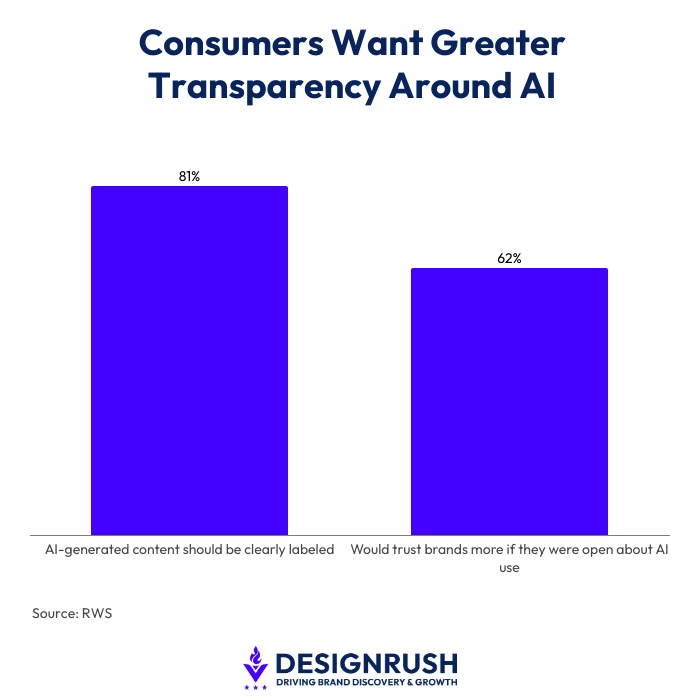
Eighty-one perccent of consumers said AI-generated content should be clearly labeled, per a 2025 RWS survey.
Another 62% said they would trust brands more if those brands were open about how they use AI.
For users, the ask is simple. Tell them when AI is involved and don't make them guess what it is doing.
That becomes harder when an AI feature produces an answer, recommendation, or action without giving users much sense of how it got there.
"Trust is earned through clarity, not automation,” Gieger adds.
“When users understand what the AI is doing, where its limits are, and how it supports their work, adoption follows naturally. When those fundamentals are missing, even sophisticated technology can feel like noise.”
Oxford College of Marketing’ webinar below explains how to balance AI innovation with consumer trust:
What Good AI Looks Like
Whether it's helping people find information faster, reducing repetitive work, or making a task easier to complete, AI features all serve a clear purpose.
In many cases, they fit into workflows people already know rather than asking them to learn something new.
"The companies that win this next chapter of AI adoption are the ones who treat intelligence as a service to the user rather than a headline feature,” Gieger says.
“Great experiences are remembered because they remove obstacles, not because they advertise the technology powering them.”
Alex Hormozi shows how businesses can make the most of using AI:
Lessons for Product Leaders
Deploying AI is becoming easier. Deciding where it belongs, however, is becoming more difficult.
For leadership teams, that raises important questions around prioritization.
Where does AI genuinely improve the product? Which features solve a problem worth solving? And which initiatives deserve continued investment once the initial excitement fades?
"If users would not notice the absence of a feature, they are unlikely to value its presence. AI should earn its place in the experience the same way any other product decision does," Gieger concludes.
And in a market racing to add AI, the harder discipline may be knowing when not to do so.