
Luckin Coffee's Blue Bottle Acquisition: Key Findings
- Centurium Capital has agreed to acquire Blue Bottle Coffee from Nestlé for under $400 million, below the $425 million Nestlé paid for its 68% stake in 2017.
- Luckin Coffee and Blue Bottle will operate independently with no plans to merge the two brands.
- The deal gives Centurium a U.S. foothold as Luckin's overseas expansion remains concentrated in Southeast Asia.
Centurium Capital, the private equity firm that controls China's largest coffee chain, Luckin Coffee, has agreed to acquire Blue Bottle Coffee from Nestléfor under $400 million.
The deal values Blue Bottle at a discount to what Nestlé originally paid.
Nestlé acquired a 68% stake in Blue Bottle in 2017 for $425 million, positioning the California-born chain as its entry into the premium specialty coffee market.
Luckin Coffee's shares closed 3% higher at $34.67 following news of the deal.
The two brands will continue to operate separately, with Centurium having no plans to merge Luckin and Blue Bottle, according to Nikkei Asia.
What Nestlé Is Walking Away From
Nestlé's decision to sell reflects a move toward an asset-light model, with the company looking to exit relatively asset-heavy retail businesses.
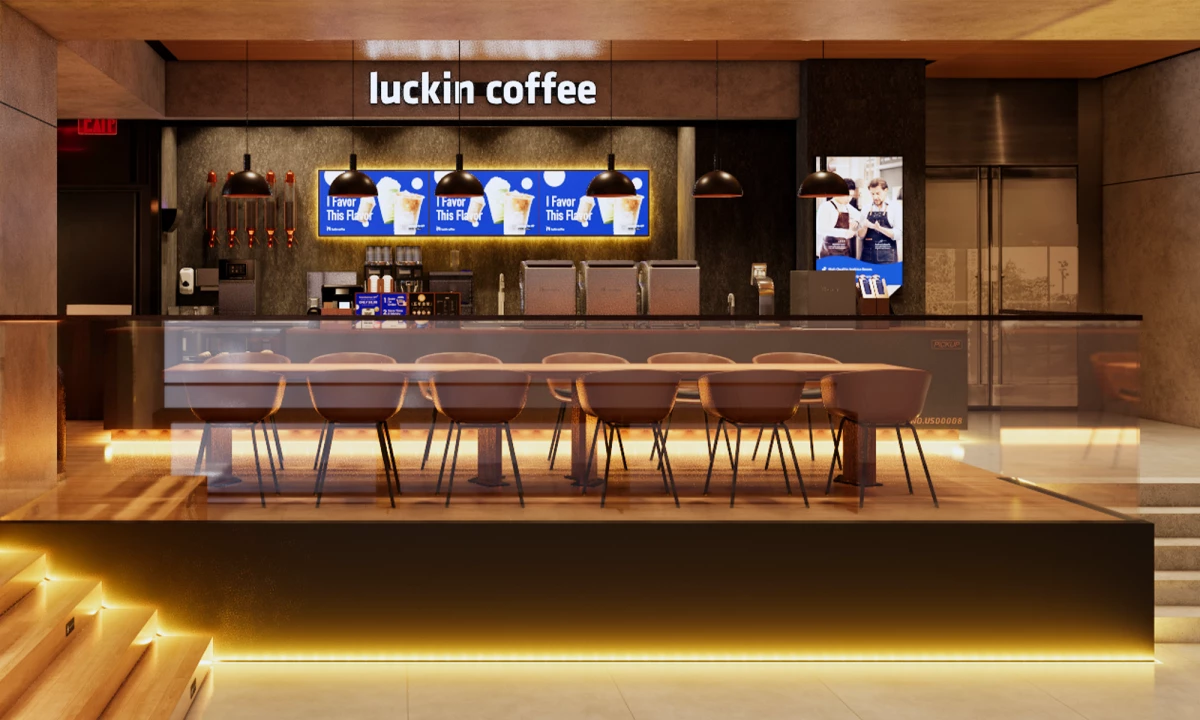
Luckin Coffee currently has only nine stores in the U.S., all of which are in New York City.
Blue Bottle has more than 100 cafes across the U.S. and Asia, along with an e-commerce platform.
But its China operations remain unprofitable after entering the market in 2020.
It opened its first store in Shanghai, positioning itself at higher prices than Starbucks.
As of the end of 2025, Blue Bottle has 140 stores globally, with 31 in Asia and fewer than 20 in China specifically.
Nestlé had worked to integrate Blue Bottle into its wider coffee business since the acquisition, including a series of Nespresso capsule collaborations starting in 2023.
Under this deal's terms, Nestlé will retain Blue Bottle's coffee machine and capsule businesses while selling the global store operations.
Luckin's Scale and the Premium Play
Luckin Coffee ended 2025 with 31,048 stores worldwide and total revenue of 49.3 billion yuan ($6.8 billion), a 43% jump from the prior year.
Average monthly transacting customers also rose 31% year-over-year to 94.2 million.
This scale was built on a high-volume, low-margin model driven by its mobile app and aggressive pricing.
Blue Bottle sits at the opposite end of the spectrum, with fewer locations, higher price points, and a brand identity built around craft and provenance.
The Chinese chain was also delisted from Nasdaq in 2020 after paying a $180 million fine to the U.S. Securities and Exchange Commission.
This occurred when the company was caught with inflating its 2019 revenue by more than $300 million, and it has since traded on OTC Markets.
Centurium had evaluated several other international coffee brands as potential targets, including Costa Coffee and the operator of % Arabica stores.
The acquisition gives Luckin Coffee's backer a U.S.-rooted brand with existing infrastructure, local teams, and a customer base that skews toward the premium end of the market.
Here's what brands should be wary of when a high-volume operator acquires a premium name:
- Ownership reputation travels with acquisitions. Parent-company perception quickly becomes part of the acquired brand’s story.
- Craft brands face scrutiny during ownership changes. Customer trust and product credibility become immediate points of attention.
- Discounted exits signal pressure in the category. When valuations compress, investors and operators reassess long-term retail economics.
How Centurium manages the brand perception gap between Luckin’s mass-market identity and Blue Bottle’s specialty positioning will determine whether the deal creates real value.
Our Take: Can Blue Bottle Stay as Blue Bottle?
We think the independence pledge is the right opening move, but it's also the easiest one to make before integration pressure builds.
Blue Bottle's brand value is almost entirely built on a specific kind of credibility, and none of that will travel well under a parent company with Luckin's history.
The China expansion rationale makes sense on paper. But the markets where Blue Bottle has struggled most are the same ones where Centurium has the deepest operational ties.
Starbucks selling a majority stake in its China business to Boyu Capital last November shows how complicated the Chinese premium coffee market has become, even for established players.
Blue Bottle’s path here is narrow.
Every operational decision will now carry weight for how the brand is perceived by the customers who built its reputation.
Brands navigating acquisition activity and brand identity risk need agencies that understand how ownership changes affect consumer perception. Explore the top branding agencies in our directory.