
Uber Air Launch: Key Findings
- Uber Air powered by Joby is set to roll out in Dubai later this year, giving riders one-tap access to all-electric air taxis.
- Joby's aircraft has completed more than 50,000 miles of flight tests and entered the final stage of FAA certification.
- The partnership dates back to 2019, with Joby acquiring Uber's Elevate division in 2021 before the two companies rejoined forces.
Uber is adding a new option to its app, and it flies.
The company announced Uber Air powered by Joby on February 25, confirming that users will be able to book all-electric air taxis directly through the Uber app.
Joby Aviation expects to carry its first passengers in Dubai later this year, marking the first commercial deployment of the service since the two companies began working together in 2019.
For marketers and agencies tracking how brand platforms are expanding, the launch signals that Uber is moving well past ride-hailing.
It also shows how the company is adding a premium transport tier with distinct audience and context implications.
A Launch From a Seven-Year Partnership
The booking process mirrors how Uber works today.
Riders enter a destination, and if the trip qualifies, Uber Air appears as an option alongside standard rides.
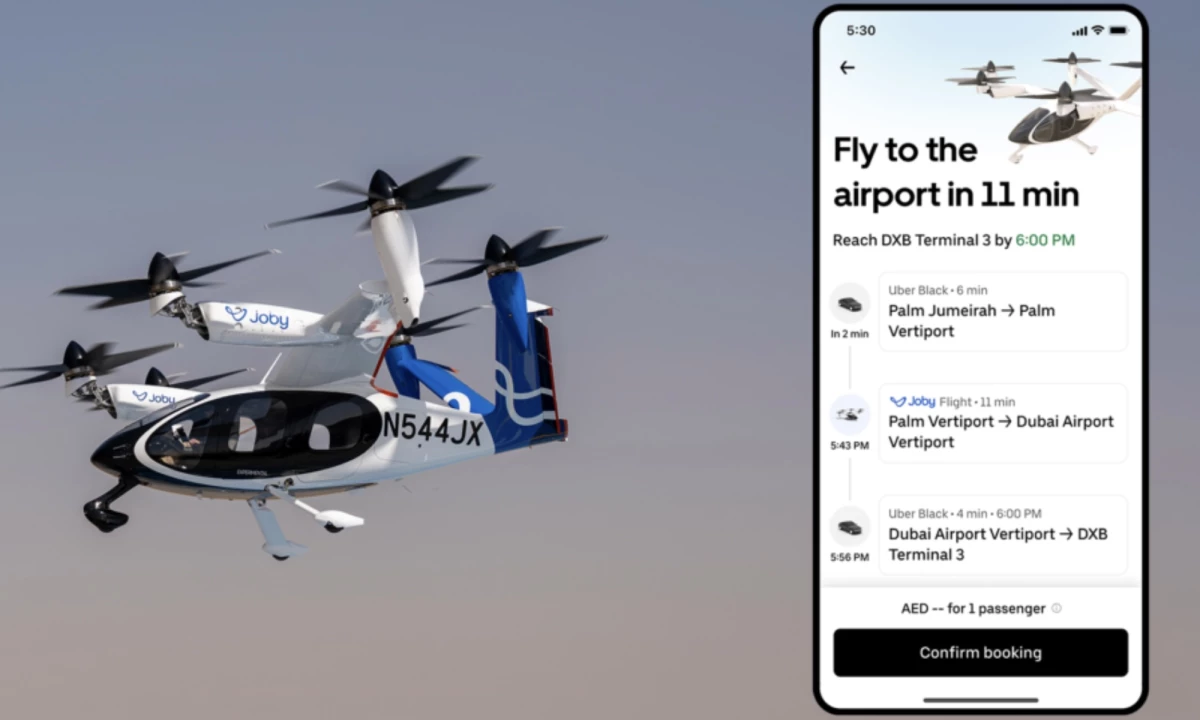
A single tap books the full journey, including an Uber Black pickup to the vertiport, the flight, and a drop-off on the other end.
Joby acquired Uber's Elevate division in 2021 to advance the urban air mobility infrastructure underpinning the service.
The aircraft is an all-electric eVTOL with six tilting propellers, a top speed of 200 mph, and seating for up to four passengers alongside a certified commercial pilot.
Large panoramic windows and a quiet acoustic profile are designed to make the flight feel integrated into city life.
Joby plans four vertiports across the city, including locations at Dubai International Airport, a mall, a hotel on Palm Jumeirah, and the American University of Dubai.
Dubai goes first partly because Joby is pursuing a qualification program with the UAE's aviation regulator that could allow passenger flights before a full FAA certification is cleared.
The U.S. Rollout Depends on FAA Progress
Before Uber Air reaches American cities, Joby must clear the FAA's full certification process.
The company has completed more than 50,000 miles of flight tests and has entered the final stage, which involves FAA pilots operating the aircraft directly.
Once certified, the confirmed expansion markets are New York, Los Angeles, the U.K., and Japan, according to the official Uber press release.
For U.S. audiences, New York and Los Angeles represent the most immediate opportunity.
Both cities already have dense Uber usage and the kind of chronic congestion that makes a 200 mph aerial option genuinely useful for time-sensitive trips.
H.C. Wainwright upgraded Joby Aviation to a Buy rating on February 26 and set a price target of $18 per share.
The firm pointed to Joby’s certification progress and its role in the FAA’s new eVTOL Integration Pilot Program, which is expected to begin activity by mid-2026.
The certification timeline remains the key variable for brands planning around the U.S. market.
The Dubai launch gives the service a live operational record to reference when domestic approvals come through.
The integration of air taxis into a consumer app used by millions creates a new advertising and sponsorship surface worth tracking now.
- App integration creates early media inventory: Watch out for sponsorship space you can secure before rates climb.
- Vertiports add premium OOH real estate: Airports and retail hubs will for sure introduce ad placements.
- Affluent riders offer high-value reach: Early adopters are likely urban and tech-forward, giving luxury, travel, and finance brands a focused audience.
Brands that begin thinking about air mobility as a media identity will now have a head start when Uber Air reaches U.S. cities.
Our Take: Is Uber Air a Marketing Opportunity or a Distant Prospect?
I think the Dubai launch matters more as a proof of concept than as an immediate commercial opportunity for most brands.
The FAA certification process is the real gating factor for the U.S. market, and until it goes live, Uber Air remains a premium niche with limited scale.
That said, the vertiport infrastructure Joby is building is exactly the kind of physical real estate that becomes valuable ad inventory once volume builds.
The smarter move is to watch the Dubai rollout closely and begin building a point of view on where air mobility fits in a broader media mix.
In other news, YouTube surpassed Netflix in 2025 revenue, generating over $60 billion in combined advertising and subscription income for the first time.
Brands planning campaigns across emerging premium transport and mobility platforms need agencies that understand how new consumer environments translate into media opportunities.
Explore the top advertising agencies in our directory.