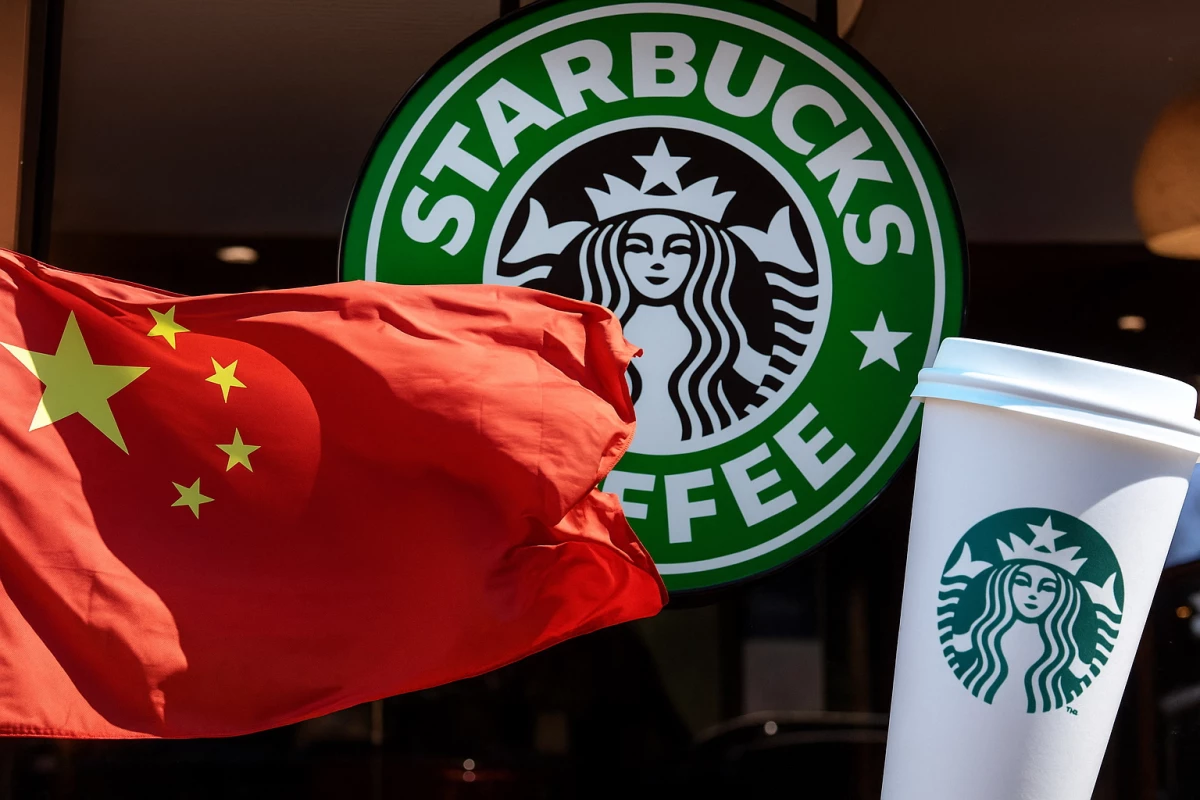

Starbucks' China Deal: Key Findings
- Starbucks and Boyu Capital have agreed to a $4 billion joint venture in China, bringing local expertise to help the brand recover sales.
- The coffee chain values its China business at over $13 billion, reflecting confidence that licensing and its remaining 40% stake can sustain long-term growth.
- The company plans to expand to 20,000 stores in the country, as local chains continue to challenge its share of its second-largest market.
Starbucks is passing the torch in China.
The Seattle-based coffee company said it will sell most of its China business to Boyu Capital in a $4-billion agreement that hands over control but keeps its name and culture intact.
"Starbucks has built an iconic brand and a deep connection with Chinese consumers over the past 26 years," Boyu Capital Partner Alex Wong said in a press release.
"Together, we aim to combine Starbucks global coffee leadership with Boyu’s deep market insights and expertise to accelerate growth and create exceptional experiences for millions of customers."
Starbucks said it would sell control of its China operations to investment firm Boyu Capital in a deal valued at $4 billion, in one of the most valuable divestments of a China unit by a global consumer company in recent years https://t.co/deyAhjsWTApic.twitter.com/4yPCrZLFMg
— Reuters (@Reuters) November 4, 2025
The two companies will run Starbucks’ nearly 8,000 stores as a joint venture.
Starbucks will license its brand and intellectual property while retaining 40% ownership.
Chairman and CEO Brian Niccol described the move as a step toward growth in a market that has become more complex and competitive.
“Boyu’s deep local knowledge and expertise will help accelerate our growth in China, especially as we expand into smaller cities and new regions," Niccol added.
The sale is expected to close in early 2026, creating positive expectations for Starbucks' increased brand relevance in China.
A Market Starbucks Once Defined
When Starbucks opened its first store in China in 1999, coffee culture barely existed.
The brand represented aspiration and modern living for a new middle class. But over time, this image lost its edge.
New chains like Luckin Coffee and Cotti Coffee offered cheaper drinks, faster delivery, and flavors that better matched local tastes.
Luckin Coffee has even expanded to the U.S., opening five stores in New York City.
According to Euromonitor International, Starbucks’ share of the Chinese coffee market has dropped from 34% in 2019 to 14% in 2024.
Luckin now runs more than 26,000 outlets globally, with most in China and Hong Kong, with $1.7 billion in net revenue, a whopping 47.1% growth year-over-year in Q2 2025.
This sharpens the risk for Starbucks’ brand in China, where relevance has already slipped as local rivals win at value and speed.
In contrast, back home, the company is shuttering hundreds of stores in a $1-billion identity reboot, proof that even the market leader must reinvent itself to stay meaningful.
Toward Local Insights
Boyu Capital was founded in 2011 and is known for its consumer investments, including stakes in Alibaba, Meituan, and CATL.
Under the new structure, Boyu will continue to focus on menu development, digital strategies, and expanding to smaller cities where competition is lighter but demand is growing.
Starbucks’ decision to sell to Boyu comes at a turning point for the company.
Consolidated net revenue rose 4% in Q3 2025 to $9.5 billion, but operating loss fell sharply by 7.9% YoY.
On top of closing stores in the U.S., Starbucks has also cut corporate jobs.
Still, the coffee giant has continued initiatives to regain consistency in service and pushed out marketing campaigns to keep its brand top of mind.
Adapt the Story to Match the Market
China remains central to the brand's future, but it has struggled to connect with younger and more price-sensitive consumers.
Starbucks has resisted steep discounting, instead leaning on brand experience and store design.
This Boyu partnership may give it the agility to localize without compromising its image.
Starbucks' move tells us that brand power alone no longer guarantees success in China.
Here are three lessons to be gleaned from Starbucks' $4-billion deal with Boyu:
- Local relevance drives growth. Partnerships with domestic players can close the cultural gap faster than global campaigns.
- Protect the brand, share the business. Keeping ownership of the name and licensing helps preserve consistency while allowing for local flexibility.
- Adapt the story and strategy. A global brand that learns to listen gains a longer future in markets where loyalty changes quickly.
Trading control for deeper cultural understanding enables Starbucks to better use the strength of its story to outlast its setbacks.
Our Take: Can Starbucks Stay Global by Thinking Local?
Yes, definitely. I've seen this strategy succeed many times.
It's similar, though not as drastic, to how McDonald's has an international menu, with specific products only available in certain countries.
The fast-food chain, like many global brands, also works with local advertising agencies to better localize campaigns.
Comment
byu/Noestimate_903 from discussion
intravel
This kind of strategy becomes effective when brands let go of uniformity and embrace difference.
But don't mix this up with abandoning what people are familiar with.
It’s really about adapting what already works in a region instead of rewriting the brand from scratch.
This builds a sense of belonging that advertising alone can’t create. And this is the kind of relevance Starbucks needs to earn back in China.
In other news, see how Lavazza used National Coffee Day and transformed it into a global brand campaign with Steve Carell.