
Pinterest Campaign Urges Users to Go Offline: Key Findings
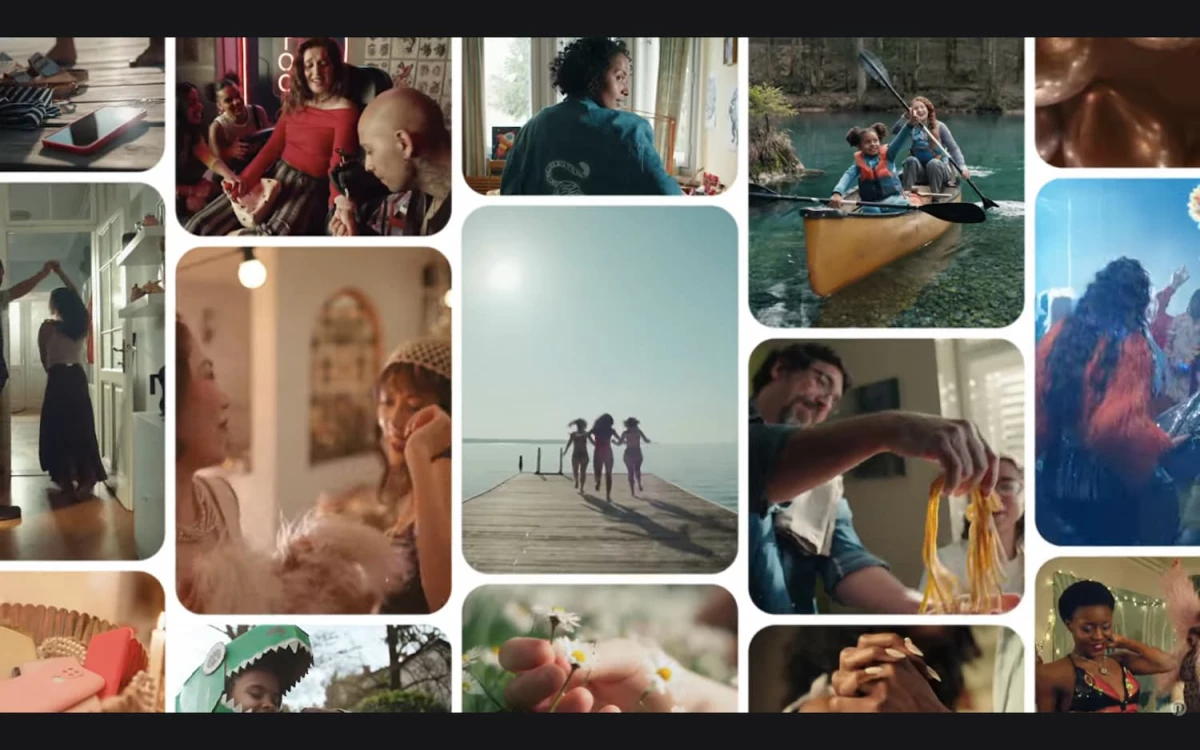
- "How Did They Do It?" is a 60-second brand film built from employees' personal home movies and family archive photos, produced in-house by House of Creative.
- Full distribution across TV, cinema, out-of-home, and digital channels begins May 1, alongside a 30-second cut-down.
- At Coachella this year, the platform debuted what it calls the phone-free brand activation.
Pinterest is repositioning itself as a social media company that pushes users offline.
Its in-house creative team, House of Creative, launched a 60-second film titled “How did they do it?”. It’s built from archival home movies and photos.
Spanning the 1950s through the 1980s, the campaign features a young narrator reflecting on how people lived before smartphones existed as archival footage plays.
The film closes on a single line on screen:
"The best thing you can find online is a reason to go offline."
It's Pinterest's first major campaign under new CMO Claudine Cheever, who joined the company in February from Amazon.

Pinterest Uses Employee Archives to Challenge Scroll Culture
Based on source descriptions of the spot, the film opens on grainy, amateur footage.
It shows children at backyard parties, families on road trips, and teenagers at school dances, none of them filming each other.
Pinterest did not hire actors or produce recreations. That decision is where most of the creative weight sits. The imperfection of real home movies is harder to fake than anything a production budget could deliver.
Alongside the main film, a 30-second cut-down will roll out from May 1 across TV, cinema, out-of-home, and digital channels.
The Coachella phone-free activation earlier this month puts the film's premise into practice at one of the most-documented social media events of the year.
Together, these executions reflect a broader shift toward digital wellbeing in brand strategy: from preaching presence to actually engineering it. This makes it a sustained campaign push, not a one-off stunt.
CEO Bill Ready Pushes Policy Shift on Youth Social Media Use
"Most platforms are engineered to keep you scrolling through other people's lives. Pinterest is engineered to get you off the app and into yours," Cheever said in a statement.
The campaign lands weeks after a Los Angeles jury found two major social media companies liable for intentionally designing addictive platforms, giving the platform's positioning unusual timeliness.
Ready has spent the past year making arguments most platform executives avoid.
He wrote in TIME about Australia's social media ban, called on governments to restrict social media access for users under 16, and made accounts private-only for minors.
"For Gen Z, most never got to experience a world without social media and are craving more connection to the real world," Ready said on LinkedIn.
What gives "How Did They Do It?" more weight than a standard brand-values campaign is that these structural changes came before a single frame of this film ran.
The platform has long argued it operates differently from passive-scroll competitors. This campaign is that argument at its most explicit.
Our Take: Is Pinterest’s Anti-Scroll Model Sustainable?
Pinterest can argue against social media norms, but only if the behavior matches the message.
The irony is structural. Pinterest runs ads, measures engagement, and profits from time on-platform. The campaign does not resolve that tension.
But the distinction being drawn here is behavioral.
Why? A user who visits to plan a kitchen renovation and then goes to buy tiles behaves exactly as the platform intends.
That is a different model than compulsive scrolling, and the brand has been building toward it for years.
We think this is one of the more honest pieces of brand communication a social platform has put out. The employee archives, the CEO's legislative advocacy, and the Coachella activation all exist independently of the ad.
The campaign is credible because the actions have already happened.
Pinterest made "How Did They Do It?" all by themselves, but brands that want to build trust around their social media positioning need agencies that know how to time things right and how to build a brand.
Explore top creative agencies to find the right partners.