
LinkedIn Safety Updates Limiting Outreach: Key Findings
- Restrictions on LinkedIn outreach are increasing, as new trust and safety systems now evaluate patterns of technical and behavioral signals instead of single actions.
- LinkedIn restricts automated outreach, but the platform can also block manual outreach if it detects irregular activity, such as inconsistent logins or device changes.
- Trigger-aware outreach workflows can reduce restriction risk by keeping activity patterns consistent.
For years, LinkedIn outreach has been a core prospecting channel for many B2B sales teams.
However, the networking platform's recent Trust & Safety updates have tightened enforcement triggers.
While these new restrictions aim to eliminate automated outreach, they can also affect manually operated accounts.
These restrictions commonly come in the form of temporary messaging limits, identity verification requests, or account access interruptions.
Often, when you run your outreach manually or if you simply manage your own LinkedIn account, restrictions are triggered by actions as simple as traveling, switching devices, or logging in from different networks.
Petr Kaliuzhny is a co-founder and CRO of GetSales, a team-centric LinkedIn outreach automation platform.
He notes that manually managed executive LinkedIn accounts sometimes face restrictions more frequently than those using controlled automation environments, where developers actively prioritize account safety and ban prevention.
For B2B sales professionals using the platform to connect with prospects, this can create real problems.
“LinkedIn isn’t just looking at how many messages you send anymore,” Kaliuzhny says.
“It’s looking at how your account behaves. When login patterns, devices, or locations start changing too often, the system treats that as a risk signal.”
The GetSales LinkedIn Automation Safety Guide offers a resource to B2B teams on the most common safety triggers and why these practices can lead to bans.
Keep reading to learn:
- What caused LinkedIn's tightened security triggers
- Why LinkedIn is watching outreach activity more closely
- The technical signals most likely to trigger restrictions
- Why both manual and automated outreach carry account risks
Plus, Kaliuzhny breaks down how the Trust & Safety updates will alter outreach for B2B teams, and how they can reduce risk by adopting trigger-aware outreach workflows that align with LinkedIn’s enforcement patterns.
Kaliuzhny and other industry experts delved into the LinkedIn ban triggers in a recent video:
Why LinkedIn Is Watching Outreach Activity More Closely
LinkedIn has spent the past several years strengthening its trust and safety infrastructure.
The objective is straightforward. Reduce spam, remove synthetic accounts, and make professional conversations feel more trustworthy.
That effort has led to much deeper monitoring of user activity.
LinkedIn doesn’t usually act because of one suspicious move.
Instead, it watches how an account behaves over time, with smaller signals accumulating before enforcement occurs.
“LinkedIn doesn't just ban you for one mistake; it bans you for patterns. Every suspicious action adds risk, and eventually you cross a line,” Kaliuzhny says.
GetSales has identified various LinkedIn ban triggers, covering everything from technical fingerprints to messaging behavior.
When several of these signals appear together, even gradually, the likelihood of enforcement increases.
Kaliuzhny explains why multiple sessions are one of the most telling automation triggers:
Technical Signals Most Likely to Trigger Restrictions
LinkedIn’s safety enforcement triggers can be grouped into several categories, and one of the most significant involves device identity.
LinkedIn uses browser and device fingerprinting to analyze attributes such as operating system details, installed fonts, screen resolution, and hardware characteristics.
These can create a technical identity that helps the platform recognize how accounts are accessed.
“When several accounts appear to share the same fingerprint, LinkedIn can connect them and flag suspicious behavior,” Kaliuzhny says.
Connection origin is another signal.
Login activity that jumps across geographic regions or frequently changes IP addresses can appear unusual.
Most professionals access LinkedIn from relatively stable environments, so sudden changes tend to stand out.
Behavior patterns also receive scrutiny.
Outreach campaigns that send large volumes of actions immediately, remain online around the clock, or repeat identical activity patterns can resemble automated scripts.
Message content matters as well. Identical outreach scripts, links included in the first message, and very low response rates can generate spam signals inside the platform’s detection system.
Profile credibility also influences risk.
Accounts with minimal activity, unrealistic career history, or suspicious profile photos often attract reports from other users, which can accelerate enforcement.
“None of these signals alone guarantees a restriction, and problems usually appear when several signals begin to overlap,” Kaliuzhny says.
Why Outreach Campaigns Still Depend on LinkedIn
Despite tighter enforcement, LinkedIn remains one of the most important channels for B2B outreach.
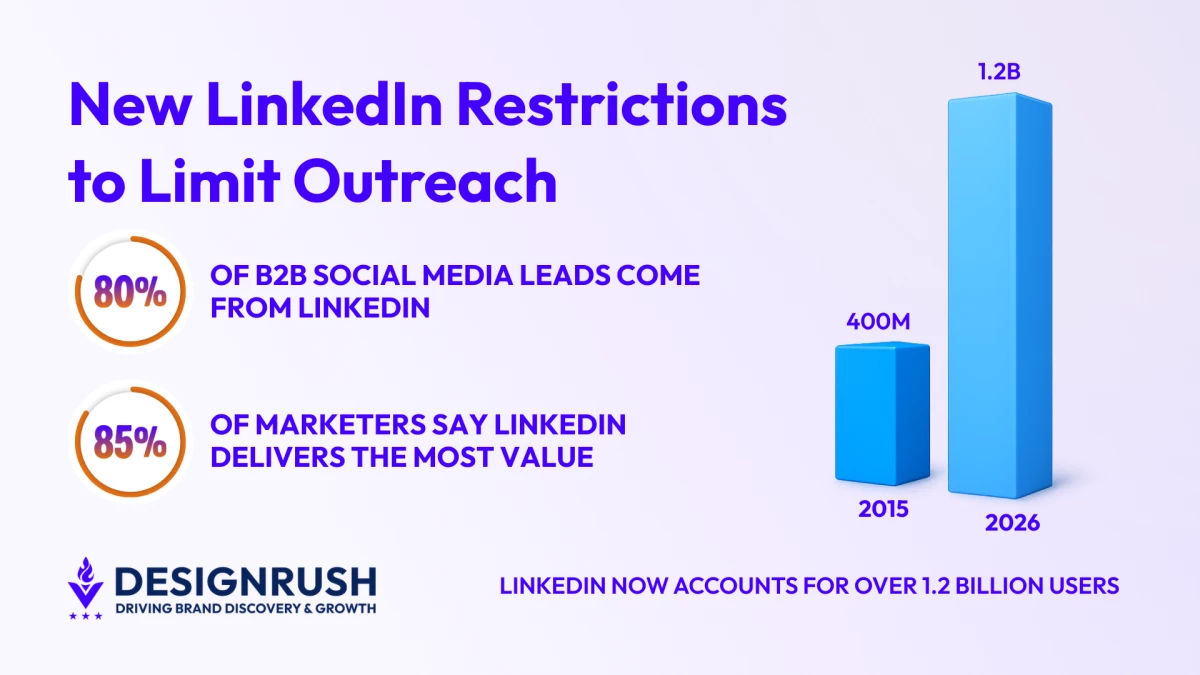
LinkedIn’s professional network has grown from about 400 million members in 2015 to roughly 1.2 billion users today.
That growth has dramatically increased the volume of outreach activity and competition for attention.
Research continues to highlight how influential the platform has become in professional sales pipelines, with 80% of B2B leads generated through social media originating on LinkedIn.
Meanwhile, Content Marketing Institute research shows 85% of B2B marketers say LinkedIn delivers the most value among organic social platforms.
“These numbers explain why restrictions create immediate disruption,” Kaliuzhny says.
“When a LinkedIn account disappears, sales teams often lose months of conversations, relationships, and prospect research.”
Why Manual Outreach is Just as Risky as Automation
Manual outreach often involves switching devices, traveling between cities, and logging into accounts from different networks. Those actions are normal in everyday work life.
To LinkedIn’s detection systems, however, that kind of activity can look suspicious.
“Changes in device fingerprints, geographic locations, login sessions, or messaging behavior may gradually resemble automation activity,” Kaliuzhny says.
Kaliuzhny explains why you should never share your 2FA secret with LinkedIn automation tools in the video below:
New Discipline Behind LinkedIn Outreach
LinkedIn outreach is not disappearing.
Professionals still respond to relevant conversations, and sales teams continue to build pipelines through the platform every day.
What has changed is the margin for error.
Trust systems now evaluate identity signals, technical environments, messaging patterns, and user feedback at the same time.
That’s why outreach campaigns that ignore those signals often encounter friction sooner than expected.
In this environment, the GetSales team focuses heavily on ban prevention within their automated outreach tool, which allows users to build automated pipelines for themselves and their clients.
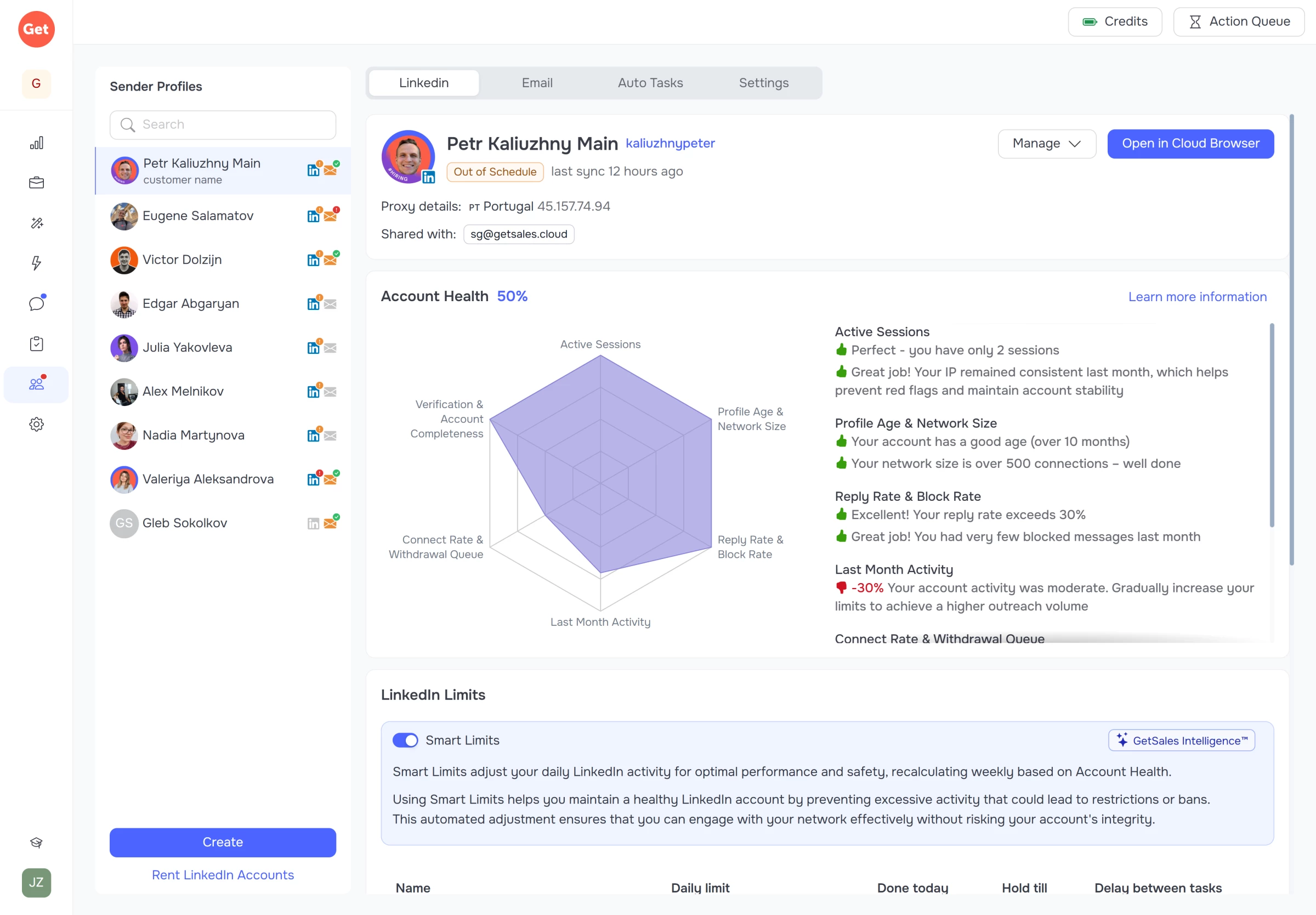
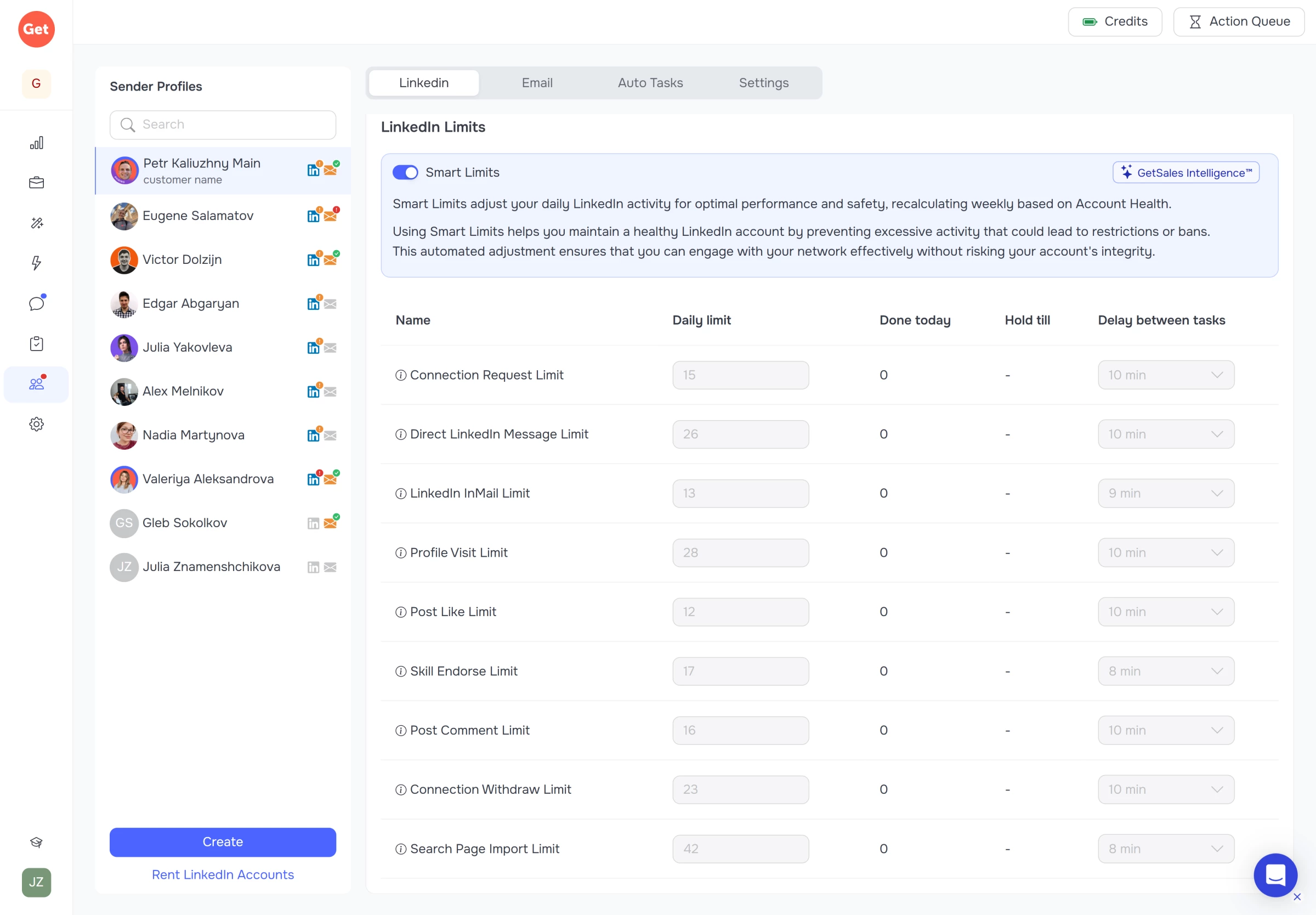
Key features that ensure account safety include the Account Health Dashboard and Smart Limits. These features help track the activity of each account, keeping its behavior as human and natural as possible.
The following screens illustrate how GetSales helps users maintain high performance while staying compliant:
In practice, prospecting on LinkedIn increasingly resembles infrastructure management rather than casual networking.
“Campaigns that maintain stable environments, vary behavior patterns, and focus on credible interactions continue to operate successfully,” Kaliuzhny says.
“However, those who rely on unpredictable activity often run into trouble sooner or later.”
Yes, LinkedIn outreach still works.
But the difference now is that success depends less on sending more messages and more on understanding how the platform evaluates behavior behind the scenes.