
LinkedIn Outbound Automation: Key Findings
- LinkedIn is 277% more effective for B2B lead generation than other social platforms, making automation crackdowns a direct revenue risk.
- Dynamic daily limits as low as 10 to 30 actions now replace fixed caps, forcing sales teams to abandon volume-first outreach.
- Trust and behavioral scoring now determine account health, shifting success from message volume to session consistency and engagement quality.
There’s no denying LinkedIn is the king when it comes to B2B outreach and lead generation.
HubSpot data shows that LinkedIn is 277% more effective at B2B lead generation than other social networks.
In fact, LinkedIn nearly triples the output of both X and Facebook.
LinkedIn’s growing crackdown on automation tools is raising concerns, especially given how effective the platform has been for B2B marketers and sales teams.
This video breaks down LinkedIn’s automation crackdown and what professionals can do to adapt and stay compliant:
The impact has been immediate.
Sales teams that once relied on volume now face shrinking activity limits and tighter scrutiny, forcing them and the tools they use to adapt on the fly.
Petr Kaliuzhny is the Co-Founder and CRO of GetSales.io, a sales engagement platform built to keep LinkedIn and email outreach safe.
He and his team have focused on rebuilding outbound systems to align with how the platform actually works, rather than relying on tactics that try to bypass detection.
“Ignoring LinkedIn’s security algorithms is no longer optional,” Kaliuzhny says.
“If your approach doesn’t respect how LinkedIn measures behavior, you’re not running automation. You’re running the risk of burning your valuable accounts.”
In an interview with DesignRush, Kaliuzhny explains how LinkedIn’s enforcement strategy has changed and why traditional automation tactics are failing.
He also shares how sales teams can rebuild outreach systems that hold up under long-term scrutiny.

Who Is Petr Kaliuzhny?
Petr Kaliuzhny is the Co-founder & CRO at GetSales.io, a safety-first sales engagement platform for LinkedIn and email outreach, used by agencies and GTM teams to scale outbound while protecting account health.
How LinkedIn Security Updates Impact B2B Outreach
LinkedIn’s enforcement strategy has shifted from visible caps to invisible behavioral scoring.
Instead of just setting fixed weekly quotas, LinkedIn now watches how you behave.
The platform flags mathematically precise actions, filters out mass spam, and evaluates technical consistency like session activity and device fingerprint.
According to Kaliuzhny, LinkedIn’s latest changes are more aggressive than ever:
“LinkedIn rolled out another Trust & Safety upgrade: stronger session consistency checks, more aggressive fingerprint-based anomaly detection, and tighter scoring around unusual automated activity,” Kaliuzhny says.
These updates focus on one goal: LinkedIn needs to protect platform authenticity and remove bots that create spam and act unnaturally.
LinkedIn identifies non-human access primarily by checking how users emulate on-platform sessions.
“Every time LinkedIn ships even a ‘small’ update, we see a wave of restrictions because a big part of the automation market still tries to simulate web sessions on their own,” Kaliuzhny explains.
“They spoof cookies, replicate network flows, and patch fragile behaviors. When the underlying logic changes, things break. You get logouts, verification loops, and eventually bans.”
At the same time, LinkedIn grew stricter in how it assigns penalties.
Beyond tracking session activity, the platform monitors many other aspects to find unnatural behavior, which the GetSales.io team outlines in the video below:
Another key focus for LinkedIn’s system is monitoring the daily limits on connections, likes, and messages you send.
The safe number for these actions now appears dynamic, often ranging from 20, 15, or even 10 actions per day, based on real-time risk signals and historical account behavior.
This is why teams should keep these action volumes fluctuating daily.
A consistent, fixed number of actions tells LinkedIn that you are running mathematically precise bot activity, which triggers penalties.
“And since there are more tools and more outreach volume than ever, when enforcement tightens, the overall number of restrictions spikes across the ecosystem,” Kaliuzhny says.
Beyond technical and behavioral signals, the content of outreach directly impacts account health.
To receive fewer negative spam reports and lower your risk of a ban, teams must rethink their messaging strategy in terms of:
- Database hygiene: Negative feedback has become far more expensive. When prospects mark messages as spam, block senders, or select “I don’t know this person,” those signals compound quickly, which hurts reply rates and accelerates account risk.
- Quality of networking and outreach: LinkedIn is steering the platform toward higher-quality professional interaction. Signals such as targeting relevance, acceptance rates, profile alignment, and content consistency now influence account health.
How GetSales.io Adapted Its Architecture
Roughly two years ago, the industry experienced one of its recurring ban spikes. Many platforms responded by patching surface-level issues and pushing emergency updates.
GetSales.io chose a different path.
Instead of continuing the cycle of reactive fixes, the team analyzed why restrictions were happening in the first place.
“We found that a huge portion of restrictions were actually driven by user-side behavior,” Kaliuzhny says.
“Multiple logins, switching accounts on the same device, inconsistent proxy and location usage, messy session patterns.”
“These create false restrictions because they look like abnormal behavior. So we rebuilt around minimizing those triggers.”
This prompted Kaliuzhny and his team to implement two major changes to their platform's architecture:
- Anti-detect and Real Fingerprint Discipline: GetSales.io integrated established anti-detect browser technology instead of emulating sessions internally. This approach reduced the need to constantly rebuild fingerprint defenses as LinkedIn detection evolved.
- Single Session Protection: Automation now runs through one secure session per LinkedIn account. Teams can collaborate without creating overlapping logins that confuse platform monitoring systems.
And these changes worked.
Since the rebuild was designed around consistency, users benefited from a safer default behavior, even when enforcement from platforms like LinkedIn tightened.
Modern Sales Teams Must Adopt These Changes
Many outbound teams still treat LinkedIn outreach as a numbers game.
Send more messages. Increase daily limits. Push volume.
Unfortunately, LinkedIn doesn’t reward this approach anymore.
Instead, the platform increasingly operates on trust scoring and behavioral realism.
And to take advantage of this, sales teams must shift away from the mindset of “coming up with better automation tricks” towards a system approach to genuine relationships.
“Just like you don’t propose on the first date, sales teams shouldn’t sell on the first touch,” Kaliuzhny says.
“You connect, start a conversation, provide relevance, and convert when the timing is right.”
“This leads to better ICP clarity, better segmentation, cleaner data, and outreach that feels like real professional networking.”
This mindset shift also requires sales teams to redefine what “aggressive outreach” means:
“‘Aggressive’ should mean efficient use of your allowed capacity, not spam,” Kaliuzhny says.
“Use connection capacity and follow-ups intelligently, keep a human rhythm, and build trust signals.”
To operate inside LinkedIn’s new reality, Kaliuzhny recommends three practical changes:
1. Zero Tolerance for Bad Data
Wrong names, weak segmentation, and irrelevant offers now carry outsized risk.
Teams should clean lists aggressively, segment precisely, and pause campaigns immediately when negative feedback appears.
2. Protect Sessions
One stable session per account should become standard practice.
Whether automating or working manually, teams need strict profile discipline using Single Session Protection or anti-detect browsers with controlled environments.
3. Use Adaptive Limits
Fixed daily quotas no longer reflect how LinkedIn enforces activity. Smart limits and account health monitoring should reduce activity before enforcement triggers and guide safe restarts when caps reset.
GetSales.io has seen these changes work in practice across active outbound programs, particularly as LinkedIn enforcement has tightened.
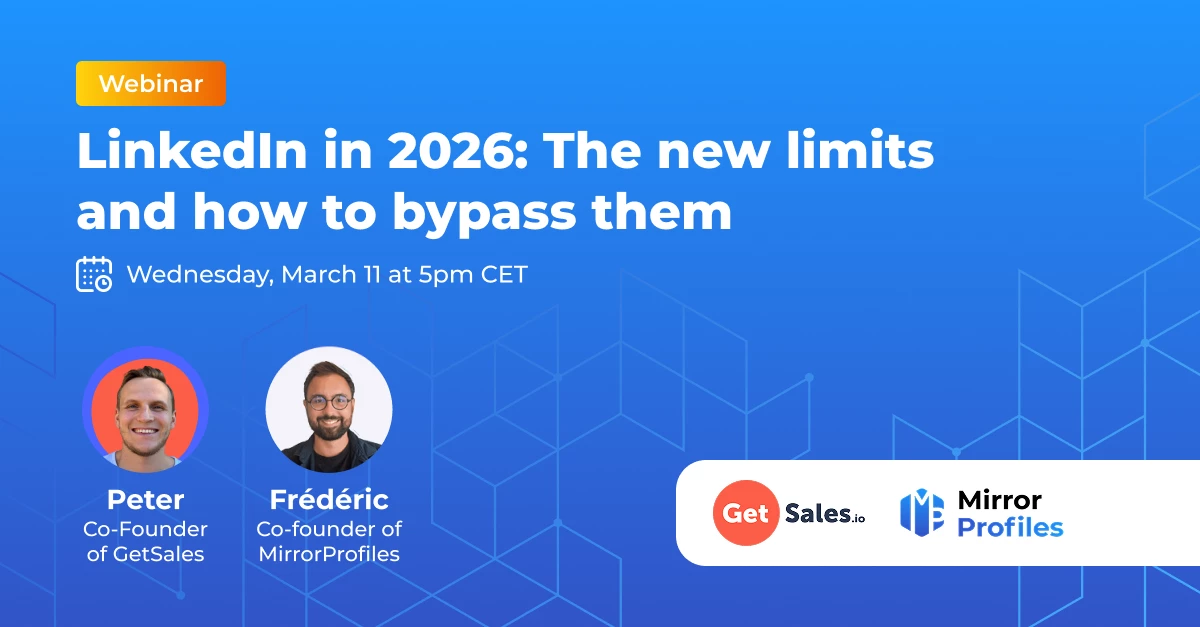
The team regularly hosts webinars to help overcome these restrictions. The next webinar will take place on March 12, 2026, and will be dedicated to the recently released LinkedIn security updates.
Build a More Sustainable LinkedIn Outreach
The era of brute-force automation is ending faster than most realize.
What replaces it is not less outreach, but smarter systems that respect how platforms now measure behavior.
For teams willing to adjust, the payoff is not just fewer bans.
It is higher trust, better conversations, and outreach that work with the platform instead of constantly fighting it.
Because in the new LinkedIn economy, volume gets attention, but credibility keeps accounts alive.