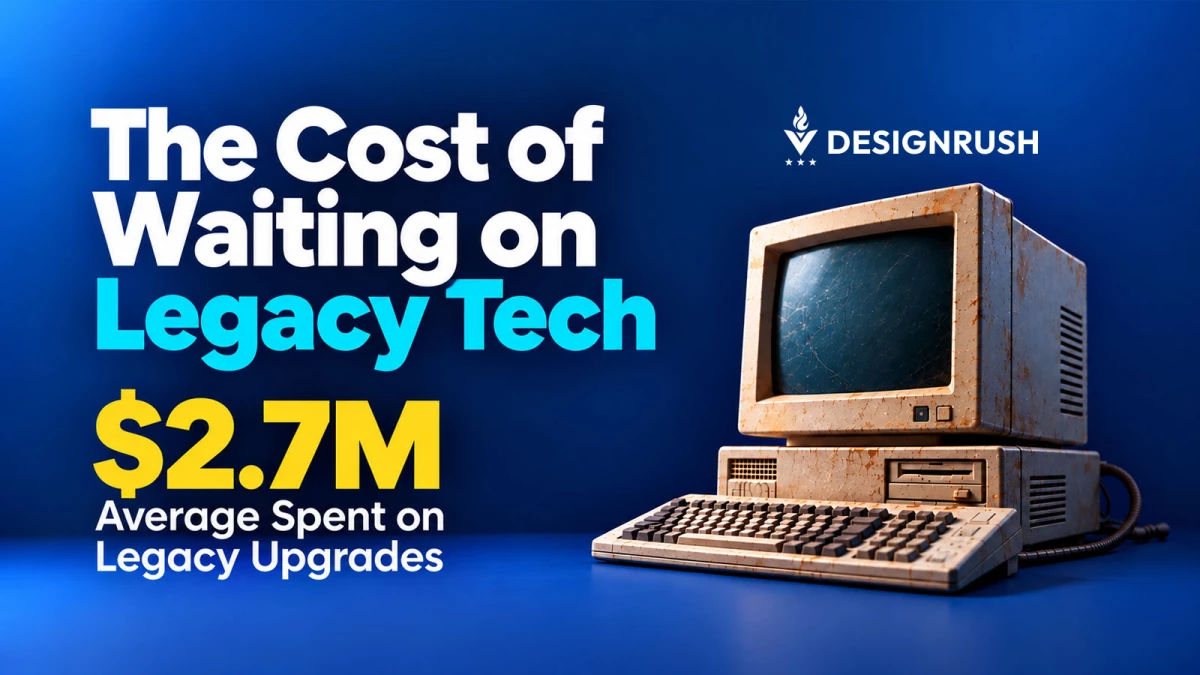

Enterprise IT teams spent an average of $2.7 million upgrading legacy technology in 2024, with much of that spending going toward reducing risk, according to Capitol Technology University.
Many legacy systems stay in place because they still work and the business depends on them every day.
Goji Labs works on enterprise software already in production, including projects that extend existing platforms or address technical debt in systems that still have to keep running.
The company’s CEO and Co-Founder, David Barlev, says that companies often see the modernization budget long before they account for everything being spent around the existing system.
"The modernization project shows up as one big number, so everybody sees it, but the maintenance behind it is a different picture," he says.
"The hours are spread across teams, and workarounds can stay in place for years, so a company can be paying for the old system long before it approves the modernization work."
Legacy Systems Add Maintenance Work and Security Risk
Support, staffing, and compatibility are often where legacy systems show their age.
Vendor support may end, the people who know the technology can become harder to find, and connecting older software to newer cloud platforms or APIs can take more work.
Older software may also stop receiving security updates, while some systems lack the logging and intrusion-detection tools teams use to spot threats.
"Senior engineers can spend a surprising amount of time keeping an old stack stable or patching around parts nobody wants to touch," Barlev adds.
"That can pull engineering capacity away from the product roadmap."
One example of successful legacy modernization comes from Goji Labs' work with Intterra, where the company replaced a 15-year-old legacy architecture.
Technical debt fell by 70%, with the platform now supporting more than 350 emergency response agencies.
Older Systems Carry Years of Integration Work
Older applications can be difficult to connect to modern cloud platforms and APIs, while newer systems still have to exchange data with them.
"A system can stay in place for another two years while the business around it keeps changing. New integrations get added, workflows start depending on them, and more data moves through the same platform," Barlev says.
"But when the company eventually modernizes, all of that has to be understood before anything can be changed safely."
Goji Labs' modernization guide says legacy applications often connect through undocumented data flows, batch jobs, or point-to-point integrations built over years.
And when those dependencies surface after work begins, project scope can expand.
Some of the work sits deep in the code. Teams may have to rewrite custom components, keep critical functions running, and connect newer technology without interrupting the system.
Users can need retraining too, while old workflows and edge cases still have to be tested.
By then, the engineers who built or modified the system may be gone. Current teams can be left working backward through functioning code before they know what is safe to change.
"That’s why I usually favor doing this in stages," Barlev says.
"You can move the application onto newer infrastructure, refactor parts of the code over time, or build around the older system while you prepare to retire it."
Which Legacy Systems Should Enterprises Modernize First
Goji Labs' Modernization Fit Framework starts with what an application failure would cost the business.
Higher-criticality systems are scored from 1 to 5 for continuity risk, and a 4 or 5 is enough to put the system in front of governance.
Integration count can change the answer. With fewer than five connections, rehosting or replatforming may still make sense.
Once a system has more than 15, Goji Labs looks at refactoring or rearchitecture.
Private equity-backed companies have another timing constraint. Goji Labs also maps modernization work against major milestones such as an add-on acquisition, refinancing, or exit.
"For a private equity-backed company, modernization has to fit the holding period and the operating plan," Barlev says.
"Essentially, if the platform is slowing product delivery or creating risk that will surface in diligence, waiting can start to affect the investment case."