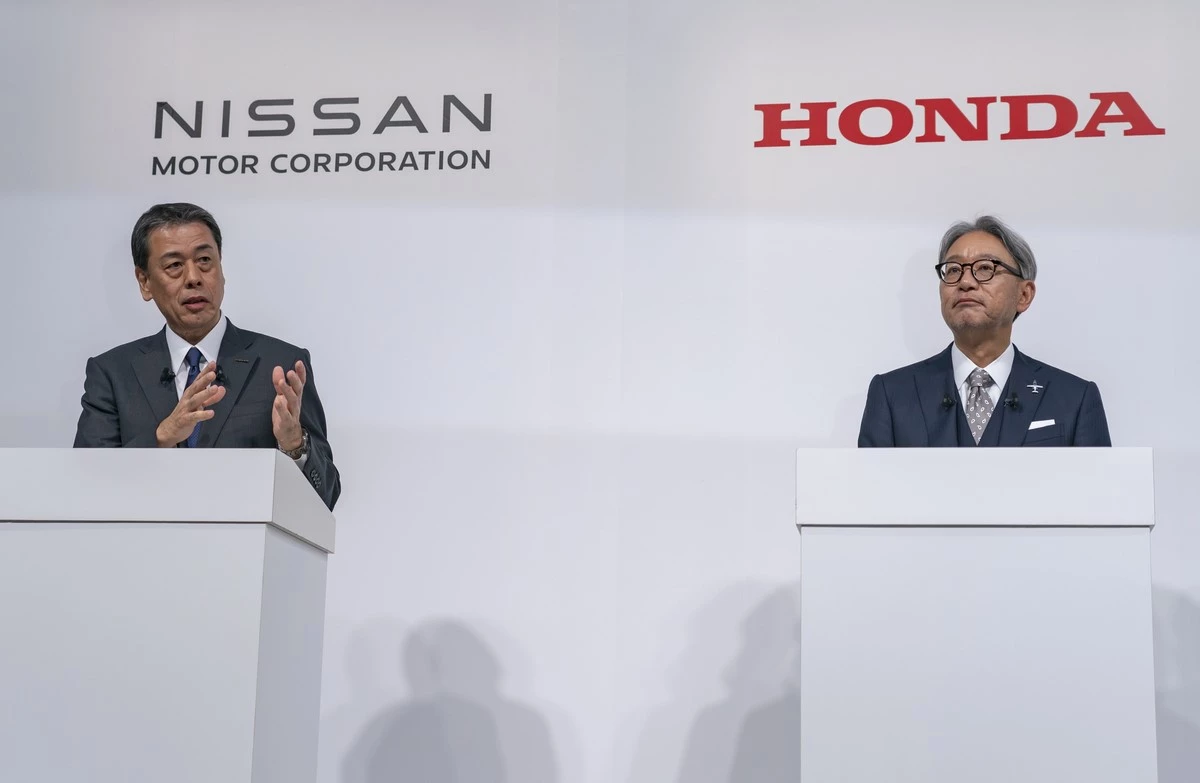

The pending merger between automotive giants Honda and Nissan, which could also include Mitsubishi, of which Nissan is the largest shareholder, caught the attention of every automotive industry executive and car enthusiast — and for good reason.
The potential $200 billion deal promises to reshape the competitive landscape, accelerate the race toward electric vehicles, and redefine global supply chains in the automotive sector.
But the merger carries implications that extend far beyond the assembly lines. This potential merger is a response to intensifying global competition and shifting consumer demands.
For leaders navigating disruptive markets, it offers a blueprint for recalibrating strategies, streamlining operations, and staying ahead of the competition.
Whether your organization builds cars, software, or pharmaceuticals, the principles behind this deal hold universal value, especially when it comes to the following:
1. Surviving in a Highly Competitive Market
The rise of electric vehicles, rapid technological advancements, and pressure from new competitors — particularly China’s rapidly growing EV market — are reshaping the automotive landscape.
Nissan and Honda recognize that standing alone risks stagnation, and their proposed union signals a powerful counter to external disruption.
As Honda focuses on partnerships like its joint venture with GM to develop robo-taxi technology, Nissan brings its EV expertise, including the successful Leaf.
GM and Honda to launch Cruise robotaxis in Japan by 2026 https://t.co/6VOidPWwDD
— The Verge (@verge) October 19, 2023
Together, they can bridge gaps in innovation and scale, outpacing competitors in an industry where falling behind could mean extinction.
This strategy demonstrates that collaboration among seemingly rival companies can redefine industries.
For industries beyond automotive, the takeaway is clear: mergers aren’t just about expansion — they’re survival tactics.
Strategic consolidation can create the scale needed to innovate faster, outpace competitors, and deliver greater value to customers.
2. Redefining Alliances and Partnerships
A merger between two powerhouses doesn’t just affect the players involved. It also sends ripples through their existing alliances.
Honda’s partnership with General Motors, for instance, may require rethinking or restructuring, due to possible conflicts of interests.
Honda’s work with GM on robo-taxi platforms and Ultium batteries showcases how alliances can drive innovation, but also how they could face uncertainty in light of a merger.
This highlights a key consideration for leaders managing brand partnerships in times of change: mergers can shift priorities, redefine goals, or even dissolve existing collaborations.
Proactive communication and adaptability are vital to maintaining relationships that still hold strategic value.
3. Integrating Supply Chain Models for Efficiency
Global supply chains are under pressure like never before. A merger of this scale offers a rare chance to streamline procurement, manufacturing, and distribution processes.
Nissan and Honda’s combined supply chain operations could unlock significant cost savings and reduce inefficiencies, paving the way for better vertical alignment with the brands' EV and battery production efforts.
For instance, with Honda’s commitment to GM’s Ultium battery technology and Nissan’s own battery innovations, their joint venture could lead to cost reductions and improved production timelines.
For industries facing rising raw material costs and logistics challenges, this is a masterclass in leveraging scale to build resilient supply chains.
A Roadmap for Executives
At its core, the Nissan-Honda merger underscores the importance of bold, strategic decision-making. In today’s fast-paced world, standing still is the greatest risk.
Consolidation, innovation, and adaptability aren’t just buzzwords — they’re the keys to long-term survival.
Every industry is interconnected, and consolidation in one sector often triggers waves in others. Nissan and Honda’s merger could reshape not only the auto industry, but also related markets like energy, tech, and manufacturing.
These potential outcomes provide a compelling reminder: leaders must stay vigilant to changes outside their immediate sectors. Disruption often emerges from unexpected corners and those who anticipate it are best positioned to thrive.
Honda and Nissan aren’t the only ones looking to pull off a strategic M&A in an effort to solidify their positions within their industry. Recently, Capital One received approval to proceed with its acquisition of Discover.