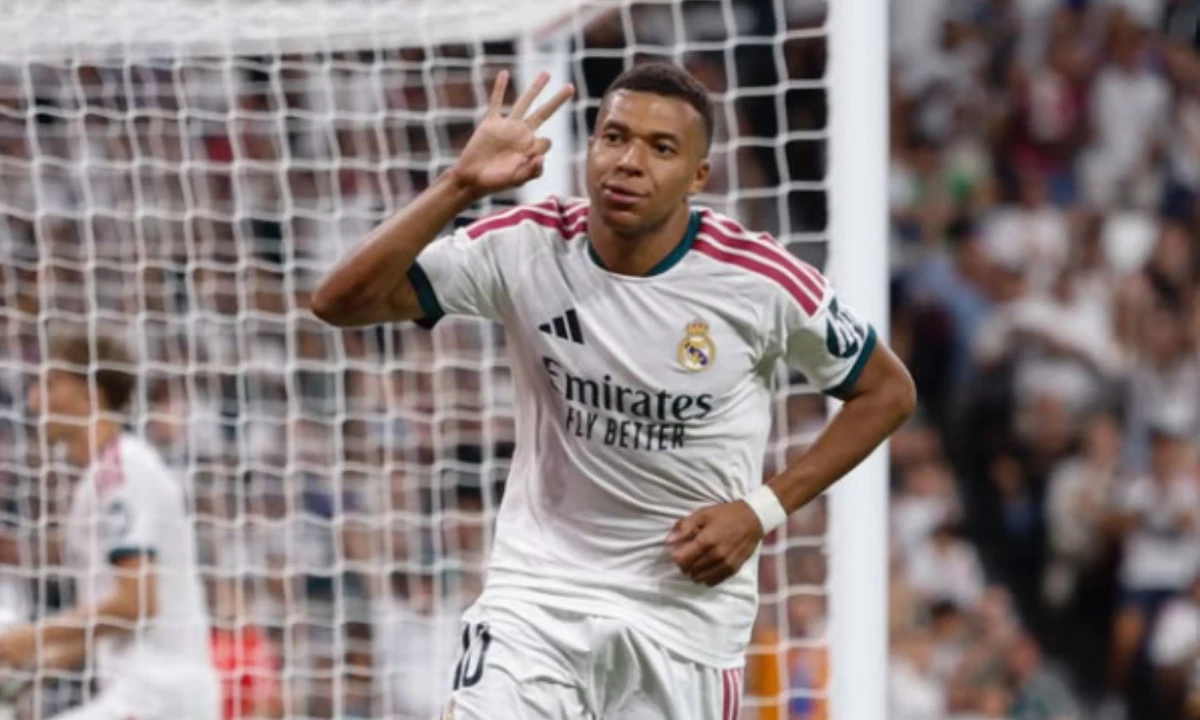

Kylian Mbappé's apology did not end the commercial fallout from his remarks about a meme depicting Mao Zedong.
Three Chinese sponsors ended their partnerships with the French football star within a day.
China Media Group (CMG), which owns state broadcaster CCTV, also suspended all LaLiga coverage, Mbappé's other matches, and ads featuring him.
On, which signed Mbappé in September after two decades with Nike, publicly welcomed his apology.
LaLiga, Real Madrid, and On each called his comments personal views, a defense that CMG threw out when Real Madrid made it.
Can a company separate a celebrity's personal views from its own responsibilities in a market where political missteps cost real money?
The controversy began with a video from "The Bridge," the YouTube show co-hosted by Mbappé's Real Madrid teammate Aurélien Tchouaméni.
Mbappé discussed a meme featuring his face superimposed on an image of a man he described as a Chinese dictator.
Although he did not name Mao, the remark triggered a backlash in China.
"My comment was ill-judged and I now understand that it hurt many people in China and in Chinese communities around the world," Mbappé wrote in his Oct. 27 apology.
CCTV answered that it would judge his words by what Mbappé does next.
The athlete's apology came as brands and football organizations faced pressure to address the controversy.
Chinese beverage company Eastroc, dairy company Mengniu, and Shanghai Milkground ended their partnerships with Mbappé.
LaLiga and "The Bridge" also apologized before Real Madrid followed on Oct. 28.
Kylian Mbappé on his favorite meme: "The one where they put my face on a Chinese dictator (Mao Zedong)? That really makes me laugh, I use it with my friends all the time."
by u/ChiefLeef22 in soccer
The responses show how quickly a celebrity controversy can become a commercial and institutional crisis.
They also reveal how little room global partners may have to rely on standard public relations language when local audiences expect a direct response.
Three Statements Repeat the Same Disclaimer
Each statement separates Mbappé's comments from the organization's own position, but China's reaction exposes the limits of this defense.
Real Madrid first said that Mbappé never meant to offend anyone and that players could voice personal opinions, per a CMG statement Goal reported.
CMG rejected the club's position and said Mbappé's comments went past the limits of free expression.
LaLiga also said that Mbappé's comments were made in a personal capacity and did not represent the league.
President Javier Tebas apologized and met with China's ambassador to Spain to discuss the fallout.
The league then emphasized its relationship with Chinese fans and partners.
On took a similar approach in its statement to Inc.
"While all athletes’ statements represent their personal views, we are glad to acknowledge Kylian Mbappé's apology," On wrote in an email to Inc.
"We have deep respect for the Chinese people and the rich cultural heritage of China."
Real Madrid and LaLiga face their own pressures, with the club protecting a global fan base and the league defending broadcast deals worth millions.
The CCTV blackout put Spanish football's reach in China at stake, which helps explain why LaLiga apologized on day one.
On's exposure is more personal, since Mbappé fronts the football launch that the company announced five weeks before the clip spread.
EM Lyon Business School professor Simon Chadwick told The Athletic that On has identified China as a key market.
In China, a company can't separate a celebrity's personal views from its own responsibilities once the market's money is on the line.
CMG kept its blackout in place even after Real Madrid apologized on Oct. 28.
Weibo and Xiaohongshu also reportedly muted Mbappé's accounts, which had about 1 million followers each, cutting his direct line to Chinese fans.
Any brand signing a global athlete inherits a personal branding risk that a single market can switch off overnight.
On's China Channels Show a Different Response
The Paper reported that On's Weibo account had no Mbappé content by the morning of Oct. 27, a day before the brand gave Inc. its statement.
It also reported that Dior removed content featuring the footballer from Weibo.
These actions offer a glimpse of how a global brand can manage its public presence in China while maintaining a relationship with a celebrity elsewhere.
Mbappé's On deal also includes an equity stake, giving him a financial relationship with the brand.
The brand, therefore, has a commercial interest in protecting the partnership while responding to concerns in China.
The public record doesn't establish whether On changed any contractual or promotional plans after the apology.
This incident highlights the need for brands to coordinate local market responses and global talent relationships before a controversy forces both into public view.
China's Response Raises the Cost of Celebrity Deals
The financial risk for LaLiga extends well past a temporary broadcast blackout.
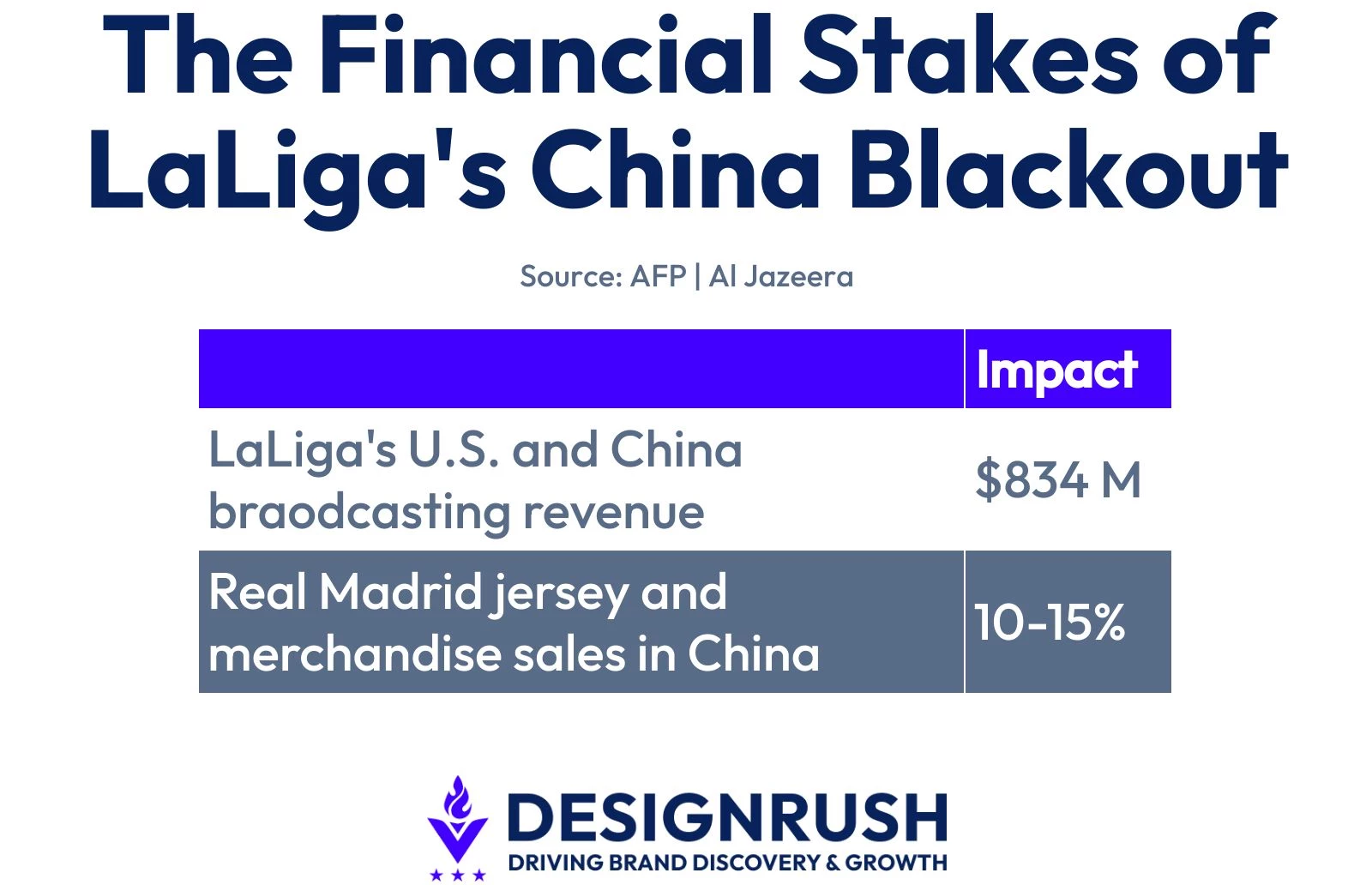
China and the U.S. account for most of the league's international broadcasting rights revenue, valued at €748 million ($834 million) in 2024-25.
Real Madrid also faces commercial exposure, with China accounting for 10% to 15% of its jersey and merchandise sales, according to Marca.
If the suspension persists, both could lose broadcast income, retailsales, and sponsorshipvalue in a key market.
Three lessons stand out for companies investing in celebrity partnerships.
- Cultural preparation reduces preventable risk. Brands should brief talent on local sensitivities before public appearances to reduce costly missteps.
- Response speed protects commercial relationships. Companies should assign decision-makers in advance to respond quickly when a partner's conduct threatens local business.
- Contract terms limit the damage. Partnership agreements should spell out what each side can pause or end when a partner's conduct sparks regional backlash.
The fallout shows how a single celebrity controversy can affect sponsorships, media distribution, and local relationships.
Our Take: Who Should Decide a Brand's First Response?
On beat Real Madrid to a response in China by a full day.
The brand's Weibo account had dropped Mbappé by the morning of Oct. 27, the day Real Madrid spent defending players' right to personal opinions.
After Daryl Morey's 2019 Hong Kong post, the NBA made the same free-expression argument and waited six years to play a game in China again.
We'd give the first call to local market teams, since people reading Weibo every day spot a red line faster than a press office in Zurich or Madrid.
On's headquarters then undercut its China team by telling Inc. that athletes' statements represent personal views, the line CMG had already rejected.
Global brands should give local teams written authority to pause campaigns, then make sure every headquarters statement backs them up.
Celebrity partners test brands at home too, as Neutrogena learned when its handling of Hayden Panettiere and a Tate McRae endorsement drew criticism.
Brands working with high-profile athletes need communications plans that account for local market sensitivities and commercial risk.
Explore DesignRush's directory of top PR firms to find partners with crisis communications experience.