
ChatGPT Ads Rollout: Key Findings
- OpenAI introduces ads after reporting $8B loss in first half of 2025, with only 5% of 800 million users paying for subscriptions.
- The new $8 ChatGPT Go tier positions ads as access rather than interruption, creating a middle ground between free and premium.
- AI firms are adopting traditional ad models despite founder resistance, signaling that investor patience for unprofitable growth is ending.
It's bad news for ChatGPT users, as the AI platform's free version will soon come with a twist.
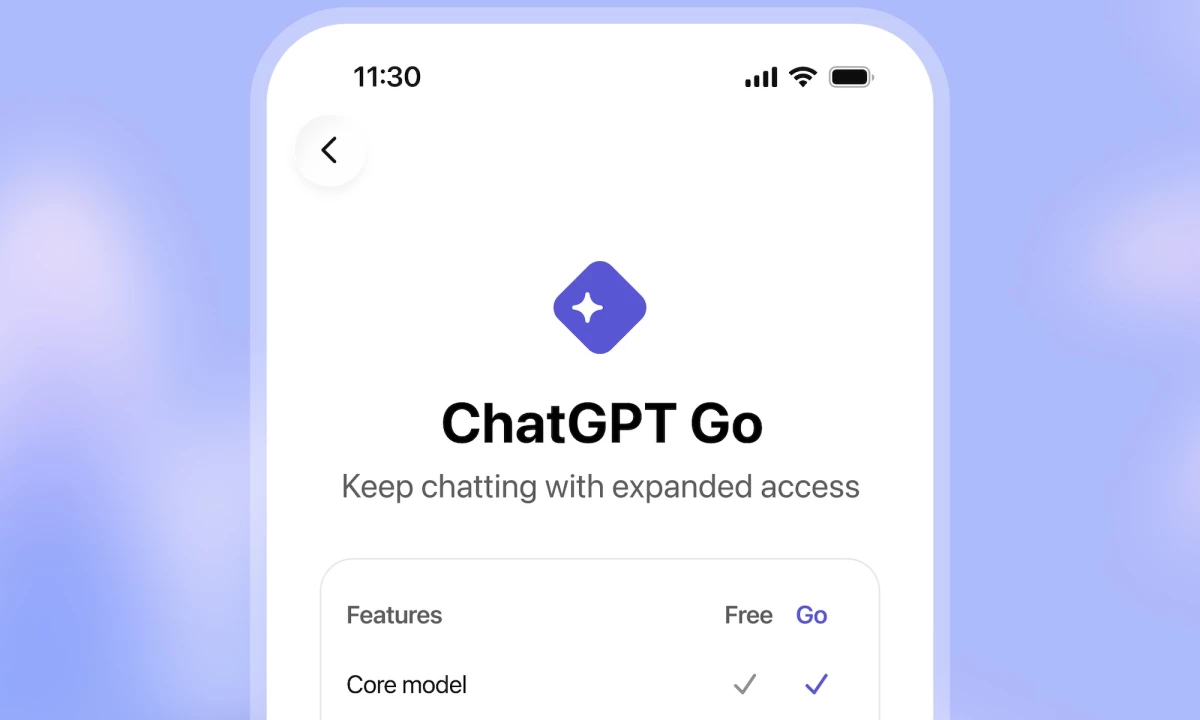
OpenAI announced on January 16 that ads will appear in ChatGPT for free users and subscribers to its new $8-per-month Go tier, which will launch first in the U.S.
In the coming weeks, we plan to start testing ads in ChatGPT free and Go tiers.
— OpenAI (@OpenAI) January 16, 2026
We’re sharing our principles early on how we’ll approach ads–guided by putting user trust and transparency first as we work to make AI accessible to everyone.
What matters most:
- Responses in… pic.twitter.com/3UQJsdriYR
The trial will display banner ads after user prompts, with OpenAI saying ads for travel destinations might appear when someone asks about a particular destination.
The company claims that ads won't influence ChatGPT's responses and won't share conversation data with advertisers.
ChatGPT Go sits between the free tier and existing Plus ($20/month) and Pro ($200/month) subscriptions.
This creates three clear price points for users who need more than the limited queries of the free tier and want different levels of ad exposure and features.
Why OpenAI Is Turning to Ads Now
The Financial Times reported OpenAI operated at an $8B loss in first half of 2025, with only 5% of 800 million users paying for subscriptions.
OpenAI will accumulate $44B in total losses between 2023 and 2028, with $14B expected in 2026 alone, according to research by TapTwice Digital, citing original data from The Information.
With 95% of users on the free tier, OpenAI needed a way to monetize this massive audience without forcing everyone into paid plans.
Henry Ajder, an AI expert, called it unsurprising in an interview with the Daily Mirror.
"OpenAI continues to burn investor money. For this company to start turning a profit, it has to find more revenue sources," he said.
When billions in losses meet millions of non-paying users, we can see how advertising becomes less about choice and more about survival.
AI's Advertising Contradiction
Sam Altman once called ads "a last resort," making OpenAI's pivot particularly notable given the CEO's previous stance against advertising-supported models.
We are starting to test ads in ChatGPT free and Go (new $8/month option) tiers.
— Sam Altman (@sama) January 16, 2026
Here are our principles. Most importantly, we will not accept money to influence the answer ChatGPT gives you, and we keep your conversations private from advertisers.
It is clear to us that a lot… https://t.co/f9Dv53rWU7
OpenAI isn't alone in reconsidering this position, with Perplexity hiring a head of advertising in 2025 before the executive left nine months later.
Google has also denied reports about bringing ads to Gemini, but the speculation alone suggests the industry is testing what users will tolerate.
This gap between founder ideals and financial reality is closing fast across the entire AI sector.
Three patterns emerge from OpenAI's shift to advertising:
- Middle-tier pricing captures hesitancy: Go targets users who value the product but balk at $20/month, proving willingness to pay exists across a spectrum.
- Loss thresholds force principle abandonment: Once annual losses hit eight figures, philosophical stances about advertising become untenable.
- AI compresses monetization timelines: Companies are moving from hype-funded growth to ad-supported sustainability faster than any previous platform category.
Brands watching OpenAI's advertising rollout should note that AI platforms are adopting traditional ad models faster than expected.
This, in turn, is creating opportunities for early placement strategies before inventory gets crowded.
Our Take: Will Users Accept ChatGPT Ads?
I think the $8 Go tier is smart positioning because it gives users a clear choice to either tolerate ads, pay a little, or pay a lot.
However, I do wonder whether banner ads can generate meaningful revenue when only 5% of users currently pay anything.
Likewise, I'm sure this will be a lesson in what happens with moral grandstanding in the face of financial ruin.
I also think OpenAI is hoping that ad-supported AI will become as normalized as ad-supported search, but the execution here matters.
If ads disrupt the conversational experience, users might migrate to competitors that offer cleaner interfaces.
In other related news, Uber recently launched Journey Takeovers with Coca-Cola, a feature that turns rides into destination-targeted ad experiences.
Brands exploring AI advertising and emerging ad formats need agencies that understand how new platforms monetize attention.
Check out the top digital advertising agencies in our directory.