
Anthropic Claude AI Campaign: Key Points
- Anthropic’s “Keep Thinking” campaign highlights Claude as an AI built for problem solvers, not replacements for human thought.
- The push includes a 90-second film, premium media placements, and out-of-home featuring real creators who use Claude.
- The company’s first major ad spend shows how it has grown from under 1,000 business clients to more than 300,000 today.
Anthropic is making its biggest brand statement yet with its latest effort.
The global campaign “Keep Thinking” spotlights the company's Claude AI model as the tool of choice for problem solvers.
Created with independent agency Mother, the campaign marks the company’s first move into paid advertising, following years of organic growth fueled by developers, researchers, and business customers.
The work shows that Claude serves as a thinking partner for those tackling complex challenges, like debugging code to building new products.
“‘Keep Thinking’ is intended as both a rallying cry and a promise: to the industry, that we must build AI responsibly,” said Andrew Stirk, head of brand marketing at Anthropic.
The campaign is marked by a 90-second film that reframes the modern challenge-filled world as an opportunity for progress.
Felix Richter, Mother's global chief creative officer, says the film "acknowledges our problem-filled present but reframes AI as the solution rather than another threat.”
Overall, the efforts present Claude as an amplifier of human effort rather than a replacement.
With this, Anthropic wants to differentiate itself from other AI tools, as the space grows increasingly competitive.
Bringing Problem Solvers to the Spotlight
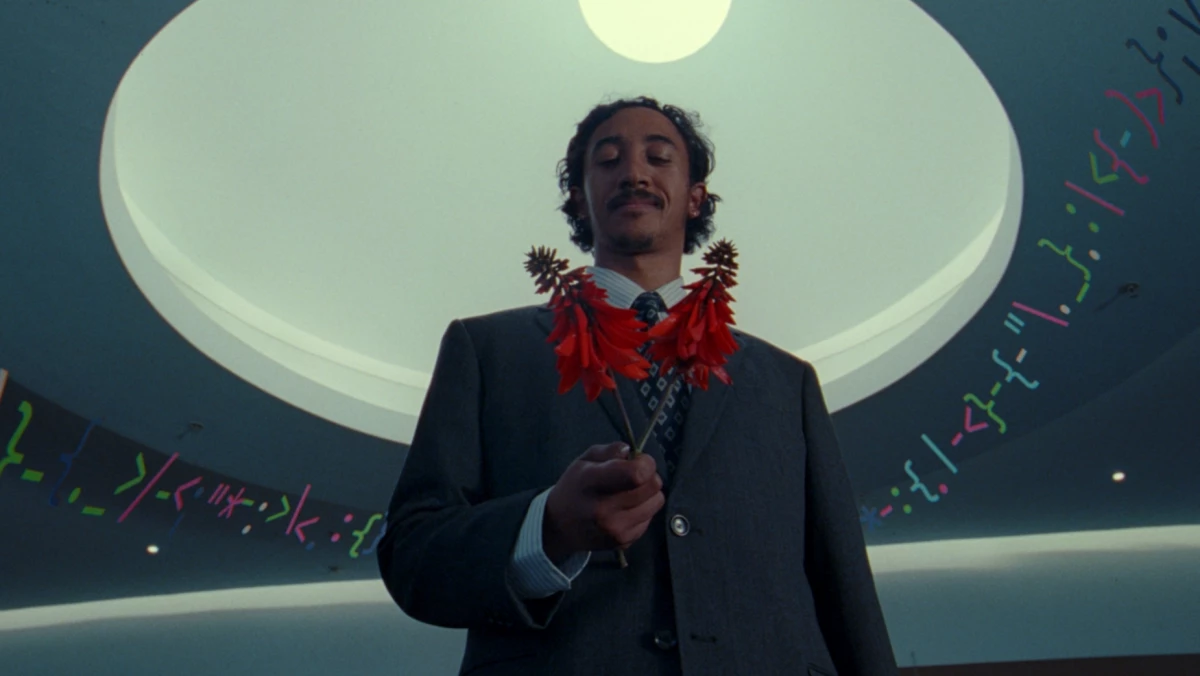
The cinematic spot starts with the word "problem" plastered and spelled out across different locations and media: in code, in type, and in prints.
Viewers are then treated to a high-speed montage of scenes, before the film abruptly cuts to black.
"There's never been a better time. A better time to have a problem," the narrator says.
We then see different people facing different kinds of problems, determined to find their own solutions.
All this to drive the point that there's no better time to face these problems, now that Claude AI can be your very own "thinking partner."
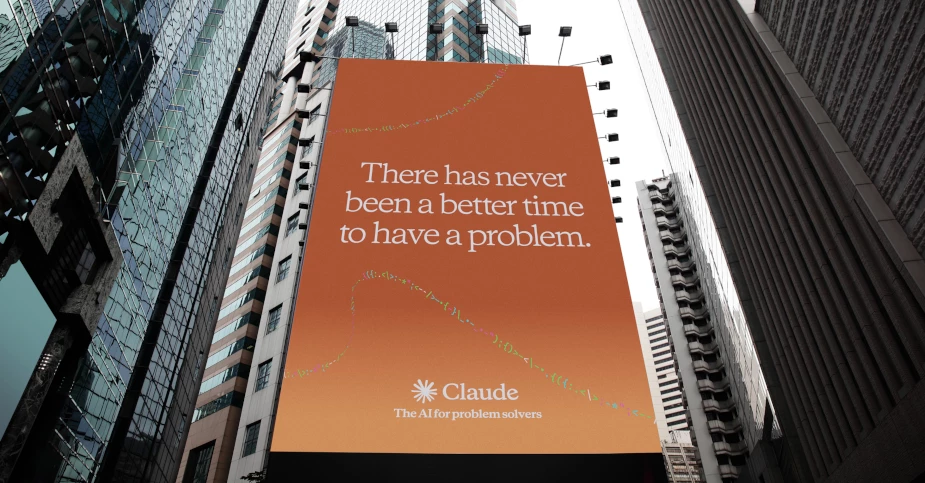
In addition to the hero film, Anthropic has secured placements across sports broadcasts, top streaming titles, and major publishers like The New York Times and Wall Street Journal.
Out-of-home brand activations bring faces behind Claude into public view, featuring Anthropic researchers Kamal Ndousse and Grace Han, as well as creators like Kelin Zhang, Ryan Mather, and Evan Kahn.
Their “Poetry Camera” project, built with Claude and without prior coding experience, is one of the solid examples that highlight how the model enables experimentation.
The campaign also expands to podcasts, influencer partnerships, and premium placements on platforms like Hulu and Netflix.
Together, these efforts aim to move Anthropic beyond its tech base and into wider business and consumer awareness.
Notably, the push is rooted in Anthropic’s founding story.
In 2021, seven researchers, including siblings Dario and Daniela Amodei, left OpenAI to create a company focused on building powerful yet safe AI.
Today, that philosophy underpins Claude’s design, from fewer hallucinations to features like extended reasoning and Socratic questioning.
Since then, Anthropic has grown rapidly.
Just two years ago, it had fewer than 1,000 business customers.
Today, it serves over 300,000, with demand growing across industries from research to product development.
What AI Agencies Can Learn from Anthropic
For agencies, Anthropic offers a timely case study in how to launch a challenger AI brand and build solid credibility.
Key takeaways include:
- First-time paid campaigns should build directly on a product’s real reputation rather than forcing a new narrative.
- Including both researchers and outside creators in ad spots can humanize technology that risks feeling abstract or intimidating.
- Combining film, OOH, influencers, and premium media builds a consistent message across touchpoints while signaling category leadership.
The challenge will be in scaling this positioning as the AI space gets more and more crowded, raising the question: can Anthropic maintain Claude’s identity as the problem solver’s model?
Our Take: Can AI Sell Itself?
What I find striking is how Anthropic sells Claude as a brand with a point of view.
In a field dominated by technical specs and endless model comparisons, that’s something new.
Campaigns like this matter because they frame AI beyond just abstract infrastructure and more like a cultural product that makes it less alienating to people.
From a marketing perspective, the decision to spotlight problem solvers instead of the AI tools themselves makes the message far more accessible.
Right now, Anthropic has created a space where AI isn’t about replacing humans but partnering with them.
In other news, Meta recently debuted its latest AI-powered smart glasses, which were met with criticism due to multiple errors during their live demonstration.