
This weekend, a 21-year-old from Cincinnati became the first content creator to perform at a FIFA World Cup final.
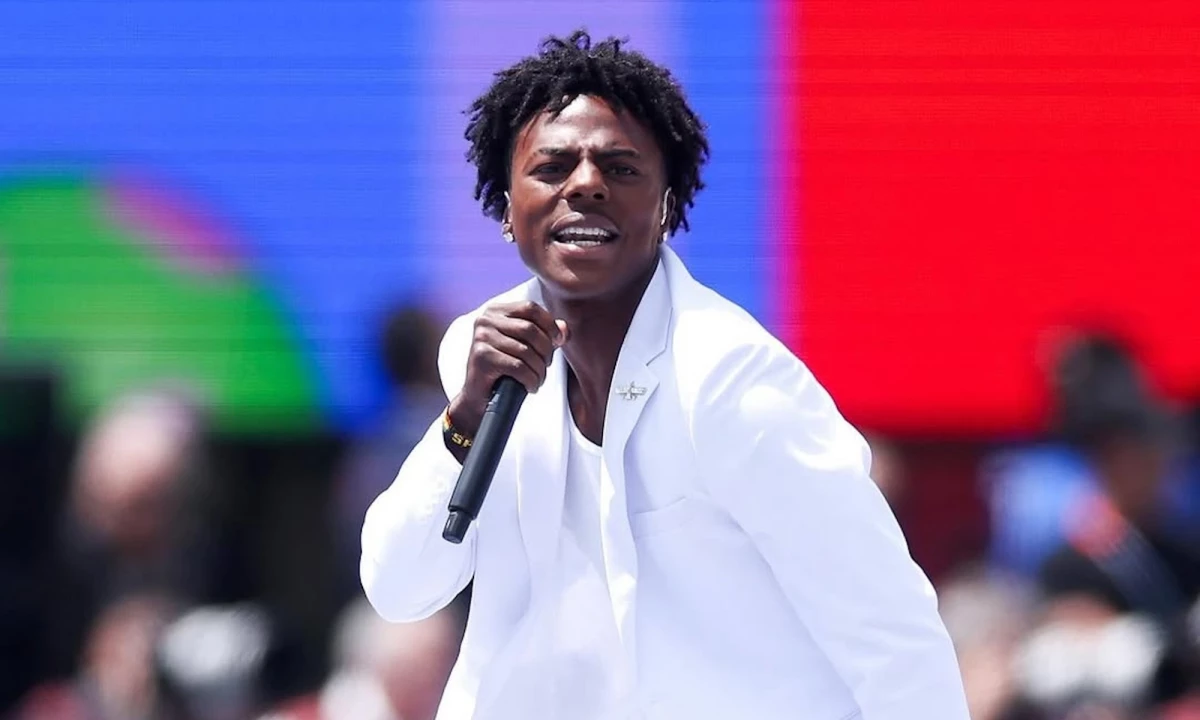
Darren Watkins Jr., known online as IShowSpeed, opened the pre-match entertainment at New York New Jersey Stadium in an all-white suit.
He led drummers and dancers through his single "World Cup (Champions)" in front of more than 80,000 people.
Speed reached the pitch with 59.2 million YouTube subscribers and a following spread across seven major social platforms.
He got there in under a decade, starting with teenage gaming streams that almost no one watched.
Speed has never softened his raw, unpredictable persona for a brand partner.
Every company that signs him structures the deal around what he already does, which is why the sales have followed.
Speed's rise changed who holds the power in influencer marketing.
The smart brands should stop handing creators a script and start paying to participate in what they already do best.
190 Million Followers Across Seven Platforms
Twitch reportedly offered Speed a $600 million exclusive streaming deal, though neither he nor Twitch has confirmed it.
Circulating reports describe a two-year agreement worth roughly $300 million a year.
He hasn't streamed on Twitch since 2021, so the platform is bidding to win back a creator who already walked away.
An amount this huge only makes sense when viewed against his reach.
Speed holds 59.2 million subscribers on YouTube, 54 million on TikTok, and 53.8 million on Instagram.
His counts drop sharply elsewhere, with 12 million on Facebook, 5.9 million on Snapchat, 5.4 million on Twitch, and 4.1 million on X.
Across all seven platforms, the raw total sits near 194 million, though heavy overlap means far fewer real people.
Brands reading this breakdown see his weight concentrated on the three video-first platforms where Gen Z spends their time.
His numbers thin out on Facebook and X, where users skew older, and legacy advertisers already know how to buy.
This concentration makes Speed a direct line to young, video-native buyers, which is the kind of audience targeting that brands pay a premium for.
The Brand Deals Speed's Reach Unlocked
On his 21st birthday this January, Speed crossed 50 million YouTube subscribers, reported as the first time a Black creator hit this milestone.
His channel has now passed 9.6 billion total views. And his signed deals match the size of this audience.
Beats by Dre made him the star of its first creator-led film in December 2025, a five-minute kung fu short pulled from his livestreamed China trip.
Beats skipped paid media and premiered it inside one of his streams, trusting his audience to carry it.
State Farm placed him in Gamerhood Season 5 to reach gaming viewers that an insurance brand rarely touches.
DICK's Sporting Goods put him in a "Speed Shopping" spot opposite Tom Brady and Kevin Durant, borrowing his energy to sell sneakers to young athletes.
Tech brand Nothing handed him its triple-screen phone concept and let a livestream serve as the product's public stress test.
FIFA, Fox, and YouTube signed him to help stream World Cup matches, handing a creator near-broadcaster status at the sport's biggest event.
The clearest measure of his pull is smaller and stranger.
His offhand coverage of Talking Ben, a decade-old mobile app, pushed it back to the top of the App Store's best-seller list.
It has since accumulated 31 million views on YouTube alone.
Travel, audio, insurance, gaming, and consumer tech have all bought in, which tells you that Speed's pull isn't tied to any one product category.
No single sector owns him, and this open field is what pushes his asking price up.
This is influencer marketing strategy at its most valuable, where his fans buy before a media plan even exists.
70% More Searches in One Livestream
Speed's Expedia partnership launched in late April 2026 with a 15-hour livestream across five Caribbean countries in a single day.
The stream reached more than 400 million people across social platforms.
In the days after, Expedia's destination search demand rose 70% for Sint Maarten, 50% for Guadeloupe, and 35% for Dominica.
The second phase, launched June 29, traded the live format for a campaign film produced by Mother Los Angeles.
The spot put Speed and an Expedia-branded mannequin on a U.S. road trip, with every activity he tried bookable at Exspeedia.com.
Natalie Wills, Expedia Group's SVP of brand marketing and creative, tied the livestream directly to the brand's travel proposition.
"In the first phase, we showed how Expedia powers the way Speed travels at full velocity through a real-time, global livestream," she said.
"Now, we're showing how everyday travelers can tap into that same energy and easily book trips to travel like Speed and experience the world their own way."
Expedia built something reusable, a campaign that can absorb whatever Speed does next and route it toward a booking.
The search lift told the brand that the model was worth scaling, which is why the second phase followed so fast.
This is what mature creator marketing looks like, where the brand designs the conversion path, and the creator supplies the reach.
The IShowSpeed Effect
The IShowSpeed Effect comes down to trust. His audience acts on what he shows them because they believe he means it.
Brands are paying for access to a generation that skips pre-roll ads and recognizes a forced endorsement in seconds.
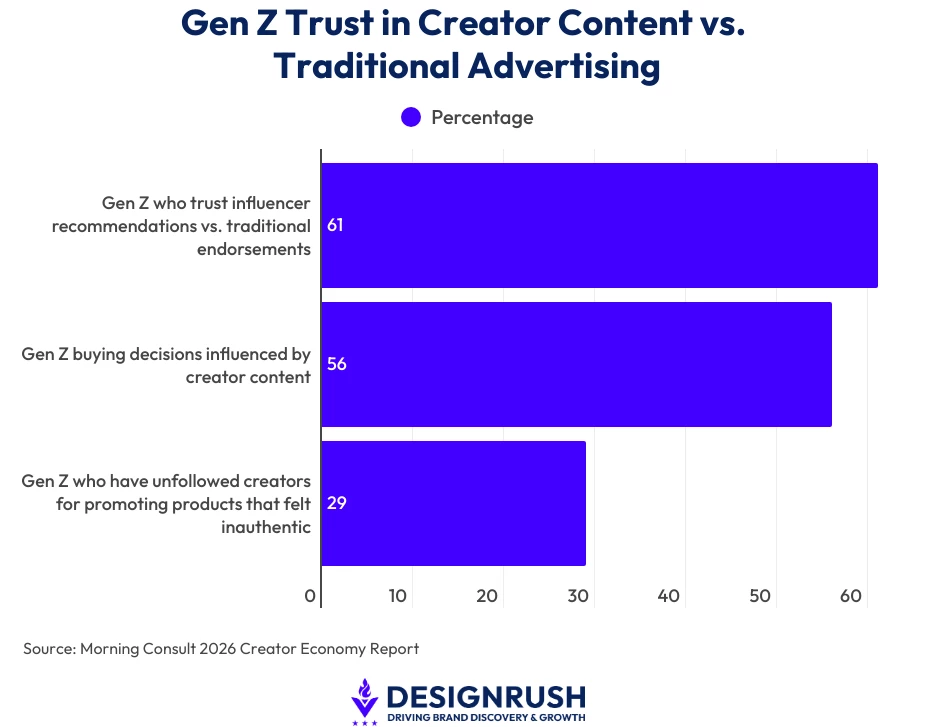
Gen Z increasingly trusts recommendations from the creators they follow, driving both purchases and viewership.
But this trust comes with conditions, since 29% of Gen Z say they have unfollowed a creator over a product plug that felt inauthentic.
Speed keeps his audience because his unfiltered persona never changes for a sponsor.
He kept streaming when fans heckled him at the World Cup.
He collapsed from exhaustion near the end of a 12-hour Expedia stream, but still came back on to finish the tour.
His audience is hyperengaged, watching him for hours at a stretch and reacting to everything he does.
The WWE clip that Speed posted on April 7 has drawn 165.1 million views and 2.9 million likes.
These numbers outpace most of what WWE puts out through its own channels.
Goldman Sachs projects the creator economy will reach $480 billion by 2027.
Speed sits at the richest end of this market, an audience that grew faster than his own means to monetize it, which is the gap brands step in to close.
An Uncommissioned World Cup Anthem
Speed's World Cup performance showed how far a creator can push into territory that once belonged to pop stars and networks.
He released "World Cup (Champions)" on his own ahead of the tournament, then tagged FIFA and asked them to run with it.
FIFA kept another track as its official anthem at first, replying only that it would be in touch.
The song kept climbing anyway, and FIFA later added it to the official World Cup 2026 album.
By the day of the final, the music video had passed 94 million views on YouTube.
FIFA then put him on the pitch at the closing ceremony before Spain played Argentina, the first content creator to perform at a World Cup final.
His own stream of the match ran nearly six hours and neared 60 million views by the end.
The part that agencies should sit with is that nobody commissioned the song.
Speed created the brand asset, his audience proved the demand, and FIFA adopted it once the win was obvious.
IShowSpeed's rise gives agencies and brands a working template for creator partnerships.
- Ask whether the creative concept exists without the creator: The campaigns that converted Speed's audience gave him something to do within a structure the brand owned.
- Use the creator's existing content as your creative brief: Beats built around his China trip, while Expedia built a booking platform around his travel style.
- Track creator campaigns against category metrics: Destination search uplifts, app store rankings, and direct bookings tell you whether the audience acted.
Early partners caught Speed at a fraction of what he costs now, back when his reach was still climbing.
The window for that discount closes fast, and recognizing the next creator before it does is where the advantage lies.
Our Take: Who Writes the Brief Now?
Speed built his audience first. The brand deals only arrived once it got too big to ignore.
We think that this is the creator economy's new default, where the brief no longer starts on the brand's side of the table.
MrBeast paved this road, growing a channel into a company so big that marketers chase him.
He can now sell this access to Fortune 1000 brands.
Speed is the next step, where the creator's unscripted self is the product, and the brand adapts to whatever he does.
The change forces agencies to measure differently, since a subscriber count shows crowd size while trust decides whether a campaign converts.
The winning brief now fits the creator's audience, and this fit is exactly the skill agencies should be hiring for.
Brands building creator partnerships that drive measurable outcomes need agencies that understand how to design briefs that work with a creator's audience.
Explore these top influencer marketing agencies in our directory.