
ADHD Consumer Research: Key Findings
- BBH USA and Understood.org found that 90% of adults with ADHD stay with brands they like to reduce the mental effort of switching.
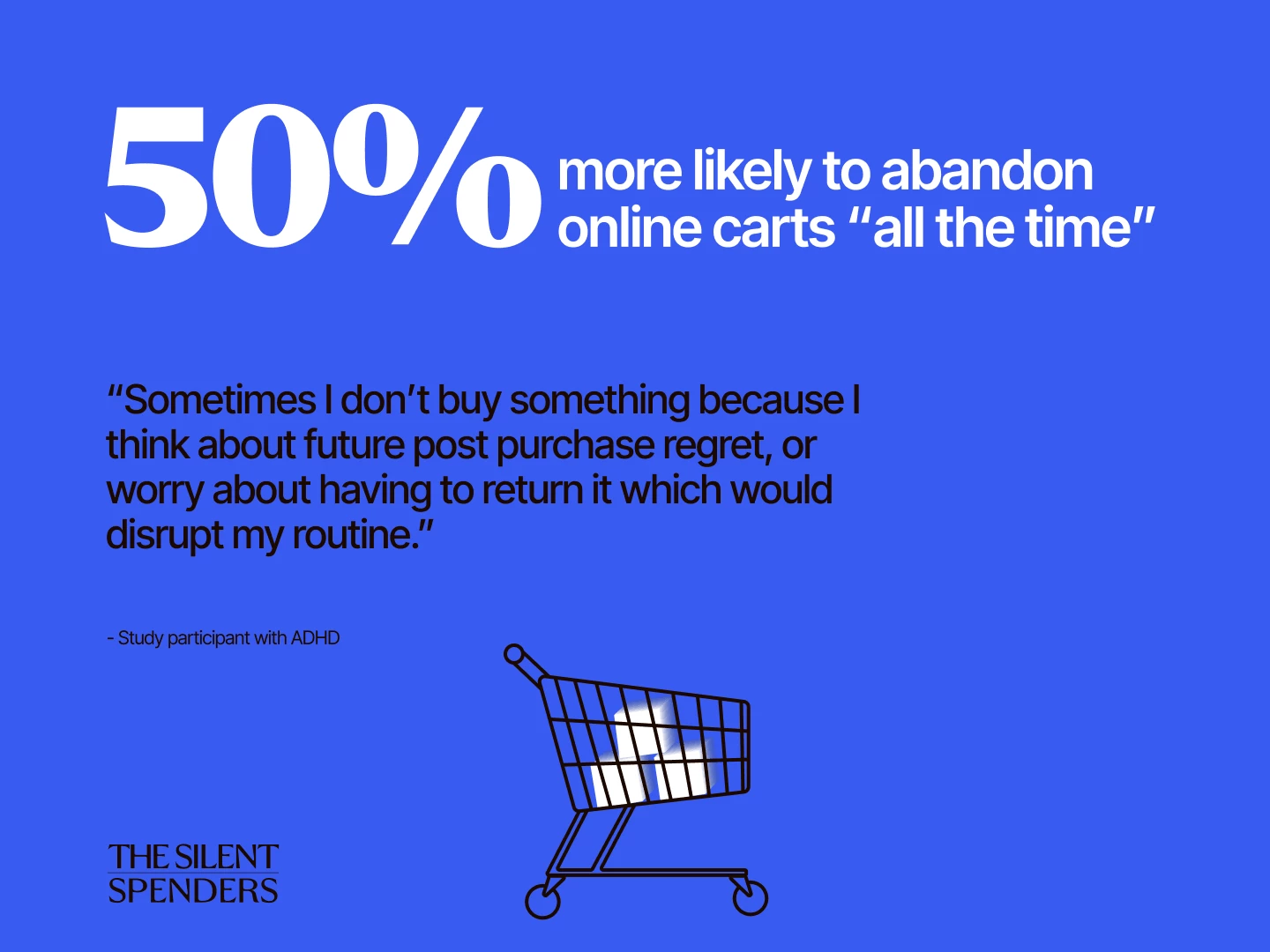
- Consumers with ADHD are four times more likely to research heavily while shopping and 50% more likely than neurotypical shoppers to abandon carts "all the time."
- Urgency tactics can hurt conversion, with sales and limited-time offers one-third less likely to influence purchase.
Brands may be reading ADHD consumers completely wrong.
For Neurodivergent Celebration Month, BBH USA and Understood.org released Silent Spenders 2.0, the second edition of BBH’s research series on high-value audiences brands often miss.
Commonly reported ADHD traits:
— kelly (@kellytheboss7) May 6, 2026
* Overthinking small things
* Constant mental fatigue
* Trouble focusing unless it’s urgent
* Forgetting simple daily tasks
* Starting things but struggling to finish
* Feeling easily overwhelmed
* Emotional sensitivity or intense feelings
* Chronic…
It follows BBH’s first Silent Spenders study on DINKs, another high-spend segment marketers often overlook.
For the second edition, BBH and Understood.org focus on ADHD consumers.
The report describes ADHD as the most common neurodivergence in the U.S., with over 10% of adults reporting a diagnosis.
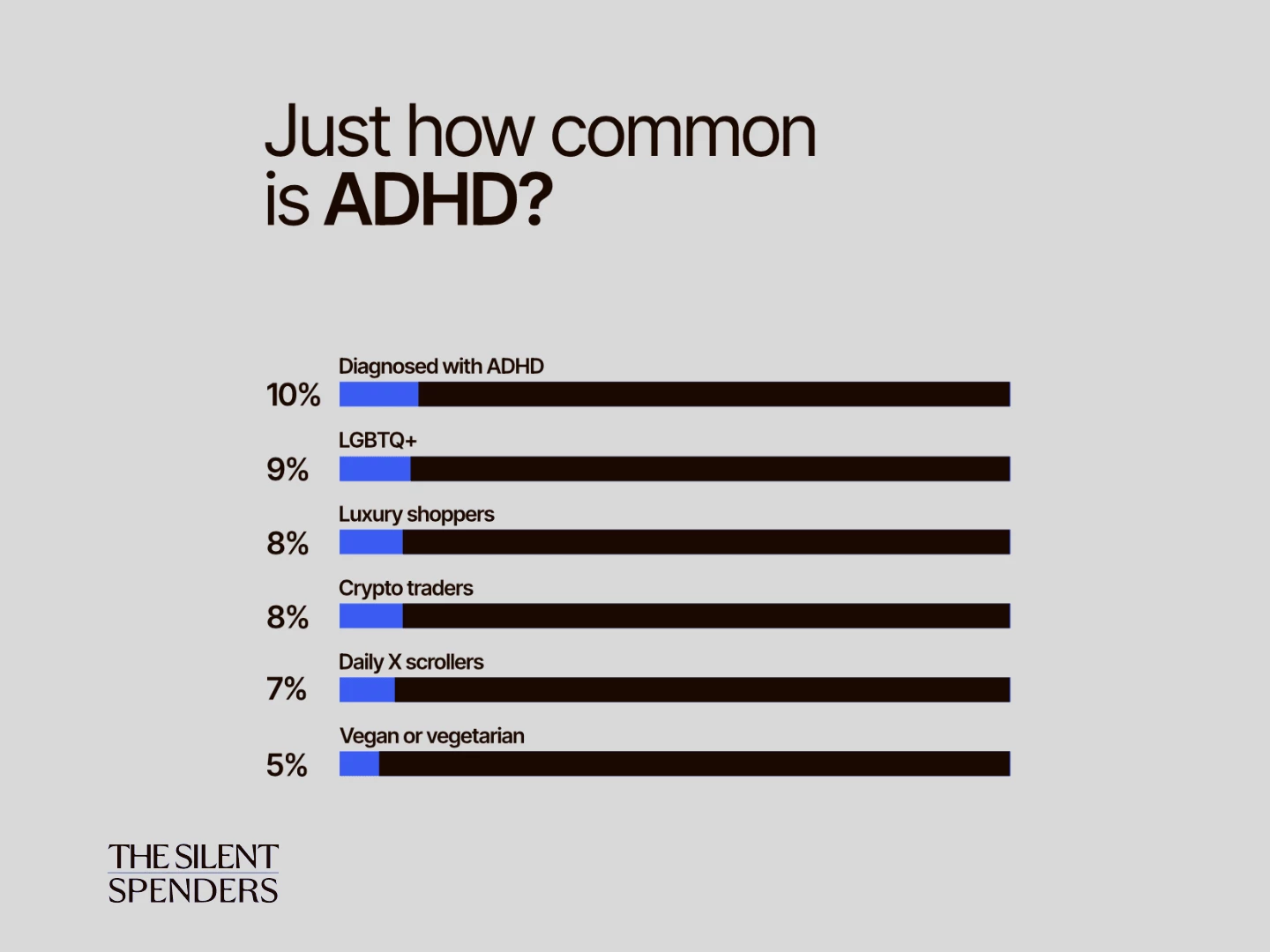
The study challenges a familiar assumption in marketing: that people with ADHD are impulsive, chaotic shoppers.
Its findings point to something more commercially useful.
Consumers with ADHD often research heavily, judge brands quickly, avoid unnecessary risk, and reward clear experiences with loyalty.
"The BBH USA Silent Spenders research series was created to look beyond surface-level statistics and uncover the culture and spending habits of overlooked, high value groups," Samantha Deevy, Chief Strategy Officer at BBH USA, told DesignRush.
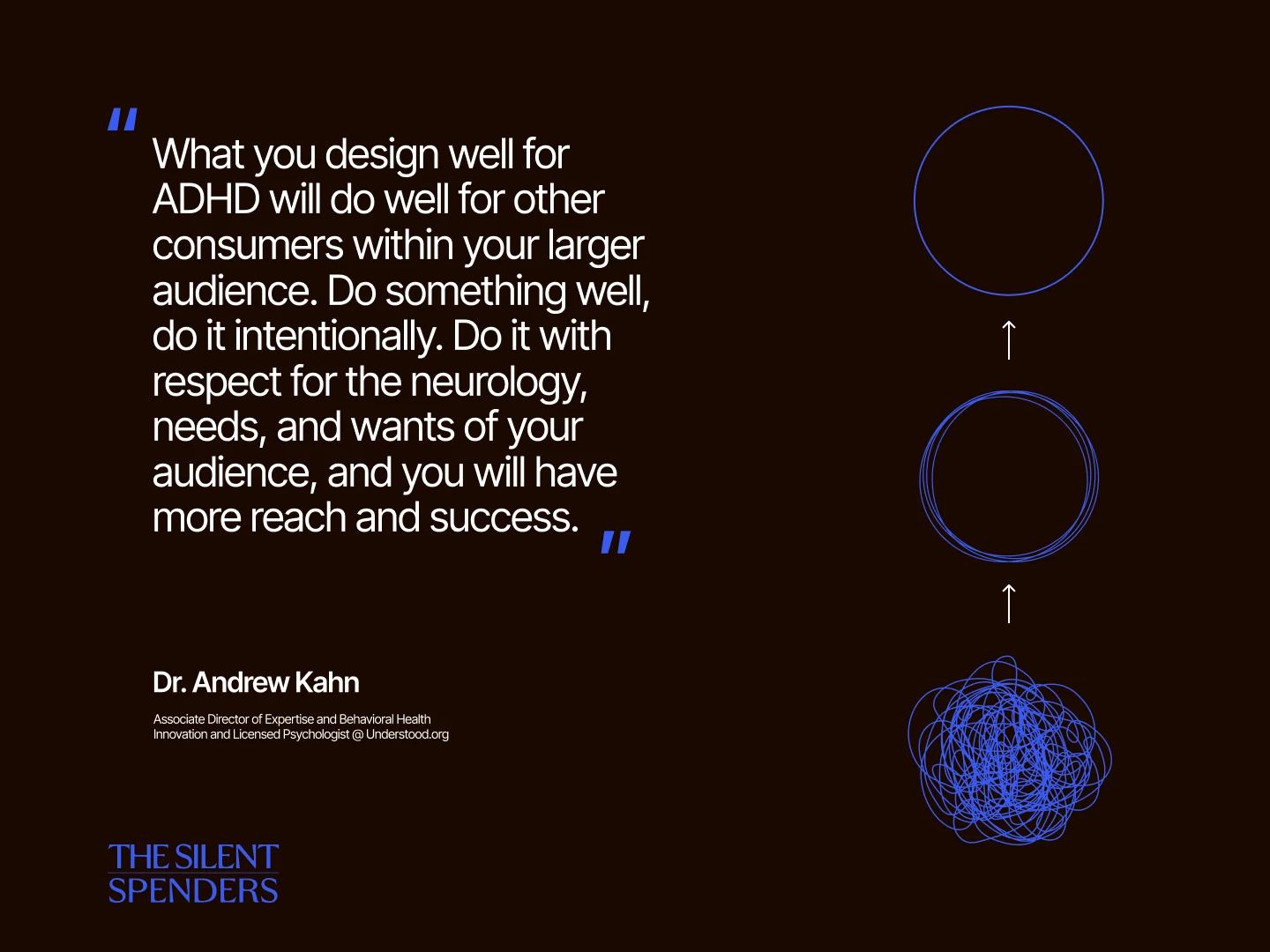
"For the second edition, we focused on the most common neurodivergence in the U.S.: ADHD. Not only did we uncover valuable insight about this massive and lucrative group, we found that when you design for ADHD, you design better for everyone."
ADHD is one of the most painful things to live with. Not because it's loud, because it's contradictory. You're capable of anything and motivated to do almost nothing. You understand everyone around you, but can't explain what's happening inside yourself. You have brilliant ideas,…
— 🤠 (@heavensbvnny) April 26, 2026
The research was built from a national quantitative study of 2,000 OnePulse respondents.
This includes 500 people who reported being medically diagnosed with ADHD, along with 10 in-home ethnographic interviews and input from Understood.org experts.
ADHD Consumers Reward Clarity
Silent Spenders 2.0 argues that ADHD consumers are far more considered than many marketers assume.
The report says adults with ADHD are four times more likely to research heavily while shopping rather than go with their gut.
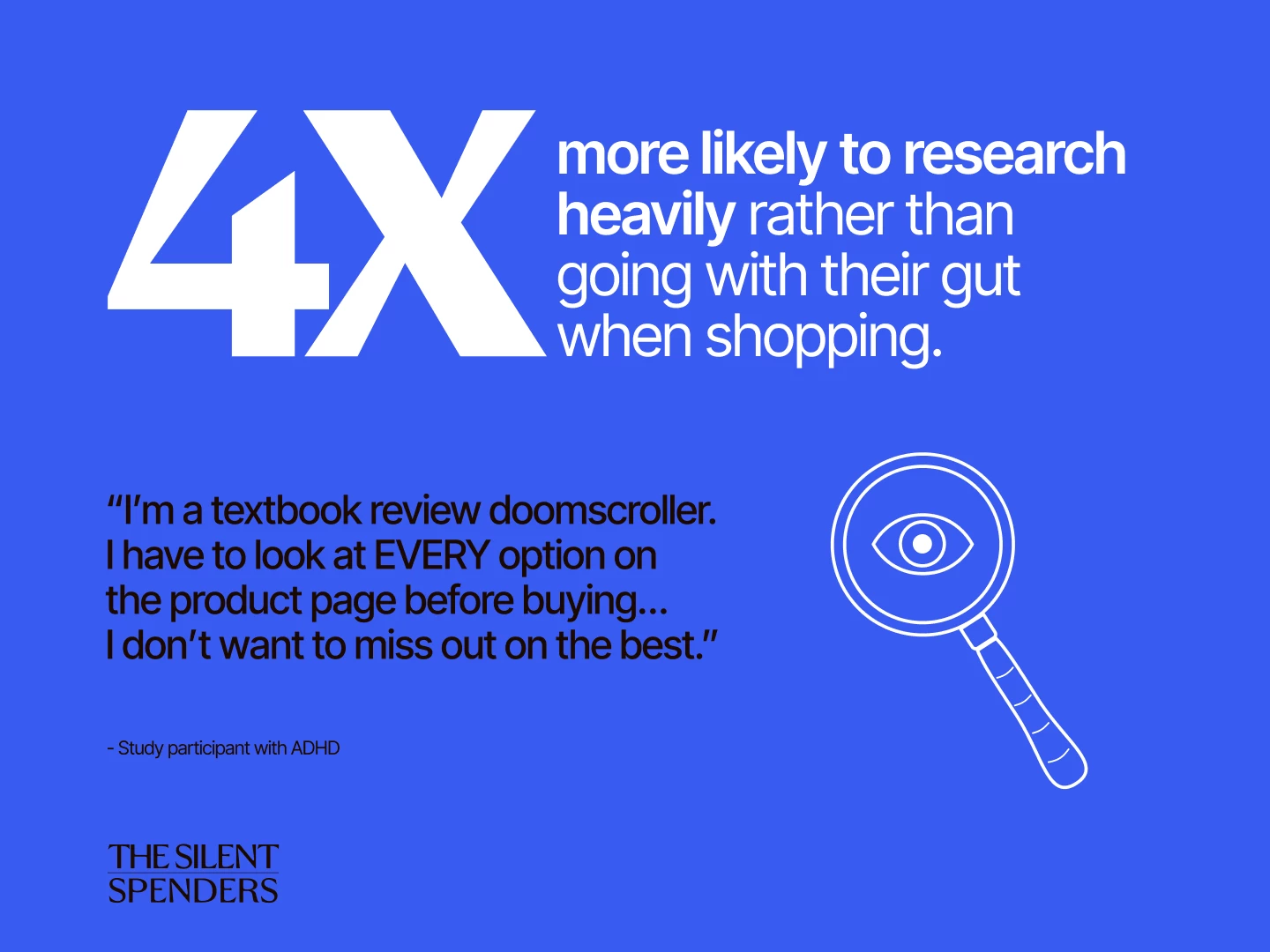
A participant quoted in the report described themselves as a "textbook review doomscroller," checking every option on a product page before buying.
This is important for brands because the purchase decision is rarely casual.
The report also found that 90% of adults with ADHD stay with a brand once they like it, partly because switching can create more mental work.
For marketers, loyalty here is tied to reduced friction and familiarity.
If a brand is easy to understand, easy to use, and consistent, it can become part of a customer’s routine.
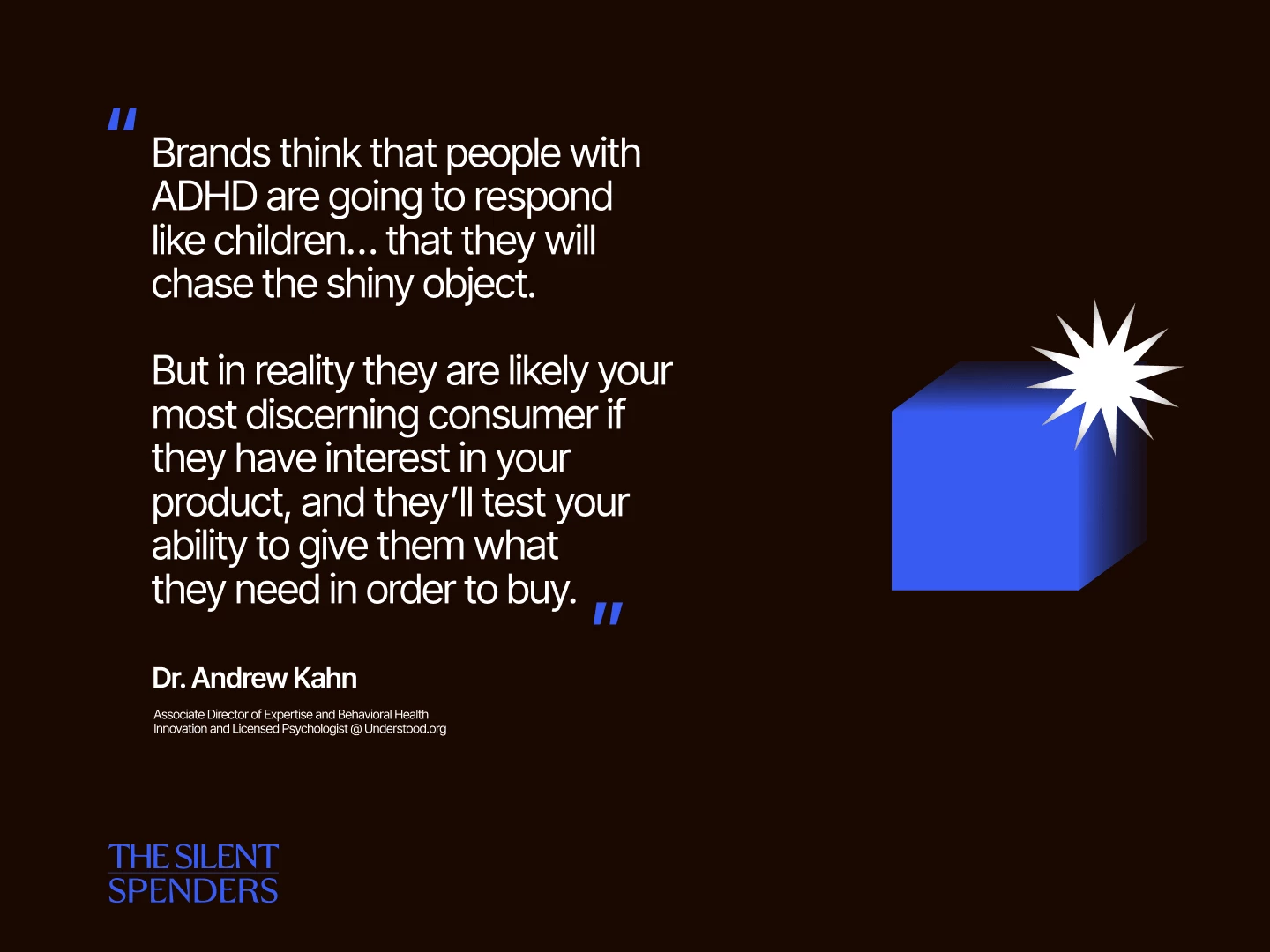
Dr. Andrew Kahn, psychologist and Associate Director of Behavior Change and Expertise at Understood.org, said the findings challenge the "chaotic spender" myth.
"The Silent Spenders 2.0 data challenges the 'chaotic spender' myth, revealing that people with ADHD are loyal, efficiency-driven consumers," Kahn told DesignRush.
"I’m very eager to see how brands use these insights to evolve their marketing. When brands reevaluate their product development, online or brick-and-mortar environments through an ADHD lens, they create a more intuitive experience for everyone."
Friction Is the Brand Problem
The biggest issue for brands is friction.
Silent Spenders 2.0 found that consumers with ADHD are twice as likely as neurotypical consumers to pay to skip a 30-minute line.
ADHD: I see something. I want it. I buy it.
— Libriscent (@libriscent) April 28, 2026
Autism: I see something. I question it. I don’t buy it.
AuDHD: I see something. I want it. I compare every single option for days on end. I buy it too late or never.
The report frames convenience as currency, especially for people who may struggle with time management.
It also warns against common pressure tactics.
"Buy now" prompts, scarcity messages, and urgency framing can trigger anxiety and hurt the sale.
Sales and limited-time offers are one-third less likely to influence purchase among consumers with ADHD, according to the study.
The visual experience matters too, with the report finding that brands with bold, vibrant colors are twice as likely to make a lasting impression.
Only one in five consumers with ADHD feel brands fully understand and serve their needs.
The checkout experience may be the most immediate risk.
Consumers with ADHD are 50% more likely than neurotypical shoppers to abandon online carts "all the time" when the journey is difficult to navigate.
For brands, the findings point to three clear priorities:
- Reduce the work of choosing. Clear product pages, easier comparison, and fewer dead ends can help customers stay with the decision.
- Treat convenience as value. Faster service, easier navigation, and fewer steps can matter as much as a discount.
- Use credible translators. Diagnosed ADHD creators can explain a brand’s value through lived experience, especially when only 20% of ADHD consumers feel fully understood by brands.
The study gives marketers a direct warning: attention is valuable, but ease may be what actually closes the sale.
Our Take: Should Brands Design for ADHD First?
We think the strongest part of Silent Spenders 2.0 is how clearly it connects accessibility with performance.
Consumers with ADHD are telling brands where the journey breaks: too much pressure, too much friction, unclear navigation, bland design, and content that misses how they actually make decisions.
The useful part for marketers is that these fixes help more than one audience.
Cleaner purchase paths, better product information, stronger visual cues, and trusted creator explanations make the experience easier for many consumers.
This is why the report’s universal design point lands.
Designing for ADHD improves the experience for everyone dealing with limited attention, too many choices, and low patience for bad UX.
Looking to build customer experiences that reduce friction and improve brand loyalty? Explore these top UX design agencies in our directory.