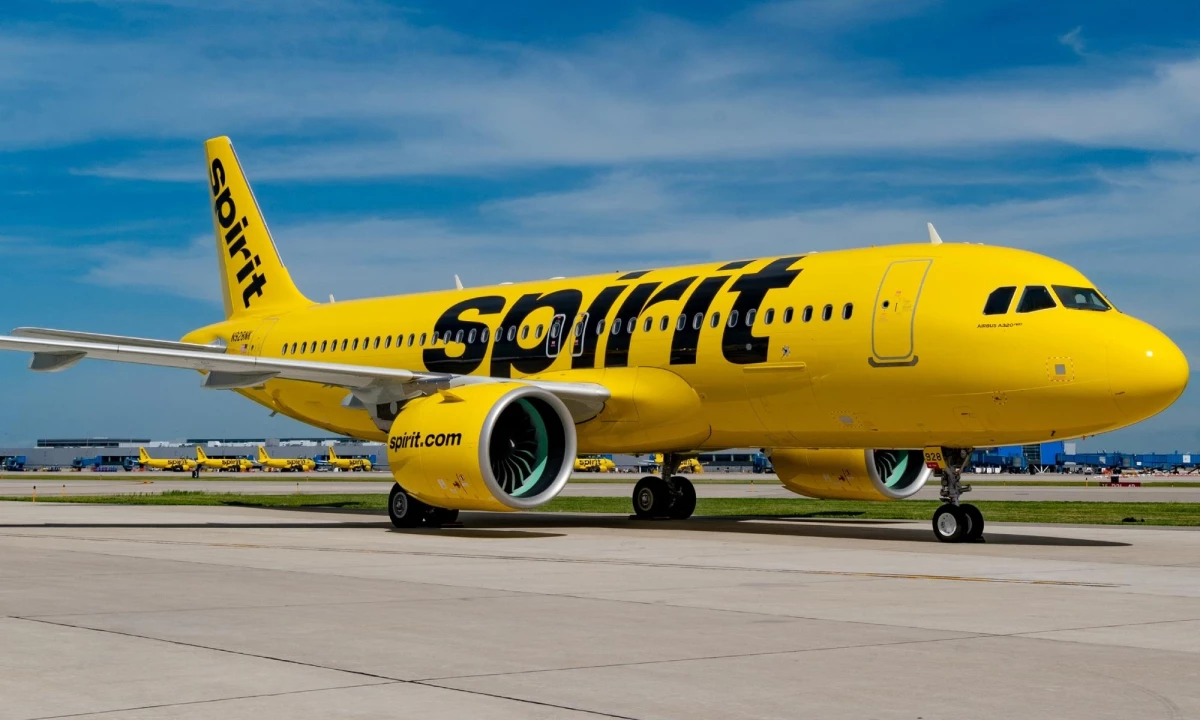

Spirit Airlines Collapse: Key Findings
- The carrier permanently ceased operations after 34 years, marking the first major U.S. airline failure in 25 years.
- The airline’s low-cost branding eroded as competitors closed the price gap and improved customer experience.
- A pricing model built entirely on affordability lost resilience once fuel costs, fees, and traveler expectations changed.
Spirit Airlines permanently shut down on May 2, 2026, after mounting financial pressure exposed the limits of a brand built primarily around low fares.
By tying its identity so closely to cheap flights, the airline showed how difficult it is for price-driven brands to stay competitive once rivals catch up.
That strategy reshaped expectations across the aviation industry and helped Spirit account for roughly 5% of U.S. flights last year, according to Reuters.
But once larger airlines introduced similar budget fares with fewer compromises, Spirit’s pricing advantage became harder to maintain.
And as more airlines began competing on price, Spirit had little else to help it stand out.
Spirit Airlines' Low-Cost Model Lost Its Edge
Spirit's model was simple: pay less, get less.
For years, that trade-off held because the price gap was obvious.
But legacy carriers started introducing their own stripped-down basic economy fares to gain an advantage.
They offered the same entry price, but fewer trade-offs, and Spirit stopped looking uniquely cheap.
Additional fees added pressure to the struggling airline. Bags, seats, and hidden extras pushed total costs closer to full-service airlines.
This weakened the clarity of its original promise and blurred the line between ‘cheap’ and ‘costly overall.’ By then, the model was becoming harder to sustain.
The shift wasn’t just financial. Low fares only work as a brand anchor when customers feel confident in what they are sacrificing.
"For more than 30 years, Spirit Airlines has played a pioneering role in making travel more accessible and bringing people together while driving affordability across the industry," said Dave Davis, Spirit’s President and CEO, in the official statement.
"However, the sudden and sustained rise in fuel prices in recent weeks ultimately has left us with no alternative but to pursue an orderly wind-down of the Company."
As fuel costs climbed and competitors narrowed the pricing gap, Spirit’s business model and brand strategy became harder to sustain.
The Aviation Industry Neutralized the Budget Advantage
Spirit built its brand identity on unbundled pricing. The broader industry copied it without inheriting the same brand limitations.
Other airlines matched the price while offering a more reliable and flexible travel experience.
They also provided a clearer upgrade path, an emotional appeal that the company couldn’t replicate, and it suffered financial decline for years.
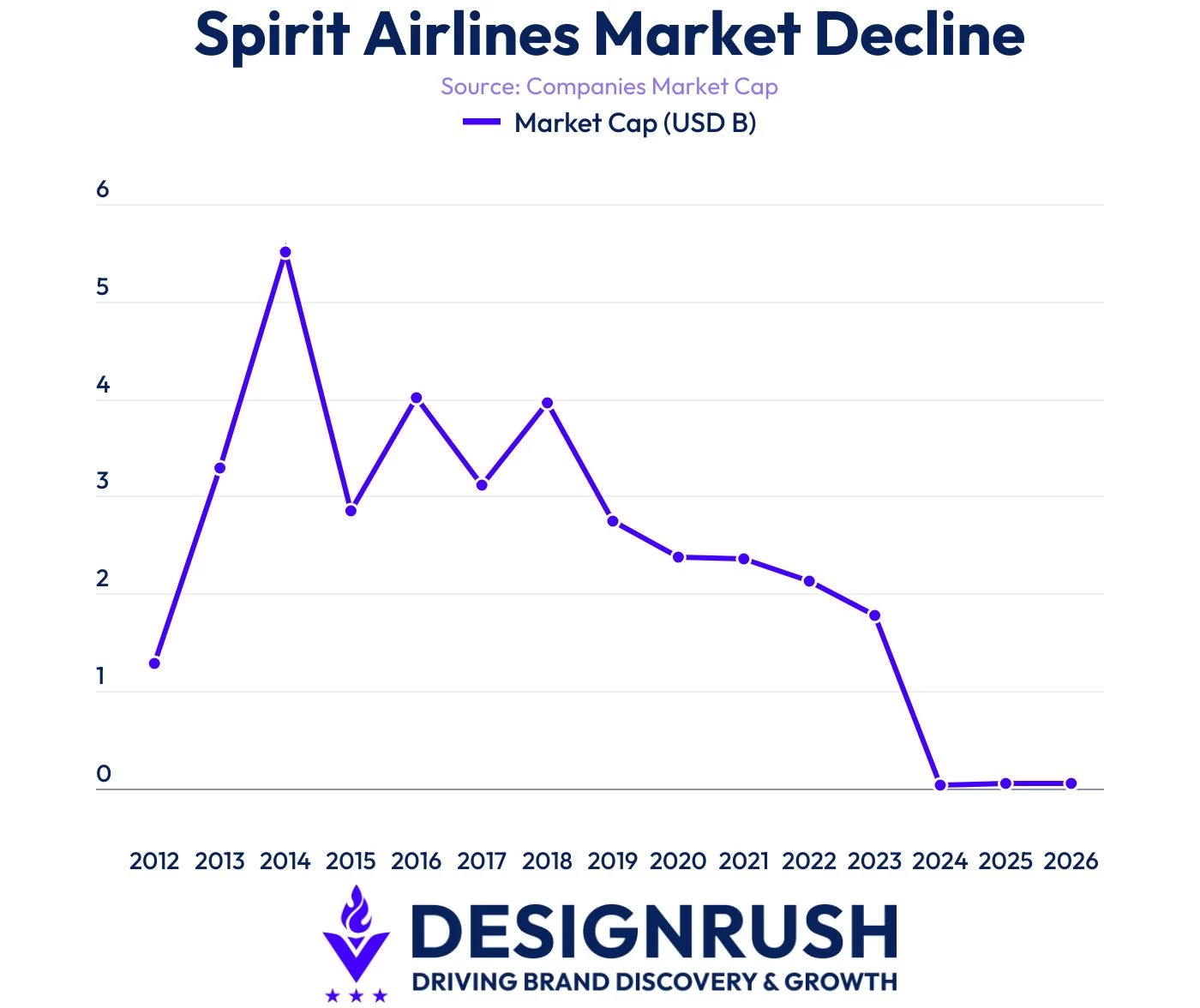
Once competitors matched fares, Spirit had fewer ways to keep travelers loyal beyond the initial ticket price.
Even as the company attempted to reposition after its first bankruptcy in 2025 with new fare tiers, loyalty changes, and more segmented offerings, it wasn’t enough.
The brand had already become synonymous with a specific type of travel experience, making repositioning difficult to sustain.
"Sustaining the business required hundreds of millions of additional dollars of liquidity that Spirit simply does not have and could not procure. This is tremendously disappointing and not the outcome any of us wanted," said Davis
Once budget pricing became standard across the industry, Spirit lost much of its edge. The airline struggled to stand for anything beyond affordability
Spirit's collapse shows how pricing strategy alone cannot sustain long-term brand relevance.
- Price is not a moat. Brands should build layered value beyond cost to protect differentiation.
- Perception defines value. Teams should simplify pricing structures to reduce friction and build trust.
- Competitors will copy fast. Marketers should evolve positioning continuously to stay ahead.
Brands that rely only on affordability risk losing relevance once the market catches up.
Our Take: Can a Price-Driven Brand Ever Survive Once Competitors Close In?
The collapse of Spirit Airlines proves that price alone is not a sustainable identity.
Spirit Airlines helped redefine how the aviation industry sells air travel, pushing pricing transparency and unbundled fares into the mainstream.
But once competitors can match brands on price, it becomes an even playing field, and the advantage now lies in service quality, upgrade options, and brand reputation.
The carrier had nothing else to compete with and couldn’t recover in time to reposition itself.
A brand built on affordability needs a diversified approach to stay competitive in a volatile industry.
That's not to say that a return isn't possible, as seen with the launch of Divine. A social platform that promises a ban on AI content and a return to Vine-era clips.
Companies reassessing their positioning strategy need partners who can read industry trends and successfully apply them to remain competitive.
Explore these top brand positioning firms in our directory.