
AI Usage Among B2B Buyers: Key Findings
- 32% of B2B buyers use generative AI as much as traditional search, signaling a shift in how vendors are discovered.
- Despite 31% of buyers being more likely to consider vendors that utilize AI, trust, expertise, and strong RFP responses prevail in the decision-making process.
- eCommerce and B2B brands must ensure visibility both in traditional and AI searches, particularly as AI becomes a mainstay in the search process.
The way B2B buyers research potential vendors is changing, with generative artificial intelligence (GenAI) emerging as a key tool in early discovery and evaluation.
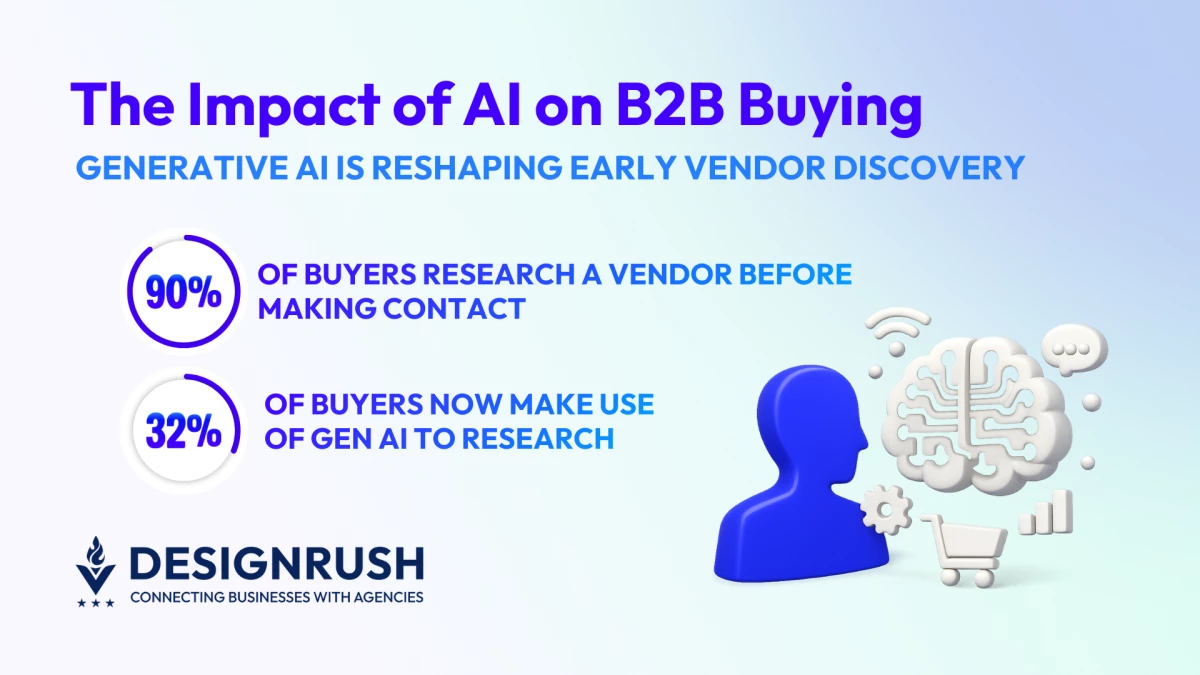
This, as Responsive’s Inside the Buyer’s Mind Report, claims that 32% of B2B buyers use GenAI tools as much as traditional search engines when researching vendors.
Research Before Engagement
According to Paul J. Scott, Chief B2B Website Strategist at GoingClear, a leading B2B digital agency, buyers today are doing their homework before even reaching out to a vendor.
“The report finds that 90% of buyers conduct research before even making first contact, and shows just how far upstream the discovery journey now begins,” explains Scott.
Buyer research is no longer limited to surface-level exploration, with insights suggesting that:
- Only 10% of buyers conduct minimal research before first contact
- 35% perform moderate research, such as price and capabilities checks
- 37% compare vendors in depth
- 18% carry out extensive research, including financial reviews and case studies
For vendors, this shift matters more than ever, with visibility required in both traditional and AI searches.
Editor's Note: This is a sponsored article created in partnership with GoingClear.
AI Adoption Across the Buying Journey
GenAI is no longer just a discovery tool. It is quickly becoming part of deeper research activities.
To this end, buyers use AI for:
- 47% for market research and discovery
- 38% to evaluate and shortlist vendors
- 35% to identify needs or opportunities
- 33% to engage or communicate with vendors
- 32% to define internal requirements
- 14% to make decisions
These trends suggest that buyers are integrating AI into multiple stages of their process and not just the initial search.
How AI Influences Vendor Consideration
The use of AI also shapes how buyers perceive and evaluate vendors.
“Here, 31% are more likely to consider vendors that use generative AI, while 42% say automation capabilities influence evaluation decisions,” says Scott.
This indicates that B2B buyers consider vendors who use AI adopt AI as frontrunners in securing business, and a sign of their innovative and operational maturity.
What Still Matters Beyond AI
Fortunately, the fundamentals of decision-making remain central in the process.
“Human judgment still prevails, with buyers prioritizing trust, demonstrated expertise, and the quality of RFP responses when making final decisions,” adds Scott.
This blend, where AI informs early discovery and human criteria helps shape the final choice, points to a hybrid future in vendor evaluation.
What It Means for Lead Generation
For eCommerce and B2B brands, the use of AI can no longer be just a supporting tactic but must take prominence as a core lead generator.
Being discoverable in the AI world depends less on keyword rankings and more on whether brand information is structured, authoritative, and easily interpreted by AI models.
“To achieve this includes investing in AI-optimized content, clear product and service descriptions, structured metadata, and credible third-party signals that help generative tools accurately represent a brand’s capabilities,” concludes Scott.
As GenAI reshapes how vendors are discovered, eCommerce and B2B brands must ensure that their expertise is visible wherever the buyers are, long before the sales conversation even begins.