

Online B2B Sales Strategies: Key Findings
- 80% of B2B sales now happen online, making websites the primary driver of conversions.
- B2B sites should integrate CRM and automation tools to foster stronger engagement and generate higher-quality leads.
- Companies must align sales and marketing around digital strategies to convert faster and close more deals.
Closing B2B deals used to involve face-to-face meetings and demos. In 2025, however, deals have moved from conference rooms to browser tabs.
According to data covered by DesignRush, 80% of B2B sales interactions between suppliers and buyers will occur through digital channels.
This should surprise no one, as having an online presence has been a standard for businesses since the dot-com boom and the rise of search engines.
Unfortunately, simply having a website isn’t enough to get the attention of potential clients.
More problematic, however, is that many B2B companies treat their websites like a digital brochure, rather than a conversion tool.
This is a common problem that many digital agencies, such as GoingClear, have helped many B2B brands resolve.
“B2B websites can’t just be a static ‘oh, here’s what we offer’ informative brochures. These need to be dynamic growth engines that clearly guide visitors toward action,” said Paul J. Scott, Chief Website Strategist at GoingClear.
“This is exactly why we developed our trademarked G3 Framework, to help businesses transform their website from a brochure to an active driver of conversions and business growth.”
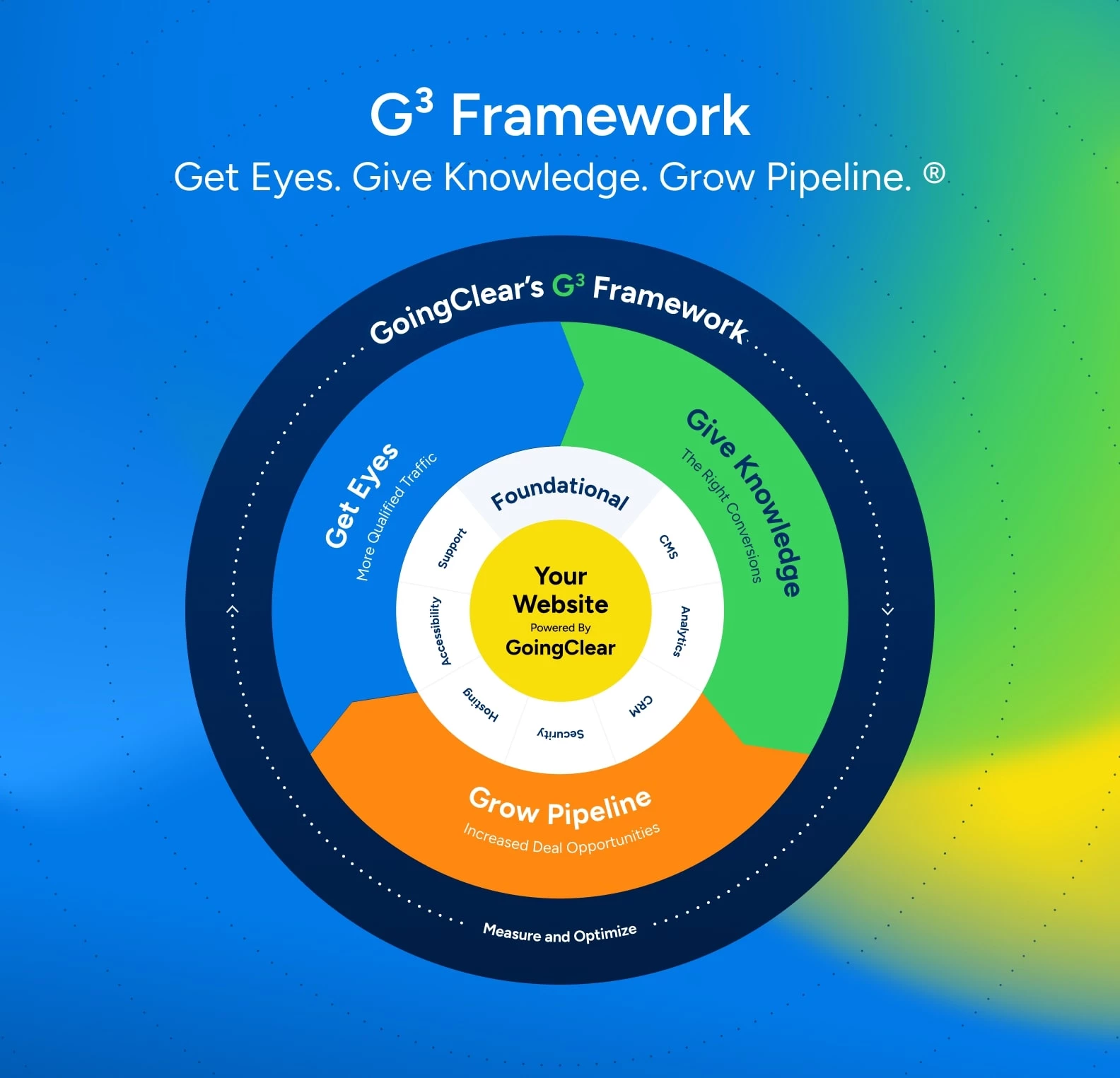
In short, Scott says that the real competition in today’s B2B market isn’t over who offers more, but who communicates better.
This begs the question: How can brands turn their websites into engines that capture and convert research-driven buyers?
Strategizing for the New B2B Buyer Journey
B2B buyers now complete most of their decision-making online, with first impressions coming from content like case studies, testimonials, and landing pages.
In this context, the website functions as the most decisive voice in the room, quietly shaping opinions and guiding preferences before human contact begins.
As such, websites that fail through design, UX, and/or clarity of their message fail to establish trust with B2B buyers, leaving them at risk of being filtered out.
Wait, so is your B2B website running well? Or is it running you down?
— GoingClear | Digital Agency (@goingclear) April 16, 2025
.
.
.
B2B websites are our jam. We help design, develop, launch, manage & optimize them. Might not be a pro sports team, but we run like one - as your website should 😉✔️ https://t.co/wnie6TLGUVpic.twitter.com/WgRlaMYDFO
That’s why GoingClear says brands must recalibrate their digital strategies to accommodate the new B2B buyer journey. Here’s how:
1. Redefine the Website as a Sales Platform
Treating the website as a living, data-informed sales system rather than a static catalog can transform how buyers engage.
The goal here is to give every page on your website a measurable function in the buying journey.
Modern B2B websites should:
- Integrate CRM systems and marketing automation tools to qualify and nurture leads in real time.
- Structure content around decision stages such as awareness, consideration, and validation.
- Build credibility with transparent pricing, real-world case studies, and verified client testimonials.
- Use AI-driven personalization to recommend solutions tailored to a visitor’s behavior, industry, and needs.
2. Build Content that Sells Before the Sales Call
Before buyers click “contact,” they want to learn and explore on their own, which is why content marketing has to be on-point.
To be specific, content should be created in anticipation of buyers’ questions and validate their challenges, positioning a brand as an expert rather than a vendor.
Effective content strategies should now include:
- Educational articles and thought-leadership insights that frame the brand as a trusted authority.
- ROI calculators and product demos that move prospects from curiosity to commitment.
- Interactive tools, such as scenario planners or benchmarking features, that allow buyers to engage directly with value propositions.
“Great B2B websites will teach before they sell, which is why these websites earn the trust of buyers early on in the journey. So by the time a salesperson steps in, the buyer already sees value instead of risk,” explained Scott.
3. Align Teams Around Digital Sales Enablement
One of the most overlooked shifts in B2B marketing is internal alignment. Unfortunately, many companies still treat marketing and sales as separate entities in the sales cycle.
However, the new B2B buying journey has blurred the line between marketing and sales. Marketing teams must now track which content drives conversions, while sales teams must interpret website analytics as a form of sales intelligence.
Companies that can unite both under a single strategy often see a notable difference quickly, as engagement rates rise, lead quality improves, and decision cycles shorten.
To build that bridge effectively, B2B leaders should:
- Create shared performance metrics to replace separate KPIs with unified targets such as lead-to-close ratios or conversion velocity.
- Establish consistent data access to ensure both teams use the same dashboards and CRM insights, thereby avoiding misaligned priorities.
- Encourage regular collaboration and hold joint reviews where marketing and sales analyze user behavior and refine campaigns together.
Turn Your Website into a Company Rep
Websites are the first and most consistent company representatives, introducing, educating, and persuading potential clients long before a face-to-face meeting is set.
If your website is designed to be thoughtful, clear, and confident, people will stay and listen. If it fumbles through introductions or speaks in ambiguous jargon, people will smile and nod politely before moving on.
And if your website can’t hold a conversation, B2B buyers are sure to start one somewhere else.