
AI SEO strategies: Key Findings
- AI tools and Google summaries mean visitors arrive knowing what they want, requiring us to put user experience first.
- Highlight services, products, and credibility with case studies, reviews, and earned media; original insights establish thought leadership.
- Clear navigation, fast pages, strong calls-to-action, and supportive SEO guide visitors and serve both people and AI.
These days, most visitors reach your website already knowing what they want because AI tools and Google’s summaries have done the research for them.
Now, your website’s job is to make it easy for them to take the next step, whether that’s buying, signing up, or getting in touch.
That means your website needs to be crawlable for all AI platforms and search engines while keeping the focus on the user.
And that’s where clear navigation, fast loading, and simple calls-to-action make all the difference.
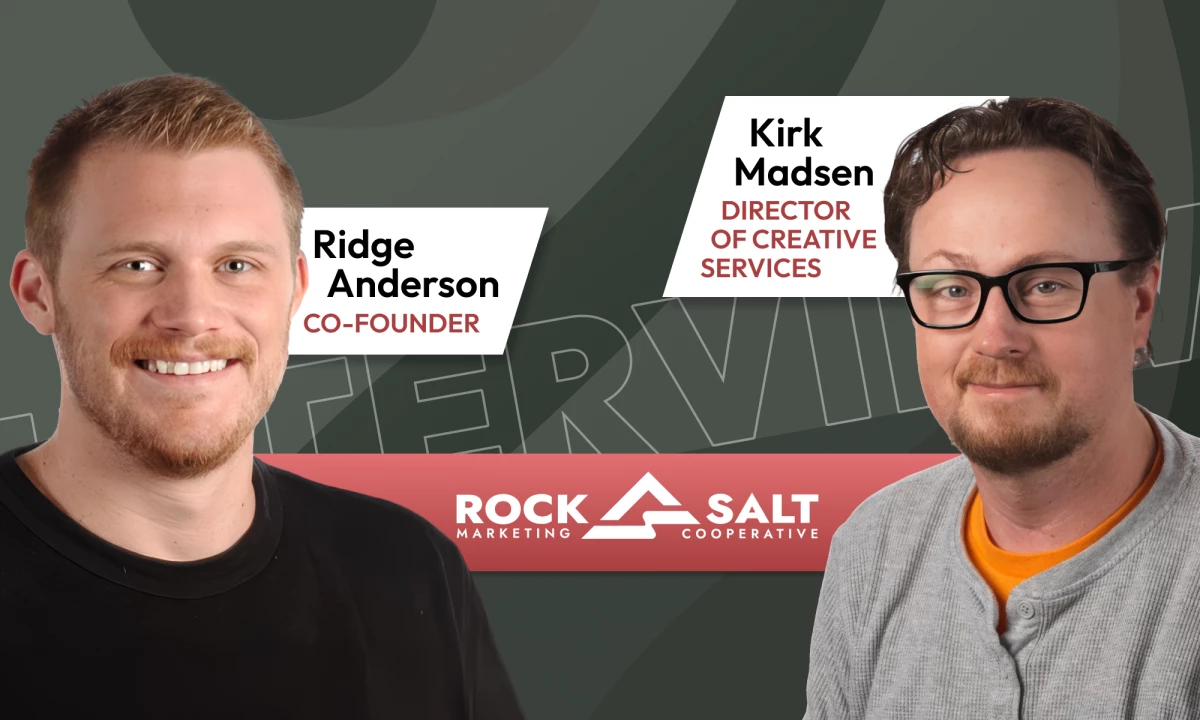
In this interview with DesignRush, Co-Founder Ridge Anderson and Director of Creative Services Kirk Madsen of Rock Salt Marketing explain how brands should rethink how their websites serve both users and AI-driven search engines.

Who are Ridge Anderson and Kirk Madsen?
Ridge Anderson, Co-Founder
Ridge has been an SEO industry expert since 2014. He’s particularly interested in franchise SEO, local SEO, and Spanish-language SEO. Ridge has developed and executed successful campaigns for household Fortune 500 franchises and thousands of small to medium-sized businesses alike. Ridge helped co-found Rock Salt Marketing in 2023.
Kirk Madsen, Director of Creative Services
Kirk has been designing for over two decades. He has expertise in graphic design, web design, branding, product development, and product packaging design. Over that time, Kirk has designed hundreds of websites for small and large businesses and is a master at translating business needs into impactful, pixel-perfect designs. A large portion of his career has seen him directing various successful web and creative teams, culminating in his role at Rock Salt Marketing. Kirk has a Bachelor’s degree in Illustration from UVU in Orem, UT.
Editor's Note: This is a sponsored article created in partnership with Rock Salt Marketing.
Anderson believes the days of optimizing websites for Google and its user base alone are over.
This is because large language models (LLMs) like OpenAI's GPT series and Google's Gemini are diversifying the search landscape, he says.
“This, combined with the DOJ’s recent antitrust ruling against Google, means you now need to consider LLMs like ChatGPT, Claude, and Perplexity, along with other search engines like Bing, Yahoo, and DuckDuckGo, when optimizing your website for search visibility.”
It’s a good thing, though, as he adds that AI is helping to diversify the search landscape, encouraging search engine providers to reward useful, trustworthy content from credible brands instead of the old tricks that once worked to game the system.
So, what does this mean?
It means brands should focus less on “gaming” search algorithms and more on replicating real-life professional business practices online.
Here’s how that plays out:
In an online setting, by offering the audience “useful, to-the-point information” as Anderson points out, and spotlighting quality work or products.
Focus on What Visitors Value
A common misconception is that SEO is all about producing more content. But Anderson recommends the opposite:
“LLMs want to see more content on your site (and across the web) that's about your brand, and not from your brand,” he tells me.
Use case studies, reviews, awards, and other UGC/earned content to convert visitors and improve search performance.
Meanwhile, blogs aren’t a universal strategy anymore unless they contain useful, proprietary content like new research or infographics.
“If we can’t offer new information, we don’t write about the topic because LLMs can already give people the same answer we can,” Anderson says.
And although meaningful content sets the stage, AI reduces visits for basic informational searches, which makes it more important than ever to focus on a few key areas:
- Highlight the value of services or products
- Create an intuitive site structure with fast, headache-free navigation
- Offer original insights or proprietary research to establish thought leadership
Rock Salt calls this “low-hanging fruit” SEO, where brands target realistic keywords that attract the right audience and drive meaningful traffic.
To help, Kirk believes in having strong calls-to-action at the top of each page and optimized core web vitals.
“Intuitive site structure and optimal technical performance also allow bots to parse more of your site's data and access your site more deeply.”
The SEO Redesign Playbook
If a brand is considering a site redesign, Ridge’s advice is simple:
“Focus on intuitive site structure and navigation flow, and avoid producing content for its own sake.”
Traditional SEO elements like optimized headers, metadata, schema, and keywords guide search engines and AI in understanding the site while keeping the focus on the main message.
“[Convey] your message in a straightforward, well-structured, and digestible manner, and use these other SEO tools as support,” he adds.
Creating Clear, Actionable Websites
Websites should make decisions obvious for visitors. Content should highlight what the brand does and why it matters.
- Case studies, reviews, awards, and other earned media show credibility and help visitors take the next step.
- Blogs only work if they bring something new to the table, like proprietary data or useful visuals.
- Navigation should be simple, pages fast, and calls-to-action clear. SEO elements like headers, metadata, schema, and keywords support the message, but they don’t replace it.
Sharing original insights helps a brand stand out and shows its team knows their stuff.
When design and content work together, the site feels easy to use and understand, for people and AI alike.
That’s what turns visitors into customers.