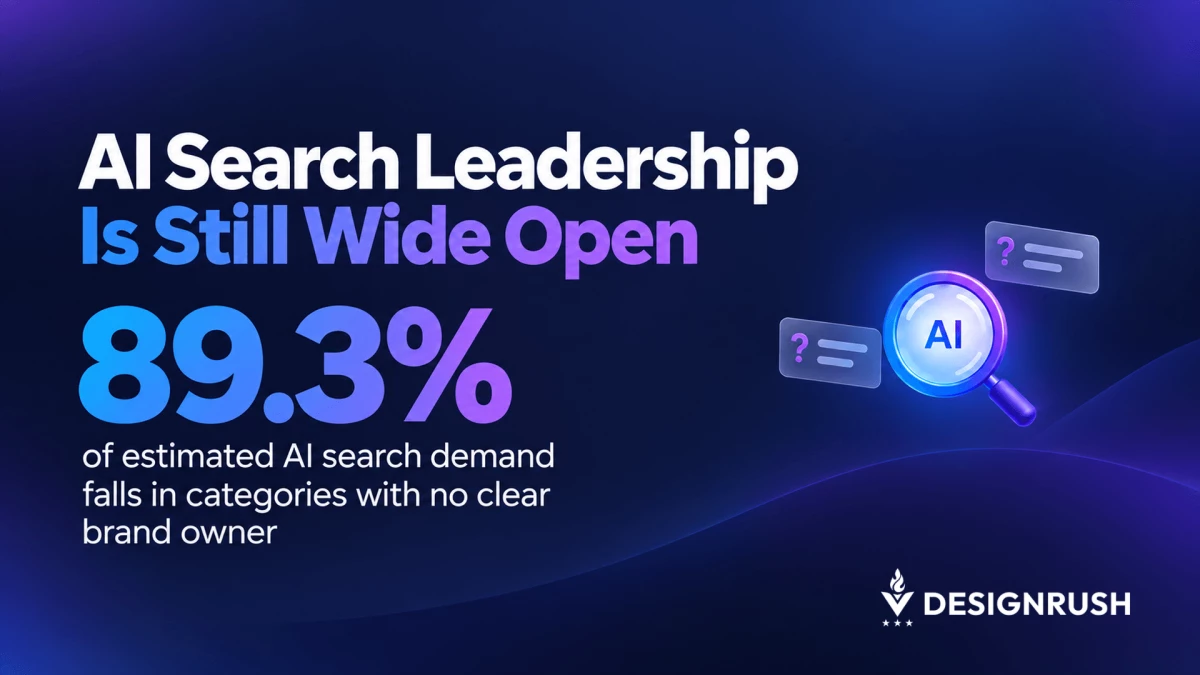

An estimated 89.3% of AI search demand sits in categories with no clear brand owner, according to six months of ChatGPT data as reported by Search Engine Journal.
The dataset covered 1,094 U.S. categories from January through June 2026, with five prompts tested per category, more than 50,000 brands, and over 600,000 citations.
As a leading digital marketing agency, ForeFront Web tracks where brands already appear, and where they are still absent, across various AI search platforms and traditional search engines.
The agency’s Senior SEO specialist, Gabrielle Schneier, examines how brands can claim authority in AI search before a competitor becomes the default answer.
“Most brands aren’t entering a category where one company has already answered every question,” Schneier says.
“There’s still an opportunity to build authority, but brands need enough depth to be genuinely useful across a range of related questions before someone else establishes that authority first.”
Ahrefs examines how AI assistants draw on multiple sources and query types when deciding which brands and content to surface:
Topical Authority Supports AI Search Leadership
The analysis considered a category to have a clear owner when one brand appeared in at least four of five test prompts and led the runner-up by at least five percentage points.
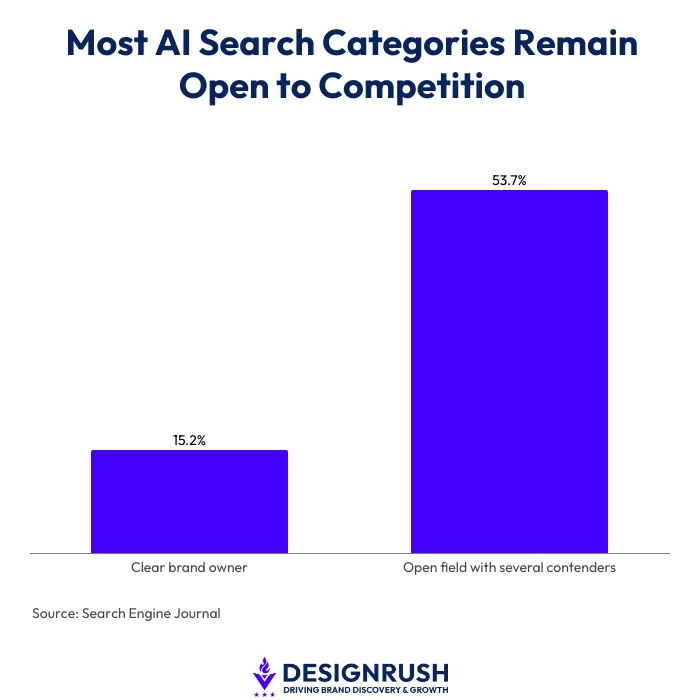
Of the 1,094 categories, only 15.2% met that threshold in June, while 53.7% remained open fields with several contenders.
Once a brand established a clear lead, it was difficult to displace. Clear owners held first place in 90.4% of month-to-month comparisons.
For Schneier, that durability makes topical depth more important than publishing isolated pieces around a handful of high-volume queries.
“A brand needs to build enough depth around a topic to answer the different questions people have throughout the decision-making process,” she says.
That can include educational content, comparisons, alternatives, use cases, expert commentary, and proof of results.
The goal is to give AI systems repeated evidence that the same brand belongs in the same category across more than one kind of prompt.
“One strong piece of content can answer one question,” Schneier says.
“But becoming a trusted resource means being there throughout the customer journey, from the initial research to the questions they ask when they’re ready to make a decision. That takes more than five versions of the same page.”
AI Search Authority Needs Third-Party Evidence
Building topical depth on a website is only part of the authority picture. Brands also need evidence outside their own domain that supports the same expertise, category position, and claims.
That is where expert input, digital PR, third-party mentions, case studies, and consistent entity information become useful.
A company can publish extensive content on its own site, but outside validation gives AI systems additional sources connecting the brand to the topic.
Citation volume alone does not reliably identify which brands ChatGPT recommends most often.
The analysis found a slightly negative correlation of -0.229 between citations and brand mentions, while the most-cited domain was also the most-mentioned brand in only 20.8% of categories.
That distinction is important for how brands measure progress. A rising citation count can show that content is being used, but Schneier would also look at whether the company itself appears consistently in recommendations, comparisons, and buying questions.
Entity building supports the same effort.
Brand names, expertise, products, people, structured data, and third-party references should describe the company consistently enough that AI systems can connect those pieces back to the same organization.
“I wouldn’t judge progress by citations alone,” Schneier adds.
“What matters is whether a brand continues to show up across the questions that matter throughout the customer journey, and whether the information being surfaced is consistently supported by credible sources.”
Ahrefs examines how editorial coverage, reviews, community discussions, and other brand mentions can contribute to AI search visibility:
Prioritize High-Value AI Search Categories
The higher-volume half of the dataset accounted for 98% of estimated AI search demand, yet only 11.3% of those categories had a clear owner.
For business leaders, that argues against spreading resources across every topic adjacent to the company.
Teams can first identify which categories are worth competing for, then decide where deeper content and authority-building work belongs.
From there, they can map the questions buyers ask across those categories and look for gaps in content, comparisons, expert input, proof, third-party coverage, and entity information.
The same categories can then be monitored over time to see whether the brand is appearing more often, whether competitors are gaining ground, and whether outside sources are reinforcing the position the company is trying to build.
“Start with the topics that are closest to revenue and customer decisions,” Schneier says.
“Focus on the areas where you can support the customer throughout the buying journey with useful content, real expertise, and credible sources. If you can’t do that yet, narrow the focus before creating more content.”
So ask yourself this. If one of your highest-value categories still has no clear leader in AI search, what would your brand need to do to become the name AI recommends consistently?