
For most of the past decade, a good PR month looked the same on paper: placements, reach, impressions, share of voice, and message pull-through.
Those numbers still matter, but they no longer tell a brand everything it needs to know.
Today, buyers ask the likes of ChatGPT, Gemini, Perplexity, and Google AI Overviews to explain a category, compare vendors, or recommend a shortlist.
And a lot of the time, they get what they need without visiting the outlet that published your coverage.
According to Pew Research Center, only 8% of users clicked on traditional links when an AI summary was present, compared to 15% on pages without one.
A feature in a respected trade publication may reach fewer human readers than its circulation suggests while still being read closely by the systems that answer your buyers’ questions.
That’s why PR agencies are reorganizing around generative engine optimization (GEO).
The question for brands is whether the earned media they’re paying good money for feeds those answers or merely fills a coverage report.
Why Does Earned Media Matter?
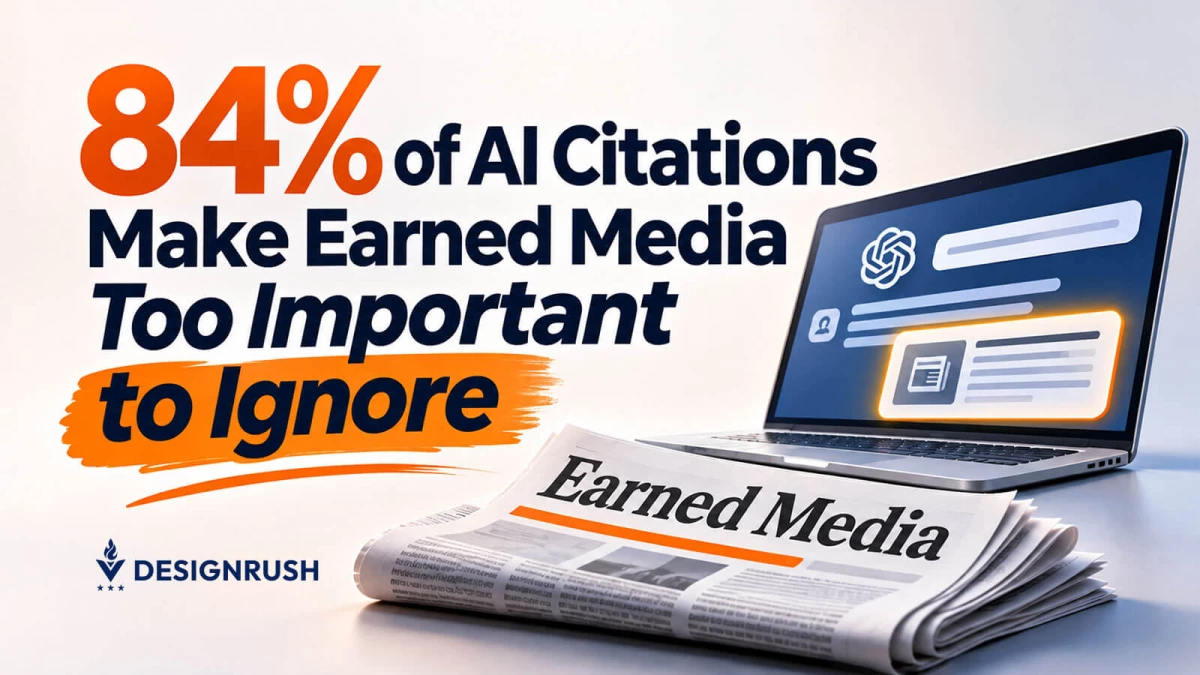
Earned media accounts for 84% of AI citations, according to Muck Rack. This includes journalism, academic research, government sources, encyclopedic sites, and third-party corporate content.
But not all coverage contributes equally. A placement only creates GEO value if it lands in the sources AI systems draw from for your category and if it says something that those systems can use.
What Makes PR Coverage Useful to AI Systems?
In our work evaluating client visibility across AI platforms, a few characteristics consistently separate coverage that shows up in answers from coverage that doesn’t.
- The outlet is part of your category’s citation set. Reach and Domain Authority are imperfect proxies.
Some modest trade publications are cited constantly for specific topics, while some big-name outlets that publish more general articles and topics rarely appear for more in-depth queries that need a higher expertise level. - The coverage answers a question buyers actually ask. Query type shapes which sources get pulled.
Muck Rack found that when consumers ask what’s happening in an industry, AI reaches for news coverage, but when they ask how to do something, it leans on reference content and brand-owned material instead.
Trend commentary and category analysis earn their keep on the first type of question. - The brand is clearly defined. Coverage that names the company, its category, who it serves, and a concrete proof point in plain language gives a model something to work with.
A quote about being "excited to partner" gives it nothing. Compare that to something like this: "[Company] is a freight audit platform for mid-market manufacturers, and in the past year, we’ve helped customers recover more than $40 million in billing errors."
That one sentence tells an AI system not only what the company is, but also who it’s for and why it’s credible. This is where good brand hygiene pays off.
When a company describes itself in the same way across press quotes, its website, executive bios, and directory listings, LLMs can confidently define it. On the other hand, when every placement uses a slightly different description, the model has to guess, which might lead it to land on a competitor’s framing instead. - It's recent and recurring. Particularly in OpenAI models, fresh content on topical, opinion-based, or event-driven queries is prioritized. That doesn’t diminish the value of older coverage, though.
A strong feature from two years ago is still part of the foundation that earned media builds, reinforcing who the brand is and what it’s known for.
Recent coverage builds on top of that foundation by meeting buyers when they’re actively searching on a topic, and recurring coverage keeps the brand in the cycle so it continues to surface as new questions are asked.
Distribution channels matter, too. One study found that 99.3% of 8,000 GlobeNewswire-distributed press releases were cited by ChatGPT or Claude and that well-structured content generated 2.6 times more citations.
Wire content clearly gets read, but what independent sources say still decides how AI describes and ranks your brand against competitors.
Which Metrics Tell the Full Story of AI Visibility?
Impressions and unique monthly visitors estimate human audience size, but this metric is becoming increasingly disconnected from actual influence.
Media share of voice measures how often you appear in coverage, not how often you appear in AI answers, and the two can diverge sharply.
Message pull-through tracks whether or not your messaging made it into an article, not whether or not it survived into the summary a prospective buyer ends up reading.
And placement counts reward volume, even when half of those placements live on sites that AI systems never cite at all.
Brands should keep those metrics in play, but they need to add an AI visibility layer: how often the brand appears in answers to a defined set of category prompts, how often its coverage is cited as a source, how accurately AI describes it, and which competitors appear alongside it.
Building a new AI search measurement stack doesn’t require a massive upfront investment.
Build out a set of 25 to 50 prompts that mirror real buyers’ questions across awareness, comparison, and selection. Run these prompts monthly across the major AI search platforms and log whether your brand appears, where it appears, which sources are cited, and whether the description is accurate.
AI responses vary from run to run, so look at trends over several months rather than a single snapshot. Dedicated tracking platforms can scale this once you know what you’re looking for.
Checklist: Is Your PR Program Producing GEO Value?
Use these questions to assess whether your PR program is earning visibility in AI-generated answers and influencing how buyers discover and evaluate your brand:
- Do you have a defined prompt set that reflects how buyers research your category, and is it tracked on a regular cadence?
- Does your brand appear in AI answers to category and comparison prompts, and is that share moving in the right direction?
- Are any of your recent placements cited as sources in those answers?
- Is your media target list prioritized by how often outlets are cited for your category?
- Does your coverage state who you are, what category you're in, and at least one concrete proof point in plain language?
- Is your media coverage recent and recurring?
- Do AI platforms describe your brand accurately, and is your PR strategy correcting gaps or outdated claims?
- Are your competitors being cited from outlets that your team has never pitched?
- Does your agency's reporting connect your placements to changes in AI visibility?
If most of your answers are "no" or "we don't know," your program is likely generating press mentions without building up your presence where your buyers are forming their opinions.
Rethinking the Brief
None of this is a case for giving up and cutting PR. Earned media has become more valuable because AI systems trust it, which means it’s time to double down.
The best agencies are already pitching with citation data in hand, shaping stories around the questions buyers are asking AI, and reporting on whether or not coverage moves the brand's position in AI-generated answers.
If your agency isn't doing that yet, it's worth asking why and what it would take to start.