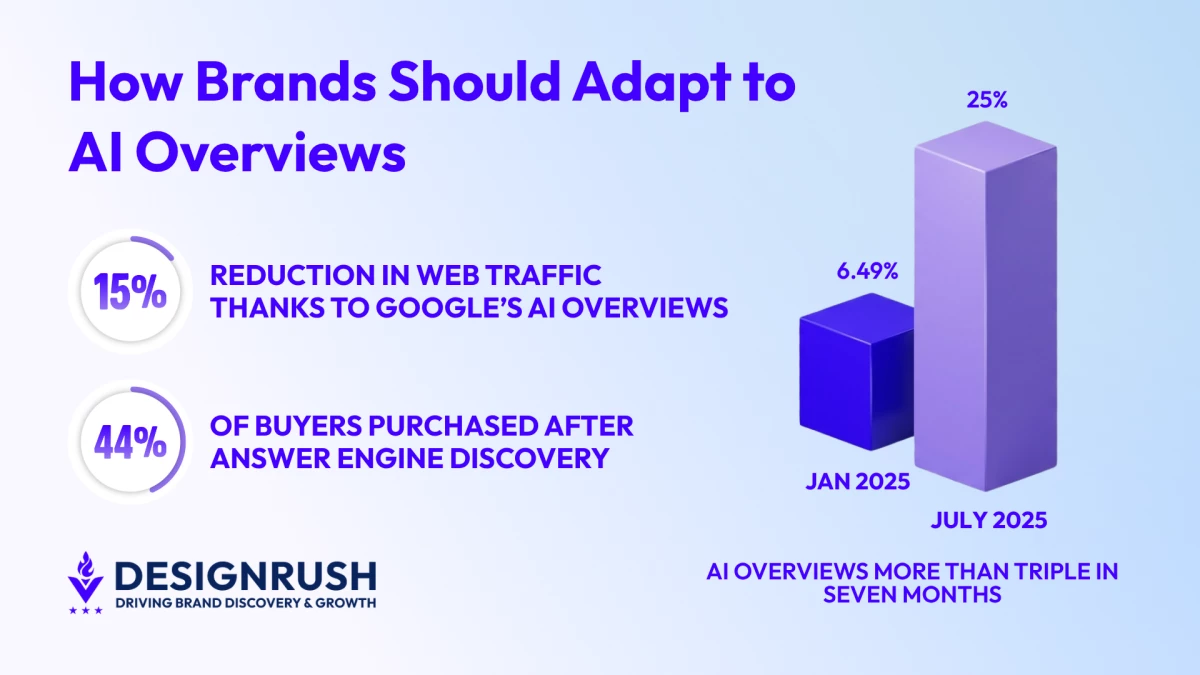

Google's AI Overviews reduced traffic to affected pages by roughly 15%, according to new research by Cornell University, which analyzed more than 161,000 Wikipedia article-language pairs.
For publishers, brands, and marketers, the findings put a number on a trend that has been unfolding for months.
More users are finding answers before they ever reach the websites behind them, rewriting what online success actually looks like.
Leading digital agency, Viacon, is already seeing these changes play out across the brands it works with.
The agency’s SEO Team Lead, Sudarshan Nath, says many marketers are still looking at the wrong signals.
"Brands need to understand whether they're showing up at the moment decisions are being shaped, because that's where much of the value is now being created," he says.
AI Overviews Are Reducing Search Clicks
For marketers who have watched organic traffic soften over the past year, findings from Pew Research Center help explain why.
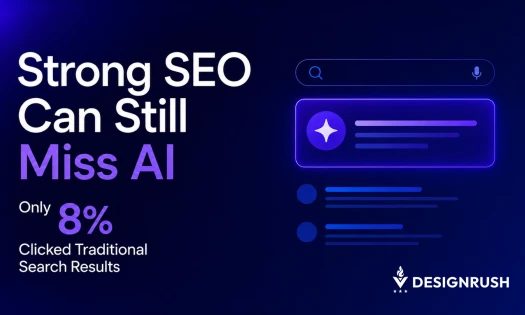
According to the institute, users clicked on a traditional search result just 8% of the time when an AI summary appeared. However, when no AI summary was shown, the click rate rose to 15%.
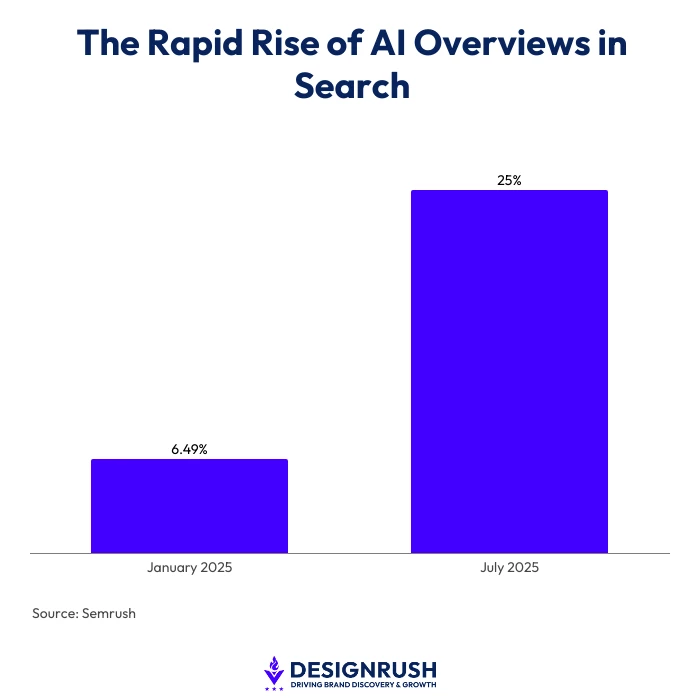
Semrush also found that AI Overviews appeared for 6.49% of tracked keywords in January 2025 before rising to nearly 25% by July.
"This is one of the first major shifts in search where visibility and website traffic are no longer moving in lockstep," Nath adds.
Why Search Performance Is Getting Harder To Track
Traffic remains one of marketing's most trusted metrics. The problem is that it only measures what happens after someone clicks.
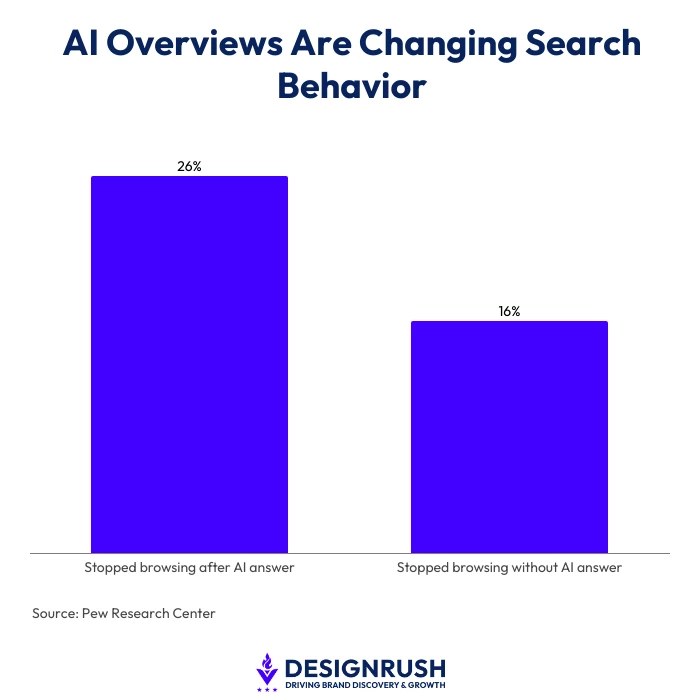
This is backed by the same Pew Center research, which found that 26% of users ended their browsing session after viewing an AI-generated response.
However, when users were shown standard search results without an AI Overview, that figure dropped to 16%.
That creates a growing blind spot where consumers can now discover a brand, compare options, and gather information directly within an AI-generated result without ever appearing in website analytics.
"Brands have spent years optimizing for clicks because clicks were visible. The next challenge is understanding the value created before a visitor ever reaches your site," Nath says.
Which Businesses Are Most Vulnerable to AI Overviews
Some businesses stand to lose far more traffic than others.
Many publishers, review sites, comparison platforms, and affiliate businesses built their growth around the assumption that Google would keep sending visitors their way.
But that becomes harder when the answer appears before the click.
"The brands most exposed are often the ones publishing content that can be condensed into a few sentences," Nath says.
“Original research, expertise, and unique insights carry more weight because they offer something that an AI-generated summary can’t.”
Why AEO Is Becoming Essential for Search Visibility
AI-generated answers are also driving interest in Answer Engine Optimization (AEO).
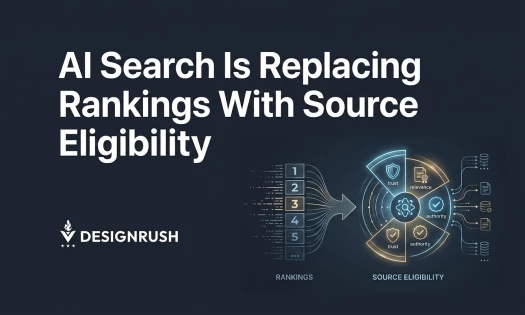
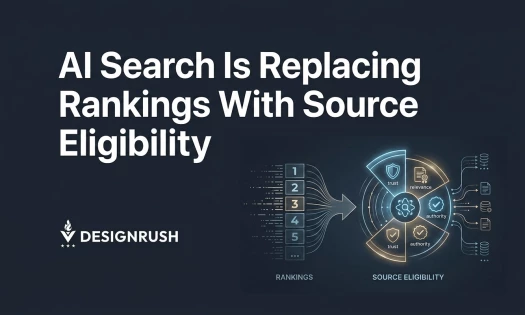
Rather than focusing solely on rankings, AEO is centered on increasing the likelihood that a brand's content is referenced within AI-generated responses.
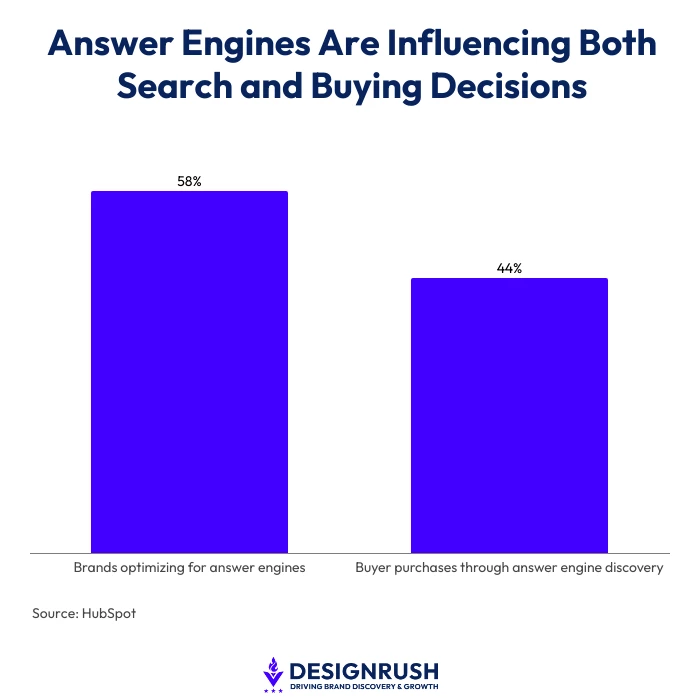
Roughly 58% of marketers are already optimizing content for answer engines, according to HubSpot's 2026 State of AEO report.
Meanwhile, 44% say they have made a business purchase based on a brand discovered through an answer engine.
HubSpot also adds that when brands focused on AEO, citations improved by 433%.
"The question is no longer whether your content ranks. It's whether your expertise is credible enough to be referenced when AI systems generate information," Nath adds.
How Brands Should Prepare for AI Search
Search is still driving discovery, but the path from question to purchase is becoming less predictable.
To adapt, Nath says brands need to pay closer attention to what happens before a visitor reaches their website.
1. Reassess How Success Is Measured
Traffic and rankings still matter, but they no longer tell the whole story.
Given that more decisions are being made before a click ever happens, it’s difficult to understand what's influencing customers if visits and pageviews are the only things being measured.
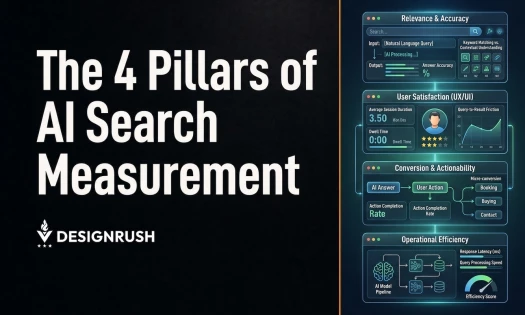
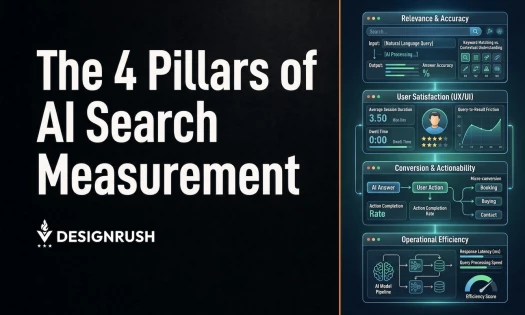
Citation frequency, share of voice, branded search growth, and appearances within AI-generated responses can offer a better sense of where a brand is showing up and how often it's part of the conversation.
2. Invest in Original Expertise
As AI-generated answers handle more routine questions, original thinking becomes harder to ignore.
Articles designed purely to capture search traffic may struggle when users can get the same information directly from the results page.
Research, first-hand experience, expert analysis, and unique insights give people a reason to keep reading.
3. Expand SEO Into AEO
AI search visibility now extends beyond where a page ranks.
Brands are competing for inclusion within the information users encounter before deciding whether to click.
That means auditing which pages appear in AI-generated responses, which topics earn citations, and where brand expertise is being referenced across the search journey.
"The brands that succeed won't be the ones chasing every change. They'll be the ones that understand what makes their expertise worth finding in the first place," Nath concludes.
As more and more people find answers without ever visiting a website, brands need to ask themselves. If customers no longer need to click, how will they find you?